Extreme weather compels emergency relief from Maldives’ government

Maldivian government authorities are providing emergency services and relief funds to island communities battered by three weeks of “extreme weather”.

The National Disaster Management Centre (NDMC) issued a statement today (May 15) urging island and atoll councils to report any damage caused by the “harsh weather” as soon as possible.

President Mohamed Waheed Hassan Manik met with officials from the Maldives Police Service, the Maldives National Defence Force (MNDF), the NDMC, and other high-ranking government officials yesterday (May 14) to discuss damages sustained and relief counter measures being taken nationwide.

Waheed provided assurances that government authorities will collaborate with island communities to provide “all the assistance and support needed”. Thus, it was decided state funds will be provided to assist “those islands with maximum damage” through the Ministry of Finance and Treasury’s contingency budget.

State funds will not be released directly to NDMC, instead the Finance Ministry will maintain control of money allocated for relief efforts and “coordinate bills” with the centre, NDMC Project Director Hisan Hassan told Minivan News today.

The exact amount of emergency relief funds will be determined today, Hassan added.

Meanwhile, the MNDF and police have issued precautionary warnings to the public due to the severe weather conditions.

The Coast Guard issued a request yesterday that “all travelers to take necessary precautionary measures before setting on their journeys due to the severe weather with heavy rain and thunderstorms… particularly in the northern and southern regions of the Maldives.”

They recommended travelers test communications sets and obtain updated weather forecasts before embarking on any journeys.

The Coast Guard further stated that average wind speeds of 15-25 miles per hour (mph) in the southern atolls and 7-17 mph are expected in the northern atolls, while wind gusts during thunderstorms will reach 40-50 mph.

Additionally, the police issued an SMS bulletin today also warning the public to “take precautionary measures due to the bad weather”.

A “white bulletin” was also issued by the Maldives Meteorological Service (MET) today, warning that the central atolls can expect average winds speeds of 23-30 mph.

Food shortages and flooding

Thus far damage assessment reports have been submitted by 12 islands from seven atolls – Shaviyani, Meemu, Dhaalu, Thaa, Laamu, Fuvahmulah, and Addu City – representing regions from the far north to the far south of the Maldives, the NDMC told Minivan News today.

Hassan explained that other islands have reported storm-related damage directly to the media or have spoken with the NDMC, but have yet to official report these issues to the centre.

Flooding due to three weeks of severe weather and heavy rain has damaged households, sewerage systems, as well as caused extensive agricultural destruction, according to Hassan.

Food shortages on some islands have resulted from agricultural damage and the disruption of transportation and supply networks due to bad weather.

“All islands import food from Male’, however the seas have been so rough [supply] boats are still in Male’ and unable to reach the islands,” Hassan explained. “Yesterday the State Trading Organisation (STO) announced the they will try to send [food supplies] somehow.”

STO is not providing free food-stuffs to islands, rather they are seeking ways to reach the islands so community shops can restock. Normally, supply boats travel between the atolls at least twice a week, according to Hassan.

“Some small islands’ [residents] are a little afraid to travel to a nearby island [to resupply] because travel is difficult,” he said.

Hassan emphasised that food shortages have not reached “emergency situation” levels.

“For the time being there is no emergency. If an island completely runs out of food, the MNDF is always on board [collaborating] with STO and NDMC, and will send vessels,” said Hassan.

The MNDF and police will deploy and provide first response emergency services, if necessary, he added.

“The MNDF is also assisting with flood relief. They take fire fighting equipment to islands and help pump water,” said Hassan.

“Houses are flooding because they are not built on high platforms, so with one or one and a half feet of flooding, water will rush into homes,” he added.

Hassan emphasised the need for people to “take responsibility” and precautionary measures to ensure their safety in the bad weather conditions.

“They should not wait until flood waters reach knee-high levels and require the MNDF to provide assistance,” Hassan said.

“People should move [their] belongings to higher ground, get rid of old trees and branches, clean their roofs, and collect rainwater in tanks. Also, sandbags should be used to minimise further flooding,” he added.

Ensuring roofs and houses are secure is also essential given the strong winds that have accompanied the recent severe storms.

The NDMC is coordinating with the relevant ministry’s to ensure damages are evaluated and addressed promptly.

Likes(0)Dislikes(0)

Vice President calls for “population consolidation”

Vice President Mohamed Waheed Deen has lambasted the country’s current presidential candidates for resorting to a “divide and rule policy” to stay in power, rather than focusing on issues such as “population consolidation” which he claimed would help sustainable development.

Speaking on May 13 during the launch of the UN’s 2013 human development report, Deen argued that it was extremely difficult for presidential candidates to discuss relocating and consolidating island populations due to fears “islanders will be angry”.

However, the vice president said he believed there were ulterior motives to avoid addressing population consolidation – the practice of relocating geographically isolated, small island communities to larger landmasses.

“The other reason – which is worse – is the divide and rule policy that has been in the Maldives for hundreds of years. I hope those who are going to be on the list of presidential candidates, and politicians, will seriously think about the development of this nation and not be thinking ‘how long can I stay in power?’,” he told Minivan News.

“The whole idea of population consolidation is for the government, or the leaders whoever they are, not to control Maldivian citizens, so if they want to be free and independent they should do it.”

Vice President Deen highlighted a number of development issues and interrelated democratisation challenges he believed were vital to development, during his speech at Sunday’s UN report launch.

These issues included included the need for improving freedom of expression and democratic education to reduce inequalities. Deen emphasised “population consolidation” as an important way of ensuring this.

“It is easier to control votes if you are on small, small little islands, but it’s difficult when the population is consolidated,” stated Deen. “I strongly believe that the Maldives must have a population consolidation method.”

“Unless populations are consolidated, economically viable solutions – healthcare, education and other services and facilities – required for development cannot be sustained,” he added.

Deen claimed there were also numerous economic and social service benefits that would come from relocating people living on small islands, whom he said faced “lots of difficulties” due to limited healthcare and educational opportunities. Restricted transportation options were another concern he identified.

“Population consolidation would also reduce income and gender inequality. They would find it easier to find jobs and things like that,” he said. “I strongly believe that’s the key to a successful Maldives.”

Voter buy-offs, other corrupt practices, political polarisation and a lack of civil education were identified by Transparency Maldives, the Elections Commission of the Maldives (ECM), and the Elections Commission of India (ECI) as threatening free and fair democratic elections from taking place in September.

Additionally, the International Federation for Human Rights (FIDH) and the Maldivian Democracy Network (MDN) released a joint human rights brief this April accusing the Maldivian government of failing to create conditions conducive to free and fair elections.

Relocation gone wrong

Population consolidation is a controversial issue for many islanders, given the unique cultural characteristics and strong inter-relationships each island community in the Maldives possesses.
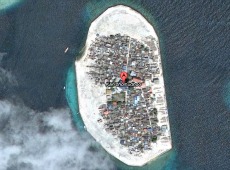
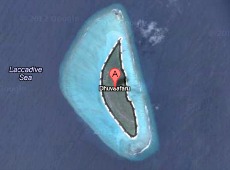
The displacement and subsequent relocation of the entire Kan’dholhudhoo Island community in Raa Atoll following the 2004 tsunami is one example of the development challenges posed by relocating entire island communities.

“The community is still suffering tremendously,” Island Council Vice President Amir Ahmed told Minivan News.

“Kan’dholhudhoo is our motherland, however, the whole island was fully damaged [in the tsunami]. Four years after our community was split and living on different islands in Raa Atoll – Alifushi, Ungoofaru, Meedhoo, Maduvvari – or in Male’,” Ahmed explained.

The International Federation of Red Cross and Red Crescent Societies (IFRC) – in partnership with other nation-state donors – provided temporary shelter and food for the internally displaced in the aftermath of the tsunami, Ahmed continued.

In 2008, the bulk of Kan’dholhudhoo’s nearly 4,000 community members were eventually relocated to Dhuvaafaru Island. However, administratively the community remains under Kan’dholhudhoo, which poses a problem for voting, explained Ahmed.

The IFRC transformed the previously uninhabited island with the construction of 600 new houses, office buildings, a health centre, playgrounds, roads, and a garbage area, Ahmed added.

Unfortunately the government’s lack of community consultations, inadequate infrastructure development, and political opposition leading to local “administrative problems” has greatly degraded quality of life for the Kan’dholhudhoo community, lamented Ahmed.

He explained that the combination of too few island-level civil servants – the government mandates one per every 500 people, but only four represent Kan’dholhudhoo – and the stanch allegiance of island office employees to former president Maumoon Abdul Gayoom created huge development-related problems and a lack of basic services.

“Maumoon’s people were working in the island office and they still supported him,” said Ahmed. He claims that the island office staff requested too few homes from the IFRC after the tsunami.

“They don’t know how the people suffer,” said Ahmed. “This is no ‘safe island’, there are many problems.”

“Day by day things get worse”

Currently 75 families still need homes, according to Ahmed. He explained the homes which have been constructed were meant to house a single six person family in a 2000 square foot area with three bedrooms and two bathrooms.

“Instead, three or four families are living in one house. Many people are not coming back because they have no place to live, or because the living conditions are so uncomfortable,” Ahmed said.

“The constitution should provide one area of land per family, but this has not happened for our community,” he added.

Overcrowding due to the lack of adequate housing has caused a variety of societal problems, including property disputes, rising divorce rates, and children “don’t learn the responsibilities of how to live… additionally they see what’s happening to the community. Disputes are increasing,” said Ahmed.

Many of the homes were constructed near a “pond area” on the island, explained Ahmed.

“The land is not good for people to live on because the well water is bad. It has a bad smell and causes skin problems, especially for children and old people,” he explained. “Maumoon decided where to build the houses, we were not consulted.”

Although a pipeline has since been built to supply safe drinking water to the 40 families living in the area, given the overcrowding problem the water supplied is not sufficient. Thus, “a lot” of well water continues to be used.

Ahmed further explained that there is a waste management shortfall also posing a serious threat to community’s health.

“The garbage [problem] is terrible here. A garbage area was made but we cannot use it because there is not enough budget. So islanders have been dumping waste in the beach area, which is now full, so garbage is all over the road blocking vehicles from driving,” Ahmed said.
“There are also diseases spreading, such as viral fever, as well as mosquitoes and flies. And there are people living nearby this [garbage] area,” he added.

Despite these human health threats, Dhuvaafaru still lacks medicine and adequate medical facilities.

“There is no pharmacy or medicine [available]. We tried to establish one, but it is still not open,” said Ahmed.

“We have a health centre but it is without medicine. It lacks basic necessities and cannot even perform blood tests or give injections. We have to go to Ungoofaru [for medical treatment] which is 10 or 15 minutes away by speedboat,” he added.

Education and economic opportunities are also very limited, according to Ahmed.

“I am reluctant to say this, but the community is not very aware. Educated community [members] are very rare and if anyone is educated they will move to some other island because they want their children to have a quality education and standard of living,” Ahmed said.

“The community’s living standard is very dependent on the fishing industry. There are no administrative jobs, so fishing is the only way to make a living,” he continued.

“Day by day things get worse and worse,” he lamented.

“Government doesn’t listen”

Successive government administrations have failed to address the development problems and threats to the Dhuvaafaru community.

“Maumoon provided us no choices. We informed the government [of these issues], but nothing changed,” said Ahmed.

Although former President Mohamed Nasheed’s administration provided the community with sandbags to thwart coastal erosion, “now the erosion has spread to another side” of the island and the ongoing development problems went unresolved, he continued.

The island office was controlled by the former opposition who did not cooperate with Nasheed’s administration to improve quality of life for the Dhuvaafaru community, claims Ahmed.

“We informed the coup government, but they don’t listen. [President Mohamed] Waheed makes many promises, but has taken no action,” he added.

Regarding whether island relocation and “population consolidation” are beneficial for island communities, Ahmed believes that if the government will actually provide the proper infrastructure for communities then the policy would be beneficial.

“I think most people would follow that, especially the younger generation. If there are good facilities I’ll go there for sure,” Ahmed declared.

“I’m happy now because everything is new [on Dhuvaafaru], but when I enter the house I want to leave immediately [due to the overcrowding],” he added.

In March 2012, the Anti-Corruption Commission (ACC) sent a corruption case involving MVR 24 million (US$1.55 million) to the Prosecutor General’s Office concerning the Disaster Management Centre and a housing project carried out on Gan in Laamu Atoll, following damage suffered in the 2004 tsunami.

The Maldivian government is obligated under national and international law to guarantee the human rights and protections enshrined in the International Covenant on Civil and Political Rights (ICCPR) and International Covenant on Economic, Social and Cultural Rights (ICESCR), which include access to adequate housing, water, healthcare, and political participation.

Likes(0)Dislikes(0)

Two arrested with 16 alcohol bottles in Male’

Two men have been arrested after police received a “tip off” on Sunday (May 12) that they were in possession of 16 bottles of alcohol, reports local media.

The 32 year-old Maldivian and 44 year-old Bangladeshi were arrested around 7:17pm while on a speedboat near the public swimming track in Male’.

The alcohol seized by police included 12 Absolute Vodka bottles, one King Robert vodka bottle, one Russian Standard vodka bottle, and two Irish Jameson whiskey bottles.

Likes(0)Dislikes(0)

ACC confirms GIP investigation; Transparency calls for inter-agency taskforce to tackle state resources misuse

The Anti-Corruption Commission (ACC) has confirmed it is investigating President Mohamed Waheed’s Gaumee Ihthihad Party (GIP) over allegations the party used state records to fill out membership forms in an effort to bulk up its numbers.

The party has denied the allegations, with Haveeru citing a GIP official as insisting: “we got members to sign for our party by taking to the streets of Male’ and visiting the islets. People are leveling various allegations because we managed to reach 10,000 members at the last minute.”

GIP spokesperson Abbas Adil Riza was not responding to calls from Minivan News at time of press.

Party membership is not necessarily a reflection of voting support in the Maldives. However, with the introduction of the recent political parties bill, parties are required to have a minimum membership of 10,000 to be formally recognised by the Elections Commission (EC) and receive state funding.

The passage of the bill earlier this year – passed by a parliament largely controlled by the country’s three largest political parties – left small parties with little parliamentary representation such as GIP, the Dhivehi Qaumee Party (DQP), Adhaalath Party (AP) and the Maldives Development Alliance (MDA) facing potential dissolution.

Of these parties, only the AP was able to obtain the required membership before the bill came into effect. The fate of the others was put on hold following a Supreme Court injunction, while they sought to reach the required membership.

The Elections Commission has meanwhile expressed concerns about fraudulent membership forms being submitted.

Use of state resources

Transparency Maldives has called for police, the EC, ACC and Prosecutor General’s Office to create an “interagency taskforce” to tackle election issues such as the misuse of state resources.

Senior Project Coordinator Azim Zahir said while a party such as GIP was in the spotlight due to their connection with the incumbent president, attention was also required at local council level.

“It’s not just trips made by a President [before an election]. During our pre-election assessment we met local councils who told us police transport was being used by candidates of certain political parties,” he noted, citing one example.

Auditor General Niyaz Ibrahim told newspaper Haveeru last week that President Waheed’s visits to islands and pledging of infrastructure projects could be considered campaigning at the state’s expense.

As Niyaz believed public funds and resources should not be used for campaigning, the Auditor General’s Office was in the process of drafting campaign finance rules to distinguish official visits from campaign trips.

The recommendations would be based on the American model, he added, and shared with the President’s Office and parliamentary committees.

Under this model, the president would be advised to announce campaign trips in advance and reimburse the office for expenses incurred during unofficial trips.

A formula would be recommended to identify unofficial components of official trips, Niyaz explained.

“The main purpose of these rules is to recover the cost of unofficial trips. We are looking to make the rules public along with the President’s Office audit report,” he was was quoted as saying at the time.

The Elections Commission has meanwhile told local media that the commission was powerless to prevent political activities outside the official campaigning period of 120 days prior to the election.

“After the announcement of the presidential election, we will take all necessary action within the authority and powers of the commission. Compliance bureaus will be established and officials of the commission will be deployed to every island in which voting will take place. According to the law, political activities conducted before that cannot be stopped,” Vice President of the EC Ahmed Fayaz told Sun Online.

Transparency Maldives Project Coordinator Zahir stated however that major parties had already begun campaigning, and noted that the US model provided for an ‘informal’ campaigning period ahead of the official period.

Likes(0)Dislikes(0)

Man arrested for attack on Sonee Sports security guard

A man was arrested for attacking a Sonee Sports security guard with a sharp object in an attempt to rob the office, reports local media.

The Police Services told local media the 27 year-old was trying to break into the office and “items normally used for robberies” were recovered during an inspection of the area.

The injured security was taken to ADK Hospital for treatment and was later released, according to police.

The case is currently under investigation.

Likes(0)Dislikes(0)

Letter: JSC claims to have been endorsed by US Ambassador

Dear Madam Ambassador Michele J Sison,

I write to you as a member of the Maldives Judicial Service Commission 2009 to 2011, and as an advocate for rule of law and constitutional democratic government in the Maldives, to express my concern following the recent remarks attributed by the Maldives’ Judicial Service Commission to yourself, Madam Ambassador, in a statement published on the said Commission’s website on May 8, 2013.

The original statement in Dhivehi is to be found on http://jsc.gov.mv/2013/05/1561.

The Dhivehi statement claims that “Ambassador Michele J Sison approves of the functioning of the Maldives’ Judicial Service Commission”, and agrees the actions of the Commission are up to the “best possible standards”.

The statement further suggests that, thus, the Commission is cleared of all the long standing, very serious allegations against it.

The statement appears to be another attempt by the Maldives Judicial Service Commission to cover up its breaches, political activism, abuse of powers, and continued actions against Constitution and State through political activism, misconstruing dialogue, and misleading the public.

Hence, I would like to recall to your kind attention the very serious allegations against the Maldives’ Judicial Service Commission that remain pending without proper Inquiry by the State. These include:

  1. Breach of trust, refusal to uphold its constitutional duties, and cover up of judicial activism and corruption;
  2. Unconstitutional nullification of Constitution Article 285, and the deliberate and willful corruption of the Judiciary, the silent coup;
  3. Corruption of the High Court by cherry picking judges;
  4. Corruption of the Supreme Court by the Judicial Service Commission failing to follow due process, and fulfill its constitutional duties and responsibilities.

Further, I would also like to bring to your attention the reports of some major independent fact finding missions and international bodies which consistently conclude that the Judicial Service Commission acted outside its mandate, failed to respect Constitution or the democratic principles therein, misconstrued law and legal concepts, is highly politicised and partial, and is not fulfilling its constitutional mandate of building trust in the judiciary by holding judges to account.

  1. Report of the International Commission of Jurists (February, 2011)
  2. Dialogue and Concluding Observations of the UN Human Rights Committee, Geneva (June, 2012)
  3. Report of Professor Tom Ginsburg supported and funded by the United States Embassy and UNDP, and prepared for Raajje Foundation (December, 2012)
  4. Observations by the UN Special Rapporteur on the Independence of Judges and Lawyers at the conclusion of visit to the Maldives (February, 2013)
  5. Press Release and Report of the South Asians for Human Rights (SAHR) mission led by Justice Leila Seth (India) to the Maldives in August 2012 (April, 2013)

Having been a part of the Judicial Service Commission, and being very familiar with the modus operandi of the Commission and its current Chair, Supreme Court Justice Adam Mohamed Abdulla, it is plausible to me that the statement of the Judicial Service Commission is its own politics and does not necessarily reflect the United States’ endorsement of the Maldives’ Judicial Service Commissions’ constitutional breaches or the sitting bench permitted to continue without check or due process as required by section 285 of the Maldives’ Constitution (2008).

Further, the Judicial Service Commission’s role leading up to the February 7, 2012 transfer of power, and in its close personal engagement with prosecuting President Mohamed Nasheed has only confirmed to the Maldives’ public that the Commission is not deserving of public trust, and that the Judiciary is hijacked as I have consistently maintained.

It is also very telling that I have continued to strongly and continuously criticize the Judicial Service Commission and Courts without any legal action whatsoever against myself for “contempt of court” or “tainting the image of the Courts and judges” in a situation where others have been investigated and prosecuted for the said “crimes” for saying far less than I have and continue to do.

It stands to reason the Maldives cannot consolidate democracy with a flawed judiciary; or the questions that hang upon it, and haunt us in the Maldives today.

Yours sincerely,

Aishath Velezinee

Velezinee is a former member of the Judicial Services Commission (JSC) and an outspoken whistleblower on judicial corruption. She was stabbed three times in the street in broad daylight in early 2011.

All comment pieces are the sole view of the author and do not reflect the editorial policy of Minivan News. If you would like to write an opinion piece, please send proposals to [email protected]

Likes(1)Dislikes(0)

Fioyree Island suffers storm damage due to bad weather

Ongoing stormy weather in the Maldives has damaged another island in the south, Fiyoree, located in Gaafu Dhaalu Atoll.

Fiyoree has suffered storm related damage, including flooding, fallen trees and roofs of some homes have been blown off by strong winds, reports local media.

Fiyoree Island Council President Mohamed Ahmed told local media that Sunday’s (May 12) bad weather had also destroyed yam crops planted in preparation for Ramadan and flooded parts of the island.

The Maldives National Defence Force (MNDF) is working to drain the flooded areas, including the yam farms.

Since 2009, Fiyoree has been visited by “several groups” conducting surveys on flood prevention in the yam-growing areas, which flood each time there is heavy rain, according to Ahmed. He expressed concern that despite four years of surveys, a drainage system has not yet been established on the island.

Likes(0)Dislikes(0)

UN expresses concern about local groups claiming affiliation for political polling

The United Nations in the Maldives has expressed concern about “individuals and groups” reported to be visiting homes to conduct political surveys, claiming to be UN affiliated.
“The UN system in Maldives expresses concern over reports that individuals and groups purporting to be affiliated with the United Nations in Maldives have been visiting homes to canvas opinion and views on a number of issues of political significance,” the UN’s country office in the Maldives said in a statement.
“The UN system is not undertaking any surveys or opinion polls of this nature, and have not authorised any individual or group or organisation to undertake any survey of this nature in the country,” the statement added.
Likes(0)Dislikes(0)

Comment: Travel awards for the less privileged

The World Travel Awards event held at Paradise Island on Sunday night was a resounding success for tourism in Maldives.

Out of a possible 57 awards in the Indian Ocean category, the Maldives won 35 including the ‘Leading Destination’ title. All the wins listed on the worldtravelawards.com site seem to solidify Maldives’ position as the leading travel destination in the region.

In fact, this success certainly disproves the theory that the tourism industry has taken a hit from the February 2012 transfer of power.

So how does the pageant touted by some as the Oscars of the travel and tourism industry stack up against the likes of British Guild of Travel Writers’ (BGTW) Tourism Awards or the Michelin Green Guide?

The obvious difference between World Travel Awards and most of its competition is the former’s expansive list of categories and titles. The BGTW Tourism Awards has fewer categories in which thousands of potential businesses across the globe compete.

In contrast, businesses have a much better chance of taking a win from competing in the World Travel Awards. However, that maybe the only thing the World Travel Awards has going for it, because behind the veil of all the glitz and gala is a highly questionable business.

The first item of interest is the contact address given on the worldtravelawards.com website. The address ‘SE1 8SJ, London’ comes up as a stall in the visitor centre in London’s Waterloo Station.

For an awards show with 20 years of history, a stall in a visitor centre seems a little too modest. What is more surprising is that the address is home to another 33 companies under the same ownership as the World Travel Awards Limited, the company running the awards.

The World Travel Awards Limited is currently owned by a single shareholder, a Mr Graham Edward Cooke, who has listed Bayham Hall, Bayham Abbey in Kent as his address in the company’s articles of association. The company was originally registered with four shareholders holding a total of 200 shares worth a total value of GBP£200.

In the latest annual return filed by the company, the capital situation remained the same whilst Mr Graham Edward Cooke had become the sole owner. The company secretary is a Miss Manyoung Han.

Like the registered address of the company, Mr. Cooke and Miss Han also have highly quizzical places of residence. The website companiesintheuk.co.uk lists 101 other individuals and 24 other companies sharing the same address as Mr Cooke, and 46 individuals and 8 companies sharing Miss Han’s address. This clearly indicates that both addresses are for mail forwarding services.

As for the company’s address, 33 other companies sharing it suggests that it too may be another mail forwarding service. As for the 33 other companies owned by Mr Cooke, they have all posted little or no profits and have had dozens of dissolution notices served across the lot of them.

Why then did the Maldives Tourism Promotion Board enlist the services of this company given its questionable reputation?

Perhaps the lack of reputation is in itself an advantage. Since the company never declared a capital greater than GBP£200 throughout its existence it would not be difficult to incentivise the declaration of more wins for the Maldives. This leaves two questions to be answered.

Firstly, did the government of Maldives truly know that the company they were dealing with was really a shell corporation? If it did not, then did they really pay exorbitant sums to advertise on the awards website?

The second question is, if the government did know the nature of the company, why then were they given such broad coverage?

Could that not be interpreted as the country’s admission of the weakness of its tourism industry? Should it not be engaging a stronger partner like Michelin instead?

All comment pieces are the sole view of the author and do not reflect the editorial policy of Minivan News. If you would like to write an opinion piece, please send proposals to [email protected]

Likes(1)Dislikes(0)