Extreme weather compels emergency relief from Maldives’ government

Maldivian government authorities are providing emergency services and relief funds to island communities battered by three weeks of “extreme weather”.

The National Disaster Management Centre (NDMC) issued a statement today (May 15) urging island and atoll councils to report any damage caused by the “harsh weather” as soon as possible.

President Mohamed Waheed Hassan Manik met with officials from the Maldives Police Service, the Maldives National Defence Force (MNDF), the NDMC, and other high-ranking government officials yesterday (May 14) to discuss damages sustained and relief counter measures being taken nationwide.

Waheed provided assurances that government authorities will collaborate with island communities to provide “all the assistance and support needed”. Thus, it was decided state funds will be provided to assist “those islands with maximum damage” through the Ministry of Finance and Treasury’s contingency budget.

State funds will not be released directly to NDMC, instead the Finance Ministry will maintain control of money allocated for relief efforts and “coordinate bills” with the centre, NDMC Project Director Hisan Hassan told Minivan News today.

The exact amount of emergency relief funds will be determined today, Hassan added.

Meanwhile, the MNDF and police have issued precautionary warnings to the public due to the severe weather conditions.

The Coast Guard issued a request yesterday that “all travelers to take necessary precautionary measures before setting on their journeys due to the severe weather with heavy rain and thunderstorms… particularly in the northern and southern regions of the Maldives.”

They recommended travelers test communications sets and obtain updated weather forecasts before embarking on any journeys.

The Coast Guard further stated that average wind speeds of 15-25 miles per hour (mph) in the southern atolls and 7-17 mph are expected in the northern atolls, while wind gusts during thunderstorms will reach 40-50 mph.

Additionally, the police issued an SMS bulletin today also warning the public to “take precautionary measures due to the bad weather”.

A “white bulletin” was also issued by the Maldives Meteorological Service (MET) today, warning that the central atolls can expect average winds speeds of 23-30 mph.

Food shortages and flooding

Thus far damage assessment reports have been submitted by 12 islands from seven atolls – Shaviyani, Meemu, Dhaalu, Thaa, Laamu, Fuvahmulah, and Addu City – representing regions from the far north to the far south of the Maldives, the NDMC told Minivan News today.

Hassan explained that other islands have reported storm-related damage directly to the media or have spoken with the NDMC, but have yet to official report these issues to the centre.

Flooding due to three weeks of severe weather and heavy rain has damaged households, sewerage systems, as well as caused extensive agricultural destruction, according to Hassan.

Food shortages on some islands have resulted from agricultural damage and the disruption of transportation and supply networks due to bad weather.

“All islands import food from Male’, however the seas have been so rough [supply] boats are still in Male’ and unable to reach the islands,” Hassan explained. “Yesterday the State Trading Organisation (STO) announced the they will try to send [food supplies] somehow.”

STO is not providing free food-stuffs to islands, rather they are seeking ways to reach the islands so community shops can restock. Normally, supply boats travel between the atolls at least twice a week, according to Hassan.

“Some small islands’ [residents] are a little afraid to travel to a nearby island [to resupply] because travel is difficult,” he said.

Hassan emphasised that food shortages have not reached “emergency situation” levels.

“For the time being there is no emergency. If an island completely runs out of food, the MNDF is always on board [collaborating] with STO and NDMC, and will send vessels,” said Hassan.

The MNDF and police will deploy and provide first response emergency services, if necessary, he added.

“The MNDF is also assisting with flood relief. They take fire fighting equipment to islands and help pump water,” said Hassan.

“Houses are flooding because they are not built on high platforms, so with one or one and a half feet of flooding, water will rush into homes,” he added.

Hassan emphasised the need for people to “take responsibility” and precautionary measures to ensure their safety in the bad weather conditions.

“They should not wait until flood waters reach knee-high levels and require the MNDF to provide assistance,” Hassan said.

“People should move [their] belongings to higher ground, get rid of old trees and branches, clean their roofs, and collect rainwater in tanks. Also, sandbags should be used to minimise further flooding,” he added.

Ensuring roofs and houses are secure is also essential given the strong winds that have accompanied the recent severe storms.

The NDMC is coordinating with the relevant ministry’s to ensure damages are evaluated and addressed promptly.

Likes(0)Dislikes(0)

Vice President calls for “population consolidation”

Vice President Mohamed Waheed Deen has lambasted the country’s current presidential candidates for resorting to a “divide and rule policy” to stay in power, rather than focusing on issues such as “population consolidation” which he claimed would help sustainable development.

Speaking on May 13 during the launch of the UN’s 2013 human development report, Deen argued that it was extremely difficult for presidential candidates to discuss relocating and consolidating island populations due to fears “islanders will be angry”.

However, the vice president said he believed there were ulterior motives to avoid addressing population consolidation – the practice of relocating geographically isolated, small island communities to larger landmasses.

“The other reason – which is worse – is the divide and rule policy that has been in the Maldives for hundreds of years. I hope those who are going to be on the list of presidential candidates, and politicians, will seriously think about the development of this nation and not be thinking ‘how long can I stay in power?’,” he told Minivan News.

“The whole idea of population consolidation is for the government, or the leaders whoever they are, not to control Maldivian citizens, so if they want to be free and independent they should do it.”

Vice President Deen highlighted a number of development issues and interrelated democratisation challenges he believed were vital to development, during his speech at Sunday’s UN report launch.

These issues included included the need for improving freedom of expression and democratic education to reduce inequalities. Deen emphasised “population consolidation” as an important way of ensuring this.

“It is easier to control votes if you are on small, small little islands, but it’s difficult when the population is consolidated,” stated Deen. “I strongly believe that the Maldives must have a population consolidation method.”

“Unless populations are consolidated, economically viable solutions – healthcare, education and other services and facilities – required for development cannot be sustained,” he added.

Deen claimed there were also numerous economic and social service benefits that would come from relocating people living on small islands, whom he said faced “lots of difficulties” due to limited healthcare and educational opportunities. Restricted transportation options were another concern he identified.

“Population consolidation would also reduce income and gender inequality. They would find it easier to find jobs and things like that,” he said. “I strongly believe that’s the key to a successful Maldives.”

Voter buy-offs, other corrupt practices, political polarisation and a lack of civil education were identified by Transparency Maldives, the Elections Commission of the Maldives (ECM), and the Elections Commission of India (ECI) as threatening free and fair democratic elections from taking place in September.

Additionally, the International Federation for Human Rights (FIDH) and the Maldivian Democracy Network (MDN) released a joint human rights brief this April accusing the Maldivian government of failing to create conditions conducive to free and fair elections.

Relocation gone wrong

Population consolidation is a controversial issue for many islanders, given the unique cultural characteristics and strong inter-relationships each island community in the Maldives possesses.
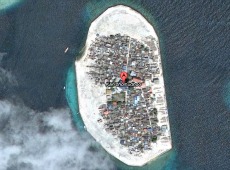
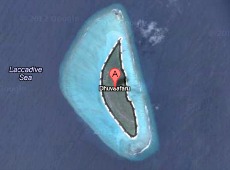
The displacement and subsequent relocation of the entire Kan’dholhudhoo Island community in Raa Atoll following the 2004 tsunami is one example of the development challenges posed by relocating entire island communities.

“The community is still suffering tremendously,” Island Council Vice President Amir Ahmed told Minivan News.

“Kan’dholhudhoo is our motherland, however, the whole island was fully damaged [in the tsunami]. Four years after our community was split and living on different islands in Raa Atoll – Alifushi, Ungoofaru, Meedhoo, Maduvvari – or in Male’,” Ahmed explained.

The International Federation of Red Cross and Red Crescent Societies (IFRC) – in partnership with other nation-state donors – provided temporary shelter and food for the internally displaced in the aftermath of the tsunami, Ahmed continued.

In 2008, the bulk of Kan’dholhudhoo’s nearly 4,000 community members were eventually relocated to Dhuvaafaru Island. However, administratively the community remains under Kan’dholhudhoo, which poses a problem for voting, explained Ahmed.

The IFRC transformed the previously uninhabited island with the construction of 600 new houses, office buildings, a health centre, playgrounds, roads, and a garbage area, Ahmed added.

Unfortunately the government’s lack of community consultations, inadequate infrastructure development, and political opposition leading to local “administrative problems” has greatly degraded quality of life for the Kan’dholhudhoo community, lamented Ahmed.

He explained that the combination of too few island-level civil servants – the government mandates one per every 500 people, but only four represent Kan’dholhudhoo – and the stanch allegiance of island office employees to former president Maumoon Abdul Gayoom created huge development-related problems and a lack of basic services.

“Maumoon’s people were working in the island office and they still supported him,” said Ahmed. He claims that the island office staff requested too few homes from the IFRC after the tsunami.

“They don’t know how the people suffer,” said Ahmed. “This is no ‘safe island’, there are many problems.”

“Day by day things get worse”

Currently 75 families still need homes, according to Ahmed. He explained the homes which have been constructed were meant to house a single six person family in a 2000 square foot area with three bedrooms and two bathrooms.

“Instead, three or four families are living in one house. Many people are not coming back because they have no place to live, or because the living conditions are so uncomfortable,” Ahmed said.

“The constitution should provide one area of land per family, but this has not happened for our community,” he added.

Overcrowding due to the lack of adequate housing has caused a variety of societal problems, including property disputes, rising divorce rates, and children “don’t learn the responsibilities of how to live… additionally they see what’s happening to the community. Disputes are increasing,” said Ahmed.

Many of the homes were constructed near a “pond area” on the island, explained Ahmed.

“The land is not good for people to live on because the well water is bad. It has a bad smell and causes skin problems, especially for children and old people,” he explained. “Maumoon decided where to build the houses, we were not consulted.”

Although a pipeline has since been built to supply safe drinking water to the 40 families living in the area, given the overcrowding problem the water supplied is not sufficient. Thus, “a lot” of well water continues to be used.

Ahmed further explained that there is a waste management shortfall also posing a serious threat to community’s health.

“The garbage [problem] is terrible here. A garbage area was made but we cannot use it because there is not enough budget. So islanders have been dumping waste in the beach area, which is now full, so garbage is all over the road blocking vehicles from driving,” Ahmed said.
“There are also diseases spreading, such as viral fever, as well as mosquitoes and flies. And there are people living nearby this [garbage] area,” he added.

Despite these human health threats, Dhuvaafaru still lacks medicine and adequate medical facilities.

“There is no pharmacy or medicine [available]. We tried to establish one, but it is still not open,” said Ahmed.

“We have a health centre but it is without medicine. It lacks basic necessities and cannot even perform blood tests or give injections. We have to go to Ungoofaru [for medical treatment] which is 10 or 15 minutes away by speedboat,” he added.

Education and economic opportunities are also very limited, according to Ahmed.

“I am reluctant to say this, but the community is not very aware. Educated community [members] are very rare and if anyone is educated they will move to some other island because they want their children to have a quality education and standard of living,” Ahmed said.

“The community’s living standard is very dependent on the fishing industry. There are no administrative jobs, so fishing is the only way to make a living,” he continued.

“Day by day things get worse and worse,” he lamented.

“Government doesn’t listen”

Successive government administrations have failed to address the development problems and threats to the Dhuvaafaru community.

“Maumoon provided us no choices. We informed the government [of these issues], but nothing changed,” said Ahmed.

Although former President Mohamed Nasheed’s administration provided the community with sandbags to thwart coastal erosion, “now the erosion has spread to another side” of the island and the ongoing development problems went unresolved, he continued.

The island office was controlled by the former opposition who did not cooperate with Nasheed’s administration to improve quality of life for the Dhuvaafaru community, claims Ahmed.

“We informed the coup government, but they don’t listen. [President Mohamed] Waheed makes many promises, but has taken no action,” he added.

Regarding whether island relocation and “population consolidation” are beneficial for island communities, Ahmed believes that if the government will actually provide the proper infrastructure for communities then the policy would be beneficial.

“I think most people would follow that, especially the younger generation. If there are good facilities I’ll go there for sure,” Ahmed declared.

“I’m happy now because everything is new [on Dhuvaafaru], but when I enter the house I want to leave immediately [due to the overcrowding],” he added.

In March 2012, the Anti-Corruption Commission (ACC) sent a corruption case involving MVR 24 million (US$1.55 million) to the Prosecutor General’s Office concerning the Disaster Management Centre and a housing project carried out on Gan in Laamu Atoll, following damage suffered in the 2004 tsunami.

The Maldivian government is obligated under national and international law to guarantee the human rights and protections enshrined in the International Covenant on Civil and Political Rights (ICCPR) and International Covenant on Economic, Social and Cultural Rights (ICESCR), which include access to adequate housing, water, healthcare, and political participation.

Likes(0)Dislikes(0)

Two arrested with 16 alcohol bottles in Male’

Two men have been arrested after police received a “tip off” on Sunday (May 12) that they were in possession of 16 bottles of alcohol, reports local media.

The 32 year-old Maldivian and 44 year-old Bangladeshi were arrested around 7:17pm while on a speedboat near the public swimming track in Male’.

The alcohol seized by police included 12 Absolute Vodka bottles, one King Robert vodka bottle, one Russian Standard vodka bottle, and two Irish Jameson whiskey bottles.

Likes(0)Dislikes(0)

Man arrested for attack on Sonee Sports security guard

A man was arrested for attacking a Sonee Sports security guard with a sharp object in an attempt to rob the office, reports local media.

The Police Services told local media the 27 year-old was trying to break into the office and “items normally used for robberies” were recovered during an inspection of the area.

The injured security was taken to ADK Hospital for treatment and was later released, according to police.

The case is currently under investigation.

Likes(0)Dislikes(0)

Fioyree Island suffers storm damage due to bad weather

Ongoing stormy weather in the Maldives has damaged another island in the south, Fiyoree, located in Gaafu Dhaalu Atoll.

Fiyoree has suffered storm related damage, including flooding, fallen trees and roofs of some homes have been blown off by strong winds, reports local media.

Fiyoree Island Council President Mohamed Ahmed told local media that Sunday’s (May 12) bad weather had also destroyed yam crops planted in preparation for Ramadan and flooded parts of the island.

The Maldives National Defence Force (MNDF) is working to drain the flooded areas, including the yam farms.

Since 2009, Fiyoree has been visited by “several groups” conducting surveys on flood prevention in the yam-growing areas, which flood each time there is heavy rain, according to Ahmed. He expressed concern that despite four years of surveys, a drainage system has not yet been established on the island.

Likes(0)Dislikes(0)

UN expresses concern about local groups claiming affiliation for political polling

The United Nations in the Maldives has expressed concern about “individuals and groups” reported to be visiting homes to conduct political surveys, claiming to be UN affiliated.
“The UN system in Maldives expresses concern over reports that individuals and groups purporting to be affiliated with the United Nations in Maldives have been visiting homes to canvas opinion and views on a number of issues of political significance,” the UN’s country office in the Maldives said in a statement.
“The UN system is not undertaking any surveys or opinion polls of this nature, and have not authorised any individual or group or organisation to undertake any survey of this nature in the country,” the statement added.
Likes(0)Dislikes(0)

Authorities plan museum of finance

Financial authorities and service providers in the Maldives yesterday (May 13) reached an agreement to establish a museum of finance within the capital over the next two years, local media has reported.

The agreement, which was signed by the Tourism Ministry, Maldives Monetary Authority (MMA), the Bank of Maldives (BML), the Capital Market Development Authority (CMDA) and private enterprise Allied Insurance, was reached during a Pension Office meeting held at the Kurumba Maldives resort.

Pension Office Chief Executive Officer Hussain Manik was quoted in Sun Online as claiming that obtaining funding for the project, expected to be established in a corner of the existing National Museum building in Male’, would begin soon.

Tourism Minister Ahmed Adheeb told local media that the museum of finance would aim to provide visitors with an overview of the economic history of the Maldives.

Likes(0)Dislikes(0)

Storm surge floods large areas of Fuvahmulah island

A storm surge in the Maldives has caused a large area of Fuvahmulah Island to flood.

Three regions of the island have areas larger than 20 feet flooded, while farmland and some freshwater wells have been affected by salt water, according to the Maldives National Defence Force (MNDF) and local media.

The extent of the damage caused to farmlands flooded by salt water last night (May 12) is still being assessed, President of Fuvahmulah Atoll Council Ali Fazad told local media. He added that the flooded farmlands are located on the island’s eastern “bushy edge”.

MNDF officers will be on alert given that more flooding is expected in Fuvahmulah during high tide later tonight.

According to the Maldives Meteorological Service (MET Office), no island other than Fuvahmulah as reported flooding, however the southern atolls can expect more heavy rain and strong winds, with gusts up to 45 miles per hour.

Earlier this week (May 9), Fuvahmulah suffered the most storm damage nationwide due to severe storms, harsh wind and rain, blowing off roofs and felling trees, according to Minister of State for Defence and National Security and head of the National Disaster Management Center (NDMC), Ahmed Mohamed.

Likes(0)Dislikes(0)

Singaporean woman drowns at Embudu Village Resort

A Singaporean woman on vacation with her husband at Embudu Village Resort died while snorkeling, the second such incident at the resort in the past three years.

The 34 year-old Singaporean, Irene Soon, drowned last Saturday (May 4) in a snorkelling accident at Embudu Village resort, located eight kilometres from Male’ in Kaafu Atoll.

Soon was snorkeling near the main jetty area of the resort and is believed to have drowned, however the case is still under investigation a police media official told Minivan News today (May 12).

Soon, an insurance manager, was vacationing with her husband in the Maldives to celebrate her recent promotion. Soon and her 37 year-old husband Mike Lie were snorkeling for the first time and taking photos with a rented underwater camera when the incident occurred, reported Singaporean publication the New Paper.

The publication claims that a dive instructor ran over after Soon had been pulled from the water and asked Lie how long she had been underwater. Allegedly Lie responded that he was unsure, but “maybe 10 minutes”.

Lie then asked the “Aren’t you going to CPR (cardiopulmonary resuscitation) or something?” at which point the dive instructor said “there was no point”, claims the publication.

“She was snorkeling with her husband, taking photographs then somebody saw her motionless, lifeless, in the water,” Embudu Village General Manager Ramsay Perera told Minivan News today.

“The dive instructor did give emergency care and performed CPR. She was then taken to ADK hospital via speed boat,” he claimed.

Perera explained that the dive school staff is “well equipped” and trained in CPR, however there is no in house doctor at the resort.

“The dive school staff are very observant most of the time. It was calm weather and very shallow water. She was briefed [about snorkeling safety] when she arrived at the resort and was wearing a life-jacket, snorkel and fins [when the incident occurred],” Perera said.

Snorkel at your own risk

After approximately an hour of snorkeling Lie decided to take a break because saltwater was “getting into his mask and nose”. Lie was standing in shallow water next to the resort’s pier watching his wife continue to snorkel and diverted his gaze for five minutes to watch a group of guests learning to scuba dive. When Lie looked back for his wife, she was nowhere to be seen.

“That was when I realised, ‘Oh my goodness,’ the weather is bad, cloudy and drizzling. I decided to swim out,” Lie said. “I was worried, I wanted to get her out of the weather and say it was time to go back.”

While Lie hurried to put his snorkelling gear back on to swim out and look for Soon, she was being pulled from the water by a German uncle and nephew, with her body face down on the seabed.

The German tourists noticed that Soon’s snorkeling tube was underwater and swam out to where she was floating.

“I was shocked, I wondered what I could do to save her. Her fingernails and toenails were purple. I tried calling her name, she didn’t answer. I frantically felt for her pulse, but there was none,” said Lie.

Soon was snorkeling in water about one metre deep. “It would have taken effort for her to stand with flippers on her feet and corals below,” explained Lie.

Soon was not a strong swimmer and her husband recalled swimming together fewer than 10 times in the last 12 years they had known each other. “She wouldn’t do laps, just short distances,” Lie recalled.

Lie said there no lifeguards were present at the Embudu Village beach, however he and his wife had been briefed about water safety upon their arrival at the resort. During the briefing, entry points into the water and coral bed areas were discussed, as well as advice not to swim too far away from shore. They were also told that “activities were carried out at their own risk”.

Lie returned to Singapore May 6 and Soon’s body arrived the morning of May 9. During her wake, Lie told Singaporean media that he regrets “taking his eyes off my wife.. or else, this might not have happened.”

Second death

Soon’s drowning is the second such incident at Embudu Village Resort. In February 2010, a 69 year-old German tourist died while snorkelling at the resort.

A senior staff member at Embudu Village told Minivan News at the time that the man was snorkeling with his friend.

”His friend noticed that he had been floating in the water without movement for a while and went to help him,” the staff member said at the time. ”When he shook him he did not move, so he knew that something was wrong. The sea was calm and there was low tide at the time.”

There have been a string of tourist deaths while snorkeling in recent years.

A 51 year-old Italian tourist died in a boat propeller accident while snorkeling in January of this year near Elaa Island in Thaa Atoll.

During 2012, tourist deaths – usually while snorkelling – were disproportionately higher among Chinese visitors, who now account for a majority of Maldives tourist arrivals compared to the country’s traditional European market.

Mohamed Ibrahim ‘Sim’ from the Maldives Association of Tourism Industry (MATI) pointed out in a 2012 interview with Minivan News that Chinese guests in particular needed to be made more aware of the dangers of snorkeling in the Maldives, “because it is a totally different environment than what they are used to.”

Many resorts and Chinese tour operators have reacted to the higher incidence of casualties by issuing life-jackets to Chinese guests on arrival. However, despite efforts to adapt to a market which in 2011 brought over 100,000 visitors to resort beaches and house reefs, Sim observed that “things still have not changed” as Chinese fatalities remain higher compared to European market.

Two Chinese nationals vacationing on two different resorts in the Maldives were found dead within 48 hours in suspected snorkeling accidents in 2012.

A Chinese woman identified as Shuhui Li, aged 58, was pronounced dead after she was pulled out from the waters of Lily Beach resort on January 26, 2012, while a Chinese man identified as Ding Hai, aged 30, was found dead whilst snorkeling at the newly-opened Ayada resort the following afternoon.

In October 2012, a 26 year-old male from China staying at Alif Dhaal Atoll Vakafaru resort was suspected to have died in a snorkelling accident at the property.

In December 2012, a Chinese tourist was reported missing from the Bandos Island Resort and Spa property.

Earlier in 2012, a French tourist, identified as 49 year-old Alan Marshall, went missing during a late afternoon swim while vacationing on Club Med Kanifinolhu resort with his wife, daughter and son-in-law. A day later he was found dead near Paradise Island Resort.

A 36 year-old Chinese tourist was also found dead off the coast of Sun Island Resort and Spa in January 2011.

In August 2011, a decomposing female body was found on the shore of the Adhaaran Hudhuranfushi resort, a week after a 29 year-old Japanese tourist and her 37 year-old husband were reported missing from the property.

On March 14, 2010 police received a report that a Chinese national, Rui Dai, died while snorkeling at Holiday Inn Kandooma Resort, in Kaafu Atoll.

Earlier that same month another Chinese man died while snorkeling at Chaaya Lagoon Hakurahura Island Resort, less than a day after a German tourist died in a snorkeling accident at Embudu Village Island Resort.

In mid-August 2010 a Chinese couple vacationing in the Maldives disappeared from their resort after going for a swim. The 38 year-old woman and 40 year-old man were staying with their 13 year-old daughter on the Hilton Irufushi Beach and Spa Resort in Noonu Atoll.

In September 2010 a 48-year old Chinese woman died while snorkeling at Paradise Island Resort and Spa.

A top UK transplant surgeon died while snorkeling on holiday at the Adaaran Meedhupparu Resort in Raa Atoll in September 2010.

The following month, Sharon Duval, a 42 year-old British woman died while on honeymoon. Her body was found on the shore of Kuredhoo Island Resort.

Likes(0)Dislikes(0)