State negligence investigated in death of Rakeedhoo child

The Human Rights Commission of the Maldives (HRCM) and the Prosecutor General’s (PG) Office are conducting separate investigations into the death of a child in the island of Rakeedhoo in Vaavu atoll.

The body of three-year-old Mohamed Ibthihaal, showing signs of severe abuse, has now been brought to Malé for further investigation and examination.

HRCM commission member Ahmed Tholal said that the focal point for vulnerable groups will lead a comprehensive investigation into the child’s death in a human rights perspective in order to identify any negligence by state institutions and individuals.

“We will share the report of the investigation with the public and relevant institutions. The report will also point to potential systematic flaws that may have led to this tragic death”, Tholal said.

Rakeedhoo Island Councillor Abdulla Rasheed told Minivan News yesterday that authorities had been aware of the abuse, having visited with the mother prior to the incident.

“We previously informed the police and gender ministry that the kid was being abused, but when [the mother] was questioned she was going to take care of the boy and stop abusing him,” explained Rasheed.

The mother was said to be unresponsive to questioning yesterday, having alerted health officials to the incident after she had rushed to the health centre before passing out.

State negligence?

Neither the police nor the gender ministry were revealing details of the case at the time of publication, though both have promised statements.

PG’s Office Spokesman Adam Arif told Minivan News that the office was currently investigating the death and that it will also focus on the events leading to the death in terms of possible negligence on the state’s part.

“Maldives Police Services will be investigating how exactly the child died and the immediate circumstances. The PG Office will investigate the events that led to this, including talks about how some state institutions were made aware of the child being beaten and abused”, Arif said.

The boy’s mother was known to the authorities as having a record of abusing the boy, who is the eldest of three. Media have published old images of child, appearing to show a black eye from past abuse.

Arif also noted that a three-member team of prosecutors are currently collecting information about the history of abuse in the case the child.

PG Muhthaz Muhsin was quoted in media yesterday as saying. “It is unacceptable that the child was handed over to the mother for the second time after it was found that she was beating him.”

Reaction

The incident has provoked an outpouring of grief, with President Abdulla Yameen promising strict punishments for those found culpable in Ibthihaal’s death. A public rally has been arranged for Friday at 4:15pm from the Raalhugandhu area in Malé.

The opposition Maldivian Democratic Party (MDP) held a news conference yesterday regarding the incident, expressing the party’s concern over possible systematic flaws that might have led to the death.

“The main issue is that, this is not first time that he was harmed. He did not die on the first day he was harmed,” said MP Rozaina Adam.

“This is not a political problem, but instead this is a very big social problem which can only be fixed if everyone in this country works towards a solution.”

She revealed that MDP parliamentary group has decided to summon the gender ministry and other relevant state institutions to the Majlis to investigate the matter and to identify ways to prevent the occurrence of any such incidents in the future.

MDP rights committee chair Hisaan Hussain welcomed PG’s decision to investigate into the matter. Pointing to the disappearance of Minivan News journalist Ahmed Rilwan, Hisaan expressed her disappointment over the lack of results from such state investigations.

She suggested that proper measures taken at the right time could have prevented the death.

“Did the gender ministry monitor the situation within the house after its initial visit? If not, why not?”

Following the death of the child former president and MDP leader Mohamed Nasheed tweeted stating that “the only way to protect children is to strengthen the social protection programme”.

(PHOTO: IBRAHIM ASAD)


Related to this story


Body of abused child found in Vaavu Rakeedhoo

Likes(3)Dislikes(1)

Supreme Court has removed right of appeal, claim legal experts

Legal experts have accused the Supreme Court of effectively removing the right of appeal after the bench shortened the time in which an appeal case can be filed at a higher court to 10 days.

In a ruling issued yesterday (January 27), the court revoked Article 15 and 42 of the Judicature Act and Article 85 of the Employment Act – which stipulates the current appeal durations – while a Supreme Court circular signed by Chief Justice Abdullah Saeed announced the new time frame.

The move has prompted legal experts to accuse the court of infringing upon the constitutional right to an appeal.

“They have taken out the appeal process,” says former Judicial Services Commission (JSC) member turned whistle-blower Aishath Velezinee. “Ten days for appeal will deprive people of the right to appeal.”

Another legal expert – who wished to remain anonymous – suggested that the new time frame would make it practically impossible for many people to lodge an appeal.

The Supreme Court ruling – signed by all five of the Supreme Court justices – said the current regulations are in violation of Article 42 of the Constitution which states the right to a “fair and public hearing within a reasonable time”.

The Judicature Act currently states that appeals to the higher courts will only be accepted within 90 days, while 180 days is allowed for cases adjudicated in island courts outside of the capital Malé.

Meanwhile, the Supreme Court circular stated that the establishment of two regional High Court branches under amendments to the Judicature Act means all appeal cases should be appealed in the region of the court issuing the decision.

According to the amendments passed by parliament last month – which also resulted in the controversial dismissal of two Supreme Court Judges – the nine member High Court will be divided into three branches with three judges assigned to each.

The two regional branches in the North and South will be allowed to hear appeals against magistrate court verdicts while only the Malé branch will be allowed to hear challenges to laws and regulations.

Constitutional rights

Velezinee claimed that by changing the regulations, the Supreme Court is “taking over the functions of the legislator” in an “attack on the Constitution”.

“No right is guaranteed anymore,” said the outspoken critic of the judiciary. “Supreme Court is under the constitution, but now it has gone above the Constitution.”

Velezinee has previously accused the Supreme Court of dominating the entire judiciary, and compromising the independence of the lower courts, via its close oversight of the Department of Judicial Administration.

Similar suggestions made by the Human Rights Commission of Maldives (HRCM) to the UN Human Rights Council last year prompted the initiation of ‘suo moto’ proceedings on charges of undermining the Constitution and the sovereignty of the country.

Velezinee was barred from the public gallery during the proceedings of the HRCM case in October.

Meanwhile, a prominent legal expert said that by shortening the appeal period, the Supreme Court is “trying to limit a fundamental right guaranteed by the Constitution”.

“The right to a timely trial should not overlap the right to appeal,” he said. “It is going to be logistically and practically impossible for most people to prepare an appeal case and submit it within ten days.”

He pointed out that most atolls do not have the adequate transportation systems to the nearest court branch, saying that it might be easier for islanders to travel to Malé to file an appeal.

Both he and Velezinee suggested that it normally takes in excess of two weeks to acquire the court report required to adequately prepare for an appeal case.


Related to this story

Supreme Court controls the judiciary, says HRCM report to United Nations

Judicial administration brought under direct control of Supreme Court

Majlis removes Chief Justice Ahmed Faiz, Justice Muthasim Adnan from Supreme Court

Removal of Supreme Court judges will have “chilling effect” on work of judiciary: UN special rapporteur

A justice system in crisis: UN Special Rapporteur’s report

Likes(2)Dislikes(0)

Economic Ministry stops issuing work permits to foreign photographers

The Ministry of Economic Development has decided to stop giving out work permits to foreign photographers starting from yesterday (January 26).

“We want to provide the opportunity to Maldivian youth and to ensure that photography stands up on its own as an established industry,” Minister of Economic Development Mohamed Saeed has told Haveeru.

“This will encourage small and medium sized businesses to develop,” he explained, adding that only Maldivians will be allowed to provide photography services in resorts.

The current government has pledged to create more jobs for local youth by replacing expatriate workers with Maldivians.

Maldives Photographer’s Association (MPA) President Mohamed Shafy told Minivan News that the government’s decision is a “huge accomplishment” for the organisation, which has been working relentlessly to provide more opportunity for local photographers.

Shafy said that foreign nationals were taking up opportunities which would otherwise be given to local photographers – especially at resorts – by demanding a smaller price than their local counterparts.

He explained that the association had discovered, via the recently passed Right to Information Act, that 14 foreign nationals were working in the photography industry in the Malé area, despite just 3 having been licensed throughout the country.

“We do not mind the photographers who come for a certain project or with famous celebrities,” said Shafy. “However, some of these resorts have foreign resident photographers for weddings and occasions while it could be Maldivians doing the job.”

Shafy said that the association has held talks with various government officials regarding the matter.

“We have had talks with tourism minister Adeeb, [former] defense minister Nazim and we were told they will try to change things around. So we did not think that the minister Saeed would take such a drastic measure.”

Another local photographer described the move as a “very good decision” which would provide a lot of opportunities to work at resorts.

While there are 1500 professional photographers registered with MPA, Shafy estimates that there are over 3000 photographers working professionally in the country.

“It used to be that tourists would come to the Maldives just for the underwater scenery and pictures. But now we see more honeymooners who want their pictures taken,” said Shafy, describing the potential of the industry.

He expressed his belief that the decision would prompt a lot of photographers who had given up on the profession to return to the industry.

The theme of ‘Maldivian work for Maldivians’ forms a major part of the government’s current policy for strengthening the economy and reducing youth unemployment.

Youth minister Mohamed Maleeh Jamal has told Minivan News recently that there are over 13,000 individuals in the youth unemployment registrar. Shortly after the current government took office in late 2013, the youth ministry said it would attempt to resolve unemployment by replacing expatriate workers with locals.

After pledging to create 94,000 jobs during its five year term, the government recently announced that it would be illegal to hire expatriate workers as cashiers starting from April this year.

Speaking at the time, Saeed said: “A large percentage of the Maldivian youth is unemployed and looking for unemployment. All they need is support and guidance.”

In December last year, former Managing Director at Maldives Airports Company Ltd Bandhu Ibrahim Saleem told a Majlis committee that difficulties with local staff had resulted in a dependence on foreign employees, and even military assistance, to keep the international airport running.

Saleem – who had been called before the Majlis to explain the high number of foreign workers at Malé international airport – was removed from his post for unspecified reasons last week.


Related to this story

Foreigners barred from cashier jobs as President promises work for Maldivians

MACL chief says airport dependent on foreign workers

Likes(1)Dislikes(0)

Updated Hajj regulation will help prevent fraud: Deputy Islamic Minister

Deputy Minister of Islamic Affairs Dr Aishath Muneeza has said that the updated regulations for Maldivian Hajj pilgrims would help prevent Hajj-related fraud cases in the future.

Muneeza told Minivan News that the new regulations published in the Government Gazette today would make the whole Hajj process more transparent and accessible.

“We have brought major changes to the existing Hajj regulations,” said Dr Muneeza, who also serves as Chair at the state owned Hajj Corporation – officially inaugurated last week (January 20).

Dr Muneeza said one of the biggest improvements to the regulation was the introduction of a new bank guarantee to be held at the Islamic ministry paid by the Hajj agencies, requiring the agencies to deposit 25 percent of the price per head when submitting proposals.

The regulation states that the deposited money will be used to cover any required expenses which have not been paid for by the agency such as airlines or hotel payments. It also states that the money will be taken to the ministry if it receives news that the agency has taken more customers than the quota assigned to the company.

While the Hajj Corporation is to handle 50 percent of the quota given by the Saudi Arabian government, the remaining slots are equally distributed to three private companies after a bidding process.

“We have also changed the requirements of agencies submitting proposals to the ministry,” explained Dr Muneeza. “The managing director of the company should now have five years’ experience of taking people to Hajj compared to the previous one year of experience”.

Under the new regulations, the license will not be released to the company if “anyone convicted or suspected fraudulent Hajj transactions are present in the board of directors or management,” requiring the companies to hand in the criminal records of all board members while submitting the proposals.

“The new law would also require the agencies to submit a timeline to the ministry giving itself deadlines such as the dates by when tickets are brought, money is taken from customers. This allows the ministry to keep track of the agencies while giving them some leeway to construct their own timeline,” said Dr Muneeza.

Speaking at the ceremony inaugurating Hajj Corporation last week, Islamic minister Dr Mohamed Shaheem Ali Saeed – while pledging to reduce the cost of the pilgrimage  – said that the government has become more involved in the Hajj grips after the activities of unscrupulous Hajj companies.

Last year, the government covered the expenses of 121 defrauded customers of the Al-Fathuh Hajj Umra Group with an amount in excess of US$500,000.

Dr Shaheem revealed to the press that Al-Fathuh only informed the ministry that it would be not be able to take the customers to Mecca the day prior their departure.


Related to this story

Government sends defrauded pilgrims to Mecca

Hajj corporation inaugurated, Shaheem pledges to reduce cost of pilgrimage

Police arrest al-Fathuh Hajj group managing director for fraud

Hundreds queue to submit forms to Hajj Corporation

Likes(1)Dislikes(0)

Government considering racing track in Hulhumalé, says Tourism Minister

Tourism minister Ahmed Adeeb has said the government is considering building a racing track in Hulhumalé, saying that motor racing deters youth from crime.

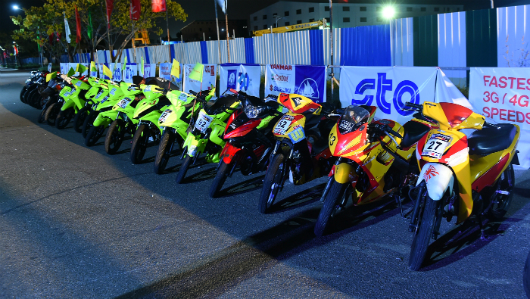
Adeeb’s comments came at the conclusion of the ‘Motor Racing President’s Challenge 2015’ last night (January 24), with the minister acknowledging that the island’s master plan for artificial island made no provision for such a facility.

“Creating a master plan takes years and it is not essential for Hulhumalé to always have a racing track,” Haveeru reported Adeeb as saying. “We are, however, trying to build a track that would last at least six years and one that can host international events.”

The two day event, organised by the Maldives Motor Racing Association (MMRA), concluded last night with awards handed out by President Abdulla Yameen for the winners.

Speaking at the opening ceremony of the competition this weekend, Adeeb said it was necessary to develop racing as a sport in the Maldives as it deters the youth population from crimes and drug abuse.

“These kind of sports prevent the youth from straying into criminal activities and drugs. Racing especially can only be done with good discipline, this is not a sport you can participate in unless you are sober,” said Adeeb.

The competition – which saw women participating in a racing event for the first time – was split into various categories as superbike racing, car racing, and various tiers of motorbike racing.

While President Yameen handed out the winning awards to all first prize winners, Adeeb handed out awards for the runners-up, and recently appointed Minister of Defense Colonel (retired) Moosa Ali Jaleel gave awards for those finishing third.

First Lady Fathimath Ibrahim was also awarded a shield of recognition by MMRA for the work she does towards developing the sport.

Adeeb said that despite motor racing being a widespread sport in the Maldives, it faces a considerable amount of restriction such as the lack of racing track and difficulty acquiring racing equipment. However, he noted that local racers had fared well despite these difficulties.

The second phase of the Hulhumalé development has begun, with Belgian company Dredging International reclaiming 240 hectares, doubling the size of what the current government government has designated a youth city.

At the official reclamation of the second development phase last week, President Yameen called on young people from around the country to relocate to the Malé suburb.

He has previously pledged to establish a ‘technopolis park’, entertainment, and sports facilities, and facilities for tourism and fisheries industries, while Hulhumalé Development Corporation officials have also said phase two of the project will feature a monorail to Ibrahim Nasir International Airport.

Source: Haveeru, Avas, Vaguthu


Related to this story

Motor racing event first to offer prize money

Motor racing comes to the Maldives: Piston Motor Racing Challenge 2013

President Yameen calls on youth to relocate to Hulhumalé

Likes(4)Dislikes(0)

Opposition suggests inconsistent policies, while Islamic ministry lecture slams tourism promotion show

Maldivian Democratic Party (MDP) Chairperson Ali Waheed has suggested that the government’s contradictory religious policies are damaging the nation.

“While the Maldives is celebrating its adherence to Islam, the religious structure of the government is as such – from the right, shows being organised,” said Waheed. “From the left, religious lectures are being convened.”

Waheed’s comments – referring to the New Year’s ‘Tourist Arrival Countdown’ music shows and the Islamic ministry’s ‘The Message’ lecture series – came at the conclusion of a party rally in the capital Malé yesterday.

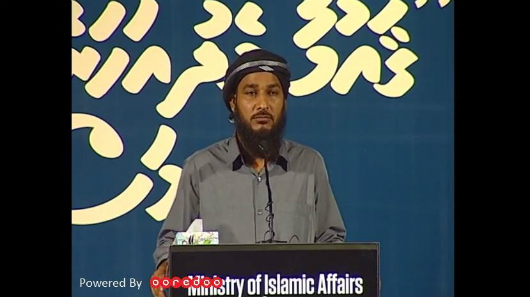
Later in the day, in the first of ‘The Message’ lectures, Sheikh Adam Shameem condemned the tourism promotion concerts, which were organised and promoted by tourism minister Ahmed Adeeb.

Drugs, sex, and rock and roll will destroy the nation, argued Shameem, suggesting that the government’s role was to lead the youth away from shameful deeds, but that such sinful activities were irresistible when handed down to them “on a platter”.

“What will happen when [they organize] sinful activities and invite the youth? Then, youth cannot be stopped,” he told approximately 1,500 attendees at the Alimas Carnival area in Malé.

The original New Year’s concert was set to feature dancehall singer Sean Paul until an online death threat prompted the artist to cancel the day before the show.

While the government later denounced the threat as a “hoax” designed to create an atmosphere of fear, religious groups united in condemnation of the event.

Islamic NGO Jamiyyathul Salaf called on the government cancel the concert, while Minister of Islamic Affairs Sheikh Mohamed Shaheem Ali Saeed described the invitation of foreign performers for such shows as “unnacceptable”.

Minister for tourism Adeeb later explained that the Islamic minister’s words were his own personal opinion, and that the concert had been discussed at cabinet level.

The Islamic minister’s own Adhaalath Party subsequently expressed concern at what it described as “horrifying acts that defy Islamic teachings and social convention” taking place in the country.

After Sean Paul’s cancellation, Indian duo Salim and Sulaiman Merchant appeared on December 31, before a second concert was arranged featuring US R&B singer Akon on January 8. Akon himself had previously cancelled a 2010 show in the Maldives after opposition from religious groups.

Sheikh Shameem yesterday described Akon – a practising Muslim – as an “infidel negro”, expressing disappointment than more young persons had attended the music shows rather than attending Ishaa prayers.

Sheikh Shameem first came to public attention following his ‘mega-lecture’ ‘Andalus‘, during the 2013 presidential elections.

Live broadcasts of this lecture were interrupted by authorities for violating state broadcaster’s guideline, while the MDP condemned the lecture accusing Shameem of inciting hatred in order to sway the electorate. More recently, he was invited to speak to police during the celebration of Martyr’s Day last year.

Yesterday’s sermon was titled ‘Our Responsibilities towards the Nation’. The lecture series will also feature Dutch convert Arnoud Van Doorn on February 20.

President Abdulla Yameen – who last night attended to opening of the Maldives’ first fully solar powered resort, Club Med Finolhu Villa – marked the celebration of the country’s conversion to Islam by telling citizens to be wary of outside influences that could weaken the Islamic faith, reported Sun Online.

At the opening of the new resort, Yameen said that it was a combination of tourism and Islam that had taught Maldivians to co-exist with different cultures.

During yesterday’s MDP rally, both Ali Waheed and former President Mohamed Nasheed vowed to change Yameen’s government, with the latter suggesting the country’s troubles’ were partly caused by divisions between Yameen and former President and Progressive Party of Maldives leader Maumoon Abdul Gayoom.

When calling for all-party talks last week, Nasheed made special mention of the former thirty-year ruler.

“I urge President Yameen to hold discussions with President Maumoon, Honourable Gasim, even us and leaders of Adhaalath Party. Also to move away from actions that will push Maldives into chaos,” said Nasheed on Thursday (January 22).

Yesterday’s ‘Maldivians stand to defend the Constitution’ rally saw over more than 1000 people march around the southern half of the capital to protest a series of decisions by the government and the Supreme Court which have been questioned on constitutional grounds.

*The original version of this article incorrectly translated Sheikh Shameem as describing Akon as an “infidel nigger”.

Minivan News would like to apologise for this error and will endeavour to make sure this type of error is not repeated.


Related to this story

Nasheed urges President Yameen to convene all-party talks

Adhaalath Party concerned that concerts are defying Islamic teachings

Jamiyyathul Salaf calls on government to cancel “sinful” Sean Paul concert

Likes(1)Dislikes(0)

Bank of Maldives introduces Islamic banking services

With additional reporting by Mohamed Said Fathih and Ismail Humaam Hamid

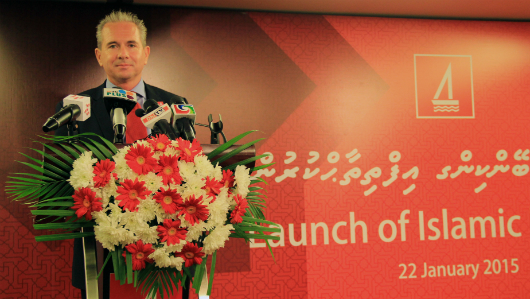
The Bank of Maldives (BML) has introduced Islamic Banking Services today (January 22).

The service inaugurated by Minister of Islamic Affairs Dr Mohamed Shaheem Ali Saeed will be operated under the name ‘BML Islamic’ which will offer its personal and business customers with deposit and financing products.

“This is a big and proud day for our Bank,” said BML’s CEO and Managing Director Andrew Healy. “Today we start to provide alternatives to those who wish to strictly follow Islamic principles in their banking.”

“We look forward to rolling out a broad range of products and services – for both personal and business customers – over the next two years”.

Islamic banking and capital market services – compliant with Islamic Shariah – were introduced in the Maldives in 2011, with the opening of the Maldives Islamic Bank.

The Capital Market Development Authority began reporting on the Islamic Capital Market for the first time last year, while Maldives Monetary Authority Governor Dr Azeema Adam said that the industry’s potential was still being realised.

“One of the reasons for the phenomenal growth of Islamic finance is the perception that it is more ethical, compared to conventional finance, which is traditionally viewed as predatory when needed,” Azeema told the Maldives’ first Islamic banking conference last September.

BML CEO Andrew Healy

The new BML service will be provided by existing branches of the bank but Islamic bank accounts and finances will be “fully segregated from the rest of the Bank’s Services”, explained a BML press release.

“ATMs and card machines and will be fully Shari’ah-compliant, with Islamic accounts,” the statement continued, while Wadi’ah accounts can now be opened at any BML branch.

Prominent Islamic scholars have expressed their support for the move, with Dr Aishath Muneeza, Sheikh Fayyaz Ali Manik, and former Islamic minister Dr Abdul Majeed Abdul Bari all contributing to BML’s promotional campaign.

“I believe this is a service which has been much needed for the people of Maldives. This allow lot of people across the country to go about their financial transactions as per Islamic Sharia,” said Sheikh Fayyaz.

Islamic minister Shaheem today described the move as “great news for many Maldivians”, saying that “BML’s commencement of Islamic financial services, to coincide with the day Maldives embraced Islam, is a memorable occasion”.

Other recent changes to services provided by the national bank included 22 state-of-the-art ATMs across Malé in November as well as the bank’s first US dollar ATM at its main branch the following month.


Related to this story

Potential of Islamic finance yet to be fully explored in Maldives, suggests MMA governor

Maldives “ideally placed” to be international financial centre, says CMDA chief

Likes(3)Dislikes(0)

Government had no choice but to increase teachers’ salary: MDP

The opposition Maldivian Democratic Party (MDP) has said today that the government decided to increase teachers’ salaries only because it was left with no other choice.

Speaking to the press today, the chair of the MDP’s education and training committee, former education minister Dr Musthafa Luthufee, said that the government had no intention of increasing teachers’ salary until the end of 2014.

“It was not included in the budget, and teachers demonstrated and threatened to strike. The salary increment was announced after even the government started providing wages for athletes,” said Luthufee.

The Ministry of Education announced the salary increases earlier this month, with some teachers’ pay jumping by up to 35 percent.

The salary increments came after repeated protests last year, with 90 percent of teachers protesting in September– wearing black clothing to raise awareness of poor pay, inadequate protection of teachers, and the failure to grant the Teachers Association of Maldives official recognition.

The MDP education committee also alleged today that since the government has decided to significantly increase the salaries of those teachers with a diploma, a degree or a Master’s degree, a lot of teachers who do not fall into these criteria are at a loss.

“1200 teachers have applied to study for diplomas at Mandhu college,” said Luthufee. “This will have negative social impacts on teachers who have certificate level qualifications, especially in small islands.”

Speaking to the press earlier this month (January 10), education minister Dr Aishath Shiham said President Abdulla Yameen had fulfilled his pledge to honour teachers, and that the government’s aim was to employ qualified teachers and provide them with adequate pay.

However, Vice Chair of the MDP education committee Shifa Mohamed – also a former education minister – argued that the structure of the increments was not properly planned or researched.

“For example, most Dhivehi teachers have a language degree, not a teaching degree. How will these teachers get increments?” asked Shifa.

The MDP also severely criticised the government for failing to consult with the relevant stakeholders regarding the new grade one to three syllabus.

“A new syllabus does not only mean new text books,” said Luthufuee. “The syllabus is very important as it holds the power to eventually shape these individuals in 18 years’ time.”

The education committee said that a new syllabus should only be implemented after holding consultations with students, teachers, parents, education experts, religious experts, and other relevant stakeholders.

The spokesperson for the ministry of education was not responding to calls at the time of publication.

The ruling Progressive Party of Maldives is trying to make it seem as though the syllabus is the creation of the current government alone, while in fact it is the product of numerous individuals over many years, argued the MDP committee today.


Related to this story

President Yameen announces rise in teachers’ salaries

Teachers across Maldives take part in ‘black protest’

Education Ministry hikes teachers’ pay by 35 and 15 percent

Teachers’ Black Sunday protest prompts government talks, strike decision pending

Likes(2)Dislikes(0)

Some police officers believe women to blame for domestic violence, says HRCM

Some police officers believe violence against women is caused by women failing to fulfill their duty as submissive wives, the Human Rights Commission of the Maldives (HRCM) has said.

In a report to the UN Committee on Convention on Elimination of all Forms of Discrimination Against Women (CEDAW), the HRCM said that meetings held with police during monitoring visits in the atolls revealed some police officers’ “initial belief is that the role of women is to raise children, take care of her family and be submissive to the husband”.

“Also, they have the notion that violence against women is mostly the result of women not fulfilling their duty as submissive wives.”

Reporting of violence against women is “proportionally low”, the HRCM said, noting it had received only 16 such cases in the period between 2008 and 2013. The Family Protection Authority had meanwhile received 19 cases in 2013 and 154 cases in 2014.

“The lack of confidence in the system, fear of intimidation, inadequate information on protection measures, stigmatization by the community along with lack of opportunities for economic empowerment are some of the factors that hold the victim from reporting to authorities,” the HRCM said.

Women’s empowerment is showing a negative trend, the commission continued, noting that conservative beliefs are fuelling an increase in the attitude that women’s role in society is to be submissive wives and to raise children.

Further, the report said there are an estimated 1,139 female sex workers in the country, while studies have shown children as young as 12 are involved in commercial sex, and that eight percent of female sex workers from 12 islands were under the age of 18.

The report also expressed concern over health risks to women, under-representation of women at policy and decision-making levels, high rates of unemployment among women, and high levels of sexual harassment at work.

Health risks

Basic health services including access to gynecologists, gynecology services, sexual and reproductive health services are not fully and easily accessible to people living in the atolls, the report said.

It also noted a high number of unsafe abortions in the country, indicating prevalence of sexual relations among teens and unmarried adults.

However, age appropriate sex education is not provided at schools and parents are against the idea of sex education. Meanwhile, access to contraceptives in the atolls is largely limited to married couples.

The commission said the government must take proactive measures against female circumcision, noting several NGOs have raised concern over religious scholars endorsing the practice as obligatory in Islam.

The report added, however, that the Ministry of Law and Gender has informed the HRCM there was not enough information to suggest female genital mutilation is an emerging issue that needs to be addressed.

The HRCM also expressed concern over a rise in marriages out of court, stating children born to such marriages would face legal issues and difficulties in accessing fundamental rights and freedoms. Women in such marriages “are bound to face social and legal consequences,” the commission said.

High unemployment

Women are far more disadvantaged than men in the labour market, the report continued, with unemployment levels among women at least a third higher than among men.

Women’s labor participation had declined from 42.1 percent in 2006 to 38.2 percent in 2010, the report said. Women earned less than men, with a mean monthly income of MVR4,674 (US$303) for women as compared to MVR7,036 (US$456) for men.

Almost half of women in the working population are economically inactive and women account for 68 percent of the economically inactive population. Preoccupation with household chores and raising children appears to be the predominant reason for female unemployment, the report said.

According to the HRCM, “sexual harassment at the workplace is a daunting reality and an accepted norm for most employed women,” but women do not take action for fear of disbelief and stigmatisation, embarrassment and shame.

The report also noted women’s underrepresentation at the policy and decision-making levels. Only three out of 17 cabinet ministers are women, and only five out of the 85 MPs are women.

There are no gender differences in primary school enrolment, but the HRCM noted a growing concern that parents are turning to home based education for girls with the increase in religious conservatism.

There are more female students at local higher education institutes, where they dominate in programmes associated with education, health sciences, and management. Measures must be taken to increase the enrolment of females in conventionally male dominated fields of study, the HRCM suggested.


Related to this story

Maldivian youth need access to sexual reproductive health education, services: Department of National Planning

Figh Academy VP endorses female genital mutilation

Parliament passes sexual harassment and sexual offences bills

Abortion in the Maldives: the untold story

Likes(2)Dislikes(0)