Maldives Green Fund to merge “scattered” climate finance

Transparency Maldives has called for stronger anti-corruption climate finance safeguards, following the government’s declaration it would establish a ‘green fund’ that would merge all climate change, conservation, and sustainable development project trust-funds.

President Mohamed Waheed Hassan Manik’s cabinet proposed a Maldives “Green Fund” be established, which would merge all the currently established trust funds in accordance with the government’s Biosphere Reserve sustainable development policy.

The purpose for merging the funds would be to enable cost reductions and strengthen operational efficiency for foreign investments for waste management, water management and renewable energy projects.

Shortly following this April 30 announcement, Transparency Maldives called for “stronger anti-corruption safeguards in climate finance” as part of the civil society recommendations presented to the Minister of Environment and Energy Dr Mariyam Shakeela during the “NGO Forum on Environment and Sustainable Development 2013” held May 5.

During the NGO forum, Transparency Maldives Chairperson Mohamed Rasheed Bari called on the government to strengthen governance mechanisms by including stronger standards of transparency, accountability and integrity.

Currently, climate funds are “scattered” because there is no consolidated national governance mechanism with a proper internationally governed governance structure in the Maldives, Transparency Maldives Climate Governance Senior Project Manager Azim Zahir told Minivan News today (May 19).

“In principle establishing a ‘green fund’ to consolidate climate change mitigation and adaptation money is ‘ok’ as long as it adheres to international best practices and good governance standards,” said Zahir.

The Environment Ministry had not responded to inquiries at time of press.

No overarching climate policy

“The government lacks an overarching climate change policy,” a civil society source familiar with the challenges facing climate governance in the Maldives, told Minivan News. “There are no specific goals, which has resulted in project-based, ad hoc and climate change mitigation and adaptation initiatives.”

The source explained that conflicting ministerial mandates and unclear rules have created redundancies and left civil servants “confused”.

“The root cause of the problem is administrative – the lack of clear mandates between who is doing what,” the source said. “There are also ministerial rivalries regarding certain projects because clear mandates are lacking.”

“I find it strange the Ministry of Environment does not have a climate change department, considering they are the people in charge of the entire amount of funds,” the source added.

“One person is in charge of massive [amounts] of funds. There is a lack of human resources within the Environment Ministry. Only a couple of people have dominated [climate change projects] since the 1990’s,” claimed the source.

Some people within the ministry working on foreign aid projects write themselves in as project staff as well to in order supplement their “really low” monthly government salaries of MVR 6000 to MVR 8000 (US$ 389 to US$ 519), alleged the source.

“The same people work on each project, they don’t have new people,” the source claimed.

“These senior civil servants say the Environment Ministry lacks capacity and young people with knowledge and technical skills, however they are not providing training and opportunities [to the newer civil servants].

“They have a complete monopoly on knowledge” which is not being properly diffused, the source added.

Politics and bureaucracy

After the Foreign Ministry has signed a bilateral agreement the funds are transferred to the Finance Ministry, which then allocates the money to the applicable ministry or government agency, according to the source.

Most climate projects were handled under the Ministry of Housing and Environment during former President Mohamed Nasheed’s administration, the source explained. Additionally, the President’s Office also undertook many climate change initiatives and established the Presidential Advisory Council on Climate Change in 2009.

“The council still exists on paper and while some people within the President’s Office said the council members have been changed [following the controversial transfer of power February 7, 2012], no one has been informed if they have been fired. They have no idea what’s going on,” alleged the source.

Additionally, the National Planning Council (NPC) – chaired by the president and consisting of various ministers and civil society representatives – was formed in February 2009 to coordinate equitable sustainable development nationwide.

Currently the NPC website states: “Due to the change of the Government , the work of the National Planning Council is currently under reform. Therefore all proposals and issues submitted to Department of National Planning/ National Planning Council is on hold for the time being.”

Under President Waheed’s government the Ministry of Housing and Environment was split to form two new entities, the Ministry of Housing and Infrastructure as well as Energy and Environment.

Due to the these changes and ongoing government instability “There has been a significant change in the process of how the project [cycle] works,” explained the source.

“For various political reasons – and the delicate nature of politics since February 2012 – climate change funds have not been consolidated,” the source continued. “It takes a lot of work to channel climate funds. Even under Nasheed’s previous administration there were the same problems.”

An additional reason Waheed’s administration “differs” from Nasheed’s is the current government “has not been ‘very keen’ on cooperating with civil society,” alleged the source.

“Previously they behaved really unprofessionally toward certain NGOs, however since the latter half of 2012, the government has started to try and engage NGOs and civil society – maybe to increase the administration’s legitimacy,” the source continued.

“A positive is the Environment Ministry under Waheed’s administration has been very active. They actually try to do things,” the source noted.

“However, the government consults civil society stakeholders after they’ve already decided everything. They invite NGOs to listen to their opinions, but do not seek their input during the project planning phase,” the source added.

“Ultimately, most [climate finance] problems apply to both administrations, under Nasheed and Waheed,” the source added.

Existing trust funds

“There are three umbrellas – the Maldives Environmental Management Project (MEMP), the Climate Change Trust Fund (CCTF), the Sustainable Renewable Energy Project (SREP) – under each there are different components,” Environmental Protection Agency (EPA) Environment and Social Safeguards Coordinator Ibrahim Mohamed told Minivan News earlier this month.

“The idea is that these projects be developed in such a way that the entire nation becomes a biosphere reserve, that’s the overall goal,” he added.

The MEMP umbrella is a US$ 13.88 million World Bank loan, approved in 2008 and set to close in 2014.

“The MEMP is a soft loan in the sense the interest is very less, and this project also has several components,” said Mohamed.

“Only one component is solid waste management, focused in Ari Atoll. Other areas include environmental monitoring, training and capacity building, and a bachelor of environmental science was established at the Maldives National University (MNU),” he continued.

“There is also a renewable energy component to install solar roofing of public buildings on Thinadhoo [Island in Huvadhoo Atoll], so at least 25 percent of their energy will come from solar. That component also has awareness and training on energy efficiency and conservation of energy.

The US$ 9.5 million CCTF picks up where MEMP left off, according to Mohamed.

“Under the CCTF umbrella we have three components: clean energy for climate mitigation, wetland conservation and coral reef monitoring, as well as solid waste management,” Mohamed explained.

“The World Bank is managing the donor money from the CCTF. They don’t finance directly to the government, because they want it to be managed by a reliable, transparent, international fiduciary system.

“The CCTF idea is that the project(s) we develop becomes an exemplary example for other small island states,” he added.

The CCTF was established in 2010 after the signing of an MOU between the Maldives government, the World Bank Group and the European Union with the aim of targeting solid waste management, capacity building for environmental management, and technical assistance for monitoring and managing key natural assets.

The US$138 million SREP was established in 2012 to generate 16 megawatts of renewable energy on 50 islands in the next five years.

The SREP scheme was directly related to the Scaling-up Renewable Energy Program (SREP) originally planned to be submitted to the World Bank in February 2012, but was not due to the political upheaval that resulted from Nasheed’s controversial resignation February 7, 2012.

Additionally, the Maldives has received Global Environment Facility (GEF) grants totaling US$14,443,426 – that leveraged US$35,176,820 in co-financing resources – for 10 national projects, four regional projects, and eight small grants. The project areas focus on climate change, biodiversity, international waters, land degradation, persistent organic pollutants, and the ozone layer.

The GEF is an independently operating financial organisation that supports national sustainable development initiatives and addresses global environmental issues by working in partnership with the United Nations, United Nations Development Programme (UNDP), and Asian Development Bank (ADB) as well as civil society organisations and the private sector.

The GEF “unites” 183 countries with these actors and claims to be the largest public funder of projects to improve the global environment.

“The EU has suggested that the Maldives’ government look at one atoll with the potential for populations to move and to live and do more projects there – such as waste management, clean energy, protection, preservation, adaptation – all things in one big area, so that these things will be more visible,” said Mohamed.

“If all the components go into one atoll they will become more climate resilient,” he added.

Likes(3)Dislikes(0)

Finance Minister rejects Family Court’s claim that government is holding child support money

Minister of Finance and Treasury Abdulla Jihad has rejected a statement from the Family Court alleging the ministry is delaying the release of child support money needed by single parents.

The money is paid to the court, which acts as an intermediary between separated parents. Jihad claimed the ministry has now begun to release the payments.

However, Family Court Registrar Ahmed Shafeeu told local media the court has been receiving complaints over delays in receiving the child support payments.

According to Shafeeu, once a parent submits child support money to the court the money is deposited in the state income account. The Finance Ministry is then supposed to return the money to the court, which issues it to the intended recipient.

Shafeeu states that this is under the order of the Finance Ministry, as defined in the Public Finance Act.

“However, I do not believe at all that there is any reason why this money has to be deposited in the state income account,” Shafeeu stated.

“Lots of people who deposit the money, and who are waiting to receive the money, continue to submit complaints about the delay repeatedly,” he said.

He further stated that no solution has been found to date, although discussions on the matter were held with the Finance Ministry three weeks ago.

Currently in cases of divorce among parents, if the mother applies for child support the father is required to provide a monthly contribution of MVR 1000 (US$65) per child.

Likes(1)Dislikes(0)

Police confirm fourth stabbing incident in Male’ within 48 hours

The Maldives Police Service has confirmed that a man has been stabbed by a sharp object in Male’ this evening, the fourth such attack to have occurred during the last 48 hours.

However, authorities have said it remains too early to tell if the incidents may be linked.

A police spokesperson confirmed to Minivan News today that a male had been taken to ADK Hospital on Sosun Magu for treatment following the stabbing attack, but did not have further details on the victim or his condition at time of press.

According to local media, the victim was alleged to have been attacked with a “sharp object” by a group of attackers at about 6:20pm this evening.

Sun Online has reported that the victim fled into an electronics store in Male’, where he tried to shelter from his attackers. The attack was reported to have occurred in the store.

Police have said investigations are continuing, though no suspects had so far been identified in regards to today’s attack.

The attack marks the fourth stabbing incident to occur in Male’ within 48 hours, resulting a total of five people injured as police continue to search for suspects.

Two young men, 18 and 21 years-old, were stabbed near Azmi-Naeem Medical & Diagnostic Centre (AMDC) in Male’s Maafanu neighborhood at approximately 3:30pm yesterday (May 18) afternoon, a police media official told Minivan News at the time.

Meanwhile, two young men were also injured in separate stabbing incidents in Male’ on Friday (May 17).

The first stabbing took place near Star Cinema in Male’s Maafanu neighbourhood and was reported to police around 6:30pm. The 20 year-old victim suffered stab wounds to his chest and back, according to local media.

The second attack was reported to police at 7:00pm and occurred near Petrel cafe in Male’s Machangolhi neighbourhood. The victim, also a 20 year-old man, was stabbed in the back.

Since the start of 2013, 506 incidents of assault have been reported to police, with 51 cases having occurred so far this May.

Likes(0)Dislikes(0)

MDP launches agriculture policy: govt to buy, ship local produce

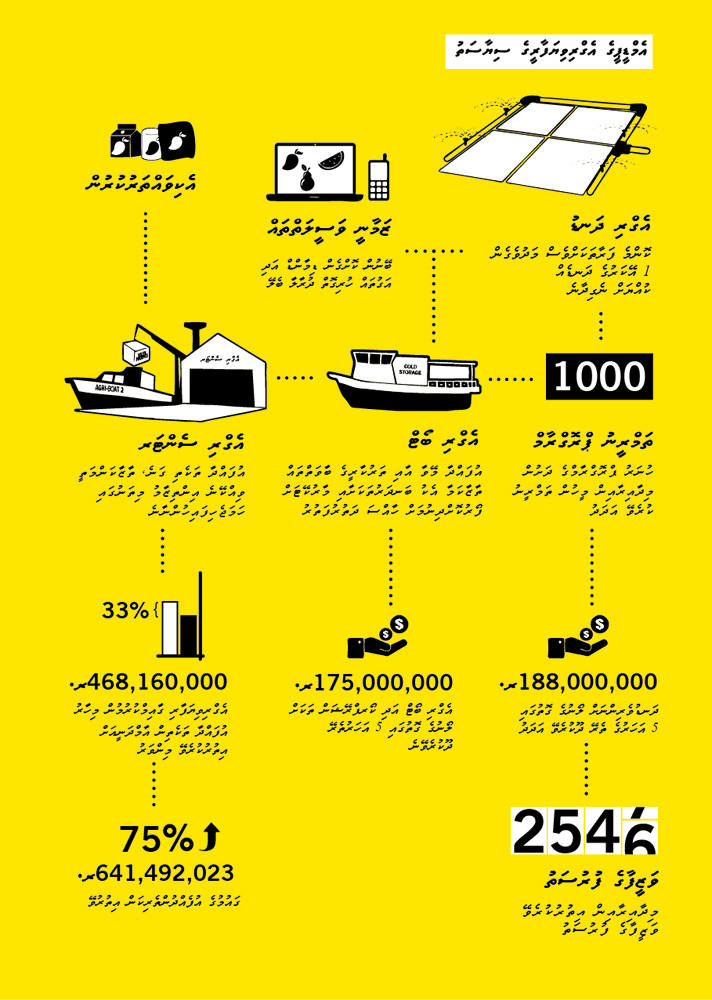
The Maldivian Democratic Party (MDP) launched its agriculture policy on Friday (May 18) in simultaneous events across 21 islands and two cities, pledging to establish a government-owned corporation to purchase local produce.

Speaking at a ceremony on the island of Kulhudhufushi in Haa Dhaal Atoll, former President Mohamed Nasheed said the Maldives could grow 44 percent of the foodstuff currently imported into the country, significantly decreasing its dependence on imports.

“God willing, when this policy is implemented, imported fruits and vegetables will decrease by 44 percent,” he said.

Of the MVR 245 million (US$15.8 million) worth of agricultural produce imported to the Maldives annually, Nasheed said, the country could produce foodstuff worth MVR 108 million (US$7 million).

The policy aims to introduce “agri-boats” to transport produce and eliminate barriers of entry and access to markets, Nasheed explained.

The agri-boats would ensure that farmers are paid immediately for their produce, which would otherwise remain unsold and left to spoil.

Two “agri-centres” would be set up across the country as market hubs for local produce, including Kulhudhufushi in the north.

A communications system was proposed to connect farmers to the agri-centers while harbour markets with cold storage facilities would be set up on 24 islands.

The government would also invest in large agriculture fields in farming islands, he continued, which would be provided facilities, expert guidance, hydroponic systems, water and electricity on an economically feasible scale.

A government-owned corporation would be set up to purchase local produce and sell the processed and “value-added” products to resorts and other businesses, Nasheed pledged.

Once the corporation becomes profitable, he added, the government would divest its majority stake and sell shares to the public.

In addition, the corporation would produce juices and syrups from unsold fruits that could be preserved for longer periods, he said.

Successful implementation of the policy would increase the income generated by farmers by 33 percent and increase the country’s productivity, Nasheed said.

The policy includes MVR 188 million (US$12 million) to be provided as agriculture loans through a development bank.

The mini-manifesto also proposed conducting training programmes for 1,000 farmers and creating 2,456 job opportunities.

According to the fourth mini-manifesto, the MDP government trained over 5,000 farmers as of 2011 and 11 farmers earned diplomas in agriculture.

A cooperative society was established to increase the participation of women in agriculture and special training programmes were conducted for women.

Through the MDP government’s economic reforms voted through in late 2011, import duties were completely eliminated for agricultural equipment and tariffs raised on some imported goods as a protectionist measure for local industries.

Mini-manifestos

As part of Nasheed’s re-election campaign, the MDP has been unveiling its manifesto as a series of mini-manifestos or detailed policies. The agri-business mini-manifesto follows the guesthouse/mid-market tourism policy, mariculture policy and worker’s rights policy.

Each policy was launched across a number of islands with panel discussions and information sessions conducted by MDP MPs and former cabinet ministers.

The policy on “empowered workers” launched on May 4 pledged the introduction of a minimum wage of MVR 4,500 (not applicable to small and medium-sized enterprises), 28 job creation programmes, “flexi-time” working hours for women, internships for students, career guidance facilities and provision of transport to workplaces.

The MDP contested the 2008 presidential election with a similar manifesto based on five main pledges: affordable housing, free universal healthcare, lower cost of living, a nationwide public transport network of ferries and policies to combat drug trafficking and abuse.

In November 2009, a Strategic Action Plan (SAP) was formulated with technical assistance from the United Nations Development Programme (UNDP) to outline a framework for implementation of the MDP manifesto.

The UNDP said in a statement at the time that it worked closely with the government and other UN agencies to formulate “a concrete results-based action plan within the framework of the Millennium Development Goals and human rights with clear targets, mandates, and the means of implementation.

“The evolving work on costing and monitoring and evaluation will ensure that the Manifesto pledges are successfully executed to significantly improve the quality of life of all Maldivians thereby sustaining the very foundation of the democracy in the country,” the UNDP stated.

“In our quest for a more prosperous Maldives, we remain unyieldingly committed to the principles of liberal democracy. We also believe that the full potential of our people may only be realised by relinquishing to our citizens greater control over their own destinies,” then-President Nasheed wrote in the foreword of the SAP.

“It is these two basic principles that animate our desire to have a small government that places greater emphasis on the marketplace and a more decentralised system of governance,” he wrote.

Likes(0)Dislikes(0)

Maafushi parents pull students from preschool over playing of nursery rhymes, lack of gender segregation

A preschool on the island of Maafushi in Kaafu Atoll has alleged a number of parents have stopped students from attending school, claiming “differences in religious views.”

Parents have so far pulled six students from the preschool, while two more have been officially expelled on parental request. Parents of two older students attending the Maafushi School have also submitted letters informing the school management that their children will no longer be attending classes.

Maafushi Preschool’s Head Teacher Aminath Shiuna has expressed concern that the new trend is depriving children of their right to education.

“Two children, both from the same family, have been officially taken out of school. There are six more who have stopped coming. Although their parents have not informed us directly, we have heard through other mediums that they will not be sending them to school again,” Shiuna said.

“This is the only preschool on the island. We have 125 students aged between two and six years, some of whom are from other islands while some are non-Maldivians. If the students are taken out from this school, there are no other alternatives available on this island where these children can be sent,” she said.

“Therefore, we as the school management, are very concerned that decisions like this are depriving innocent children from the right to an education. We are doing all we can to hold discussions with these parents and find some sort of a solution where the children can be allowed to study again,” Shiuna stated.

A teacher from the preschool has told local media that although no official explanations had been given to the school, some of the parents had expressed disapproval after the school had held Children’s Day celebrations.

According to the teacher, a number of parents complained that the school had involved their children in Children’s Day activities in which music, in the form of nursery rhymes, had been played.

Parents have also further complained that the preschoolers were not taught in gender-segregated classes.

President of the Maafushi Women’s Development Committee (MWDC), which runs the island’s preschool, Badhurunisa Ibrahim has also expressed concern about the matter.

“They stopped sending their children to school without having discussed it with us at all. Depriving them from an education is an abuse of these children’s rights. This immensely worries us,” she said.

Badhurunisa suggested that parents try to find solutions through discourse rather than preventing children from attending classes. She said that arrangements could be made where parents so inclined can request teachers to not involve their children in activities they find inappropriate, such as the singing of nursery rhymes.

“Even in the other school, which is attended by students age 7 to 16 years, parents have recently prevented two from attending classes. The parents of one of these girls has even submitted a letter informing the school of their decision,” Ibrahim said.

An official from Maafushi School confirmed that the letter requesting dismissal had been submitted by the parent of the current school captain, a girl studying in the tenth grade.

The other student is currently in the second grade, and eight years of age.

“They are no longer being sent to school, and we are very worried that their own parents are taking away a constitutional right from them. There are no other schools in this island, so it’s not like they are just changing them from one place to another. We have heard, unofficially, that the parents intend to educate them at a private Quran class run by a Sheikh instead,” the official said.

Following the Sheikh

Multiple sources from the island of Maafushi have expressed concerns about a “Sheikh” from another atoll who has been preaching in the island for just over an year, which they allege is leading to events such as the increase in children being deprived of standard education.

“Keeping children away from school and blaming it on religious differences is certainly worrying. We are seeing that there is a separate faction that is being formed within the population of Maafushi, a faction that is growing at alarming speed. This factor, or group, adheres to a much more conservative form of Islam that contradicts with our traditional ways. More women are donning the niqab now, and more men are growing their beards longer,” said Ali Shaheen from the Kaafu Atoll Council.

MDWC President Badurunisa Ibrahim alleged the Sheikh was creating a rift among the island’s citizens, alleging he was converting more and more people to join his “more extreme version of religion” and abide by rules he defined.

“He calls himself Sheikh Ibrahim Rasheed, and originally comes from the island of Thulhaadhoo in Baa Atoll. He stayed in Thulusdhoo before but was sent off for creating problems similar to what we are seeing here on this island now,” Badurunisa explained.

“He has been preaching to those who listen to him that playing nursery rhymes in preschool is the same as playing music, which he claims is haram. He has been advising parents to not let girls and boys mix together in school, saying it is anti-islamic. This is leading to parents taking their kids out of school, which is so very worrying,” Badurunisa said.

“He initially came to teach Quran at the Children’s Centre here, and then when he got fired, he started teaching private Quran and Tawheed classes,” she said.

“It seems ridiculous that he convinces parents to take children out of school as they are not gender segregated, and then himself proceeds to hold mixed classes for all ages,” she alleged.

Another source from the island, on condition of anonymity, said the Sheikh’s preachings were leading to a lot of dissent among the previously unified people of the island.

He said that Sheikh Rasheed “acts as though he owns the island’s mosque”, and that he has been verbally harassing mosque-goers with taunts like ‘laadheenee’ (irreligious) and ‘kafir’.

He said that a group of islanders had approached the Islamic Ministry asking for action against the Sheikh.

A Maafushi school official said that it was known that both the students who were being kept away from school were now attending the Quran and Tawhid classes run by Sheikh Rasheed.

Government response

Abdulla Ibrahim from the Minister of Education’s Bureau said the ministry is “highly concerned as this will negatively effect the education of these children.”

He however said that the ministry has not yet decided on a way to address the specific incidents.

“Preschools are run by women’s development committees or councils. However, we will soon be discussing how to address this matter,” he said.

Minivan News was unable to contact Sheikh Ibrahim Rasheed at the time of press.

Minister of Islamic Affairs, Sheikh Shaheem Ali Saeed, was also not available for comment.

Likes(0)Dislikes(0)

Court extends detention of Godzine Sargsyan and Maldivian arrested in connection with Artur brothers case

The Criminal Court has extended the detention period of French national Godzine Sargsyan and a Maldivian man identified as Ahmed Nishan.

The Criminal Court today told local media that police have charged the pair with assault and battery, cases related to fraud, and providing invalid documents to government institutions.

Police have previously said there are many accusations against the two, but said details cannot be given as the case is still under investigation.

In April, police issued a statement asking for public assistance in locating Godzine Sargsyan. Godzine has been identified as one of the Artur brothers, who have come under scrutiny from local authorities after being linked in local media with alleged drug trafficking, money laundering, raids on media outlets and other serious crimes in Kenya.

Police said Godzine was a French national who came to the Maldives under the passport number 10CZ05238.

The pair turned themselves into police last week and were arrested.

Police are still looking for a Maldivian identified as Ahmed Visham of Henveiru Everchance House, in connection with the same case.

Local newspapers reported that the pair were living at Marble Guest House before they surrendered themselves to police. The Maldives Police Service later searched the guest house after arresting the two men.

Photos of the Arturs in the company of the two Maldivian ministers emerged on social media, apparently taken during the Piston Motor Racing Challenge held on Hulhumale’ between January 25 and 26.

A letter from the Tourism Ministry to immigration authorities requesting a residency visa for Margaryan and Sargayan Artur, dated January 27 and signed by Tourism Minister Ahmed Adheeb, was subsequently leaked on social media.

A company named ‘Artur Brothers World Connections’ was registered in the Maldives in October 2012, with the Artur brothers holding an 80 percent share in a 61-19 percent split.

French nationals identified as Godzine Sargsyan and Edga Sargsyan had a 10 and 7 percent share, while a Maldivian national Ismail Waseem of H. Ever Chance was listed as holding the remaining 3 percent.

Waseem’s share was subsequently transferred to Abdulla Shaffath of H. Ever Peace on November 25.

Meanwhile, on April 8, reports in local media suggested that Zaidul Khaleel, General Manager of the Club Faru resort, operated by the state-owned Maldives Tourism Development Corporation (MTDC), had been dismissed after he was found to have paid the brothers’ US$6000 bill.

Immigration Controller Mohamed Ali previously told local media that while Sargasyan Artur had left the Maldives on March 31, given issues with the country’s border control system “there are questions surrounding the second brothers’ exit from the Maldives.”

Likes(0)Dislikes(0)

Six expats arrested over alleged fight with Maldivian colleagues in Noonu Atoll

Police have arrested six expats working on Fushivelaavaru in Noonu Atoll, after they allegedly assaulted two Maldivian staff members on the island.

According to a police statement, the incident occurred last night with the six expats workers being arrested at 5:30am this morning.

The expats arrested were all Bangladeshi nationals aged between 25 to 31, police stated. Police have not revealed the names of the persons arrested or the details surrounding the incident.

However, police stated that a 19 year-old and 25 year-old Maldivian were injured in the fight.

The two Maldivians were hospitalised at Manadhoo Hospital based in Noonu Atoll.

A police team is on the island investigating the case.

According to local media, Fushivelaavaru is an uninhabited island being developed into a resort.

An online newspaper based in Noonu Atoll, ‘Manadhoo Live’, reported that according to people working on the island, the incident occurred at about 8:15pm after a Maldivian staff member accidentally ran into a Bangladeshi man while he was walking out of the mess room.

The paper reported that the Bangladeshi workers on the island confronted the Maldivians following the incident and four Bangladeshi men allegedly attacked the two Maldivians using an iron bar.

Last Wednesday (May 15), an Indian physics teacher was hospitalised after a group of angry islanders allegedly confronted him on the island of Kumundhoo in Haa Dhaalu Atoll.

The teacher was then reported to have been beaten over accusations he hit a student in the chest.

Police have arrested eight persons from the island in connection with the case.

Likes(0)Dislikes(0)

Tourism Ministry searching for ‘celebrity ambassador’ to promote the Maldives

The Ministry of Tourism has announced it is seeking the appointment of a celebrity ambassador for the Maldives, through a company based in Singapore.

Deputy Tourism Minister and head of the Maldives Marketing and Public Relations Corporation (MMPRC), Mohamed Maleeh Jamal, told local media the government was in the process of selecting the most suitable celebrity on offer.

“We are currently holding discussions, the most suitable celebrities for Maldives and the prices they offer, we are discussing such things now,” Maleeh told Sun Online.

Maleeh and Adheeb were not responding to calls at time of press to speculate on the qualities the Maldives would look for in its celebrity ambassador, or the potential cost of such an endorsement.

Former Secretary General of the Maldives Association of Tourism Industry (MATI), ‘Sim’ Mohamed Ibrahim, told Minivan News the proposal was a good idea – “it will generate sound bites, column inches and other publicity” – but suggested the government seek a “goodwill ambassador” rather than a paid celebrity.

“I don’t know how much the government has in their marketing budget, but I’ve heard there is an issue with low funds. If they have the money, then why not [go ahead]? But if they don’t, there’s other basic marketing to spend the limited resources on,” he said.

“[The ambassador] should not be financially-motivated; it should be someone who has a warmth for the country. Someone like Bill Clinton, Richard Branson, or Bill Gates,” he suggested.

Following a reported £250,000 visit in December to the One and Only resort by football star David Beckham, Tourism Minister Ahmed Adheeb told Minivan News the Maldives was prized by celebrities because of the seclusion and privacy of the country’s ‘one island, one resort’ model.

“Right now we are formulating policies to encourage more VVIPs to the Maldives. They can add a lot of value to a destination solely on the grounds that so many people follow them,” Adheeb said.

”We want to let the world know how unique a destination it is. How safe it is. How can we then give mores exclusivity to VVIPs? We offer privacy, the islands are free of paparazzi, that’s how we have made the Maldives unique. It is a celebrity destination,” he added.

The tourism budget for 2013 was increased from MVR 20 million (US$1.2 million) to MVR 80 million (US$5.1 million) at the start of the year, following criticism from the Maldives Association of Tourism Industry (MATI) that the amount was too low.

The initial sum of money allocated was the lowest in eight years, according to a statement from MATI at the time.

Tourism Minister Ahmed Adheeb told local media at the time that the ministry had initially requested a budget of MVR 200 million (US$12.9 million) to carry out tourism promotion for the year, however parliament had “erased a zero” from the figure when finalising the budget.

Adheeb noted that while tourism promotion is expensive, the revenue generated from the industry “drives the entire engine”.

Likes(1)Dislikes(0)

GIP-DRP coalition not a third way; “two men with no other way”: Nasheed

The Dhivehi Rayyithunge Party (DRP) and President Dr Mohamed Waheed’s Gaumee Ihthihad Party (GIP) were forced to form a coalition to contest the upcoming presidential election out of necessity, former President Mohamed Nasheed has said, contending that the parties lacked grassroots support and comprehensive policies to represent “a third way” for voters.

Appearing on state broadcaster Television Maldives (TVM) Thursday night, Nasheed reiterated that power-sharing coalitions were not compatible with a presidential system of government.

The Maldivian Democratic Party (MDP) presidential candidate stated that the public wanted political parties to present policies that could deliver job opportunities, public transport, better healthcare and education, a higher standard of living and “a way to overcome anxiety over paying water, electricity and phone bills.”

“I do not see a citizen who wants ‘another way.’ What is the path to deliver this way [to development]? We do not hear [political parties] talking about that,” Nasheed said.

“We are presenting one path to that [development]. We believe MDP’s policies will bring prosperity to the people. I do not see this third way you referred to as ‘a way.’ I see it as two men with no other way. That is not a political philosophy,” he said.

Coalition agreements were made by politicians who wanted “power” in terms of cabinet posts and influence in the government, said Nasheed, observing that the parties in the current ruling coalition have yet to offer any policies.

Third way

Announcing its decision to back Dr Waheed’s presidential bid last week, DRP Leader Ahmed Thasmeen Ali said that the party believed voters should have a third alternative to what he contended were the “hardline and extreme” ideologies of the Progressive Party of Maldives (PPM) and the MDP.

“If the parties supporting President Waheed, DRP and other parties contest the 2013 presidential election separately, we believe that the vote will be split, the Maldivian people will not have a real opportunity, and there will be a chance for the past to be revived,” Thasmeen said at a press event on Sunday (May 12), referring to the three-year rule of MDP and the preceding 30-year reign of PPM figurehead, former President Maumoon Abdul Gayoom.

The DRP believed that “moderate” parties should join an alliance united behind President Waheed as a third option to MDP and PPM, said the MP for Kendhoo in Baa Atoll.

Earlier this year, the government-aligned Dhivehi Qaumee Party (DQP) and religious conservative Adhaalath Party both announced their intention to join a coalition with President Waheed’s GIP.

DRP Spokesperson Ibrahim Shareef told Minivan News last week that in the absence of a strong coalition, the PPM could face MDP in a second round run-off and “those of us in the middle ground would be forced to support the MDP.”

The PPM was a party that belonged to “one family, or a supreme leader,” Shareef said.

Meanwhile, responding to Nasheed characterising the coalition parties as “empty shells,” DRP Leader Thasmeen and President’s Office Media Secretary Masood Imad told local media today that the criticism showed the former president’s “concern” with the challenge posed by the coalition.

Masood claimed that the combined strength of numbers in Dr Waheed’s coalition would outstrip both the PPM and MDP before the election scheduled for September 7.

Dr Waheed’s GIP currently has 3,930 registered members while the DRP has 21,411 members, according to the Elections Commission (EC).

The MDP has 45,666 members followed by the PPM with 22,383 members. The two largest parties are also respectively majority and minority party in parliament.

Dr Waheed’s GIP does not have a single MP of the 77 in parliament or a single councillor out of more than 1,000 elected representatives on local councils.

2008 ‘Watan Edhey’ coalition

In his TVM appearance, Nasheed shed light on the rapid disintegration of the MDP-led coalition that took office in November 2008, agreeing that the power-sharing experience was “bitter.”

In the second round run-off in October 2008, MDP candidate Nasheed was backed by third placed candidate Dr Hassan Saeed and fourth placed candidate Gasim Ibrahim from the Jumhooree Party (JP), which was allied with the Adhaalath Party (AP) at the time.

Gasim however resigned as home minister 21 days into the MDP government while Dr Saeed resigned as special advisor after the first 100 days. The Adhaalath Party remained in government in control of the Islamic Ministry, but decided to sever its coalition agreement in late 2011 following a change of leadership.

Asked why the coalition fell apart, Nasheed first noted that Dr Saeed backed the MDP “unconditionally” and without a formal agreement.

“But after winning the election, [Saeed] secured posts for Dr [Ahmed] Shaheed and Dr [Mohamed] Jameel and secured positions in some government-owned companies for their people,” Nasheed alleged.

Gasim’s Jumhooree Party also secured cabinet posts, he added, stressing that all other parties agreed to endorse the MDP manifesto and implement its policies.

“The policies include, for example, public-private partnerships (PPP), opening up fishing,” he said. “Opening up fishing was a big problem for some people. And developing the airport and our other public-private partnerships were unacceptable to some people. And striking at resorts became completely unacceptable to some people. They felt if there was a strike at a resort, riot police should be sent immediately to put a stop to it.”

On November 30, 2008, police clashed with about 200 striking employees at the ‘One and Only’ Reethi Rah resort. Police were sent to the island by Home Minister Gasim at the request of the resort management.

Nasheed said that the “regrettable incident” occurred while he was in Fuvahmulah.

TVM visit

Nasheed’s appearance on the Raajje Miadhu programme marked the first time the former president has featured on the state broadcaster since the controversial transfer of power on February 7, 2012.

On February 7, the main compound of the now-defunct Maldives National Broadcasting Corporation (MNBC) was taken over by mutinying police and soldiers almost two hours before Nasheed’s resignation.

After briefly broadcasting live feed of Gasim’s Villa TV, the MNBC brand name was changed to TVM, its title under former President Gayoom.

Nasheed’s visit to the state broadcaster on Thursday night meanwhile prompted a flurry of tweets and Facebook posts by TVM staffers.

Likes(0)Dislikes(0)