“Why doesn’t Rasheed petition FIFA to sack me?”: Dr Shaheed rubbishes Riyaz’s calls for his resignation

Deputy Leader of the Dhivehi Qaumee Party (DQP) and MP for Vilifushi constituency Riyaz Rasheed yesterday submitted a resolution to the People’s Majlis calling on former Foreign Minister Dr Ahmed Shaheed to resign from his post as UN Special Rapporteur on Human Rights to Iran.

Sun Online reported that the resolution was linked to the recently published 2010 audit report of the Foreign Office, dating from the time Dr Shaheed headed the department during the Presidency of Mohamed Nasheed.

The media outlet reported that Rasheed’s resolution called for action to be taken against Shaheed for his part in what the MP believes to have been corrupt practices.

“We call for the investigation of these accusations of corruption, and also to take action against Dr Shaheed,” the resolution is said to have read.

Shaheed responded to the corruption allegations shortly after the report’s release, calling them “politically motivated, misleading, ill-informed, and anachronistic”.

He noted that the report highlighted “systemic deficits” but said he felt they were in no way indicative of a lack of integrity of civil servants in the office.

Rasheed was today unwilling to speak with Minivan News, so it remains unclear what action he proposes the Majlis take against Shaheed who works in an independent capacity, without salary, on behalf of the United Nations.

Comments on Shaheed’s Twitter page yesterday suggested that he failed to see how Rasheed’s wishes were pertinent to the Majlis’s remit.

“Why doesn’t [Riyaz Rasheed] petition FIFA to sack me?” he asked in one post.

“If someone told him that a resolution in the parliament is not going to strip of him his FIFA referee accreditation, he might understand,” said Dr Shaheed, when speaking with Minivan News today.

Shaheed also suggested that the move by Rasheed was an angry response to the recent disclosure of details concerning money owed by the government to forensic accounting firm Grant Thornton.

The firm recently invoiced the government for over Rf107million (US$7 million) as a cancellation fee, after the current government requested the firm halt its investigation into illegal oil trading involving prominent politicians.

Special Rapporteurs are appointed after being recommended to, and ratified by the Human Rights Council (HRC) – a subsidiary body of the United Nations General Assembly.

The HRC’s handbook on its special procedures states that “individual mandate-holders are selected on the basis of their expertise, experience, independence, impartiality, integrity and objectivity.”

Rasheed’s resolution says that Shaheed owed his position to an opportunity provided to him by the Maldivian state which may allude to his nomination having come from the Foreign Ministry. This is allowed for in the HRC’s procedures.

The position, however, is by its very nature not affiliated with the government, as the HRC handbook makes clear.

“The requisite independence and impartiality are not compatible with the appointment of individuals currently holding decision-making positions within the executive or legislative branches of their Governments or in any other organization or entity which may give rise to a conflict of interest with the responsibilities inherent to the mandate,” reads the document.

Shaheed yesterday was keen to make clear via Twitter that he served as special rapporteur in an individual capacity: “I am NOT in a post allotted to Maldives!” he tweeted.

Riyaz, who is the DQP’s sole parliamentary representative in the national unity government, also claimed that he felt Shaheed’s continuance in the position would damage the reputation of the Maldives.

Riyaz made headlines earlier in the year after calling for the Maldives to withdraw from the Commonwealth following the organisation’s criticism of the government’s attempt at political reconciliation.

This proposal came after Rasheed had criticised the current head of the Commonwealth, Queen Elizabeth II, labelling her “physically challenged” on national television.

Riyaz also criticised the democratic credentials of Britain owing to the Queen’s position as head of state despite the fact that she is a constitutional monarch whose powers are largely ceremonial.

Likes(0)Dislikes(0)

Police arrest 37 year-old man on suspicion of raping two teenage girls

A 37 year-old man has been arrested for allegedly raping two teenage girls after forcing them to drink alcohol.

The girls – aged 15 and 16 – were raped in the late hours of Tuesday at a rented house on Hulhumale’ island, according to the police.

Staff Sergeant Ismail Ali said the case was reported to the police around  2:30am. The man alleged to have raped the girls was arrested soon afterwards.

The identity of the suspect was not revealed by police as the investigation is ongoing.

“This case is very serious and we are currently investigating it. So no further information can be revealed about the suspect or the case at this stage,” Staff Sergeant Ali noted.

This is the second reported incident of rape this year. In January, police arrested five suspects for allegedly gang-raping a 17 year-old girl in Addu City.

Among the many forms of sexual, physical and emotion violence inflicted on several hundreds of women and girls in Maldives, rape is identified as the most heinous crime, and is being reported at alarmingly high levels.

According to the Human Rights Commission of the Maldives, 13 rape cases were reported last year alone, of which most were gang rapes and involved minors.

The state-run hospital IGMH’s Family Protection Unit meanwhile reported in 2010 that the centre received 42 cases of rape between 2005-2010. Most cases similarly involved minors.

In 2008 the Global School Based Student Health Survey (GSHS) conducted among 1516 students from secondary school also signaled an astonishing amount of sexual violence, with 17 percent of students reporting being “physically forced” to have sex.

Despite the record high incidence of rapes, the country’s penal code does not classify rape as a separate offence and therefore cannot be prosecuted under any act – a key reason for the distressingly low or non-existent figures on rape convictions.

In HRCM’s initial findings submitted to UN, the commission pointed out that other provisions of the law are used to criminalise rape and that the Prosecutor General’s Office uses sexual assault or forced sexual misconduct charges depending on the gravity of the offence.

“A man can be convicted of rape in the absence of a confession only if there are two male witnesses or four female witnesses willing to testify,” the commission added.

Following a study of reported crimes and convictions in 2010, a coalition of NGOs condemned the performance of the judiciary and the state for its treatment of criminal cases, especially those concerning rape.

They “note with great concern that there is not a single case of ‘rape’ in the statistics maintained by either the PG or the Criminal Court” in 2009.

Information provided by the Maldives Police Service (MPS) to Transparency Maldives states that in 2009 ten cases of rape were reported to police, eight of which were investigated and five sent to the Prosecutor General (PG)’s office. However, Criminal Court statistics showed zero cases under ‘rape’ were prosecuted in 2008 and 2009.

At the time, Deputy Prosecutor General Hussein Shameem said the discrepancy was “a misunderstanding of technical terms.”

“If consent is lacking, regardless of whether or not there was intercourse, the case would fall under sexual misconduct,” he said.

Likes(0)Dislikes(0)

Date to resume parliamentary sessions “yet to emerge”, claims MDP

An exact date for resuming parliamentary sessions in the Maldives has “yet to emerge” following the suspension of the Majlis Speaker, the Maldivian Democratic Party (MDP) has said, as government-aligned parties request for the chamber to be reopened to MPs.

MDP MP and spokesperson Hamid Abdul Ghafoor told Minivan News today that the decision by Speaker Abdulla Shahid to suspend parliament “indefinitely” on July 31 had been the correct course of action, adding that MPs were on the “right track” to finding a potential resolution during the final 10 days of Ramazan.

Despite the claims, government-aligned MPs have continued to criticise the conduct of the MDP over the Majlis suspension.  The Dhivehi Qaumee Party (DQP) has this week urged that parliamentary sessions continue with the assistance of security forces to remove any members attempting to disrupt hearings.

Speaker Shahid at the time of announcing the suspension of parliament said that MDP MPs had confronted him in his private chambers after party member Mohamed Rasheed ‘Kubey’ was forcibly removed at the beginning of sitting.

“Moreover, confrontations occurred between MPs in the chamber to the point of becoming dangerous,” an official statement read, adding that “an atmosphere of calm necessary to conduct sittings could not be assured” as all recent sittings had to be cancelled due to disorder.

Shahid explained that he decided to invoke the Speaker’s authority under section 213(e) of the rules of procedure to cancel sittings indefinitely as he believed a political solution had to be sought through dialogue among parliamentary group leaders.

However, local media yesterday reported that DQP Vice President and Vilufushi MP Riyaz Rasheed had sent a letter to the speaker citing the conduct and perceived role of the MDP in having parliament suspended as an “infringement” of democratic rights in the country.

As well as calling for notification of the present situation to the Commonwealth Ministerial Action Group (CMAG) and the Inter Parliamentary Union (IPU), Riyaz was quoted by local newspaper Haveeru as calling for parliament to press ahead with its work to amend and enact national legislation such as through the various parliamentary committees.

“The work of the committees is stalled due to the suspended parliament. Hence as the laws to combat the rising crime rates, unrest, violence and acts of terrorism are held up at the committees, we request [the Speaker] facilitate the resumption of Parliament sessions and Committees,” a letter attributed to Riyaz read.

“Article 105 of the Constitution obligates the security forces to assist the speaker.”

When contacted today, DQP Secretary General Abdulla Ameen forwarded Minivan News to Riyaz himself for a response to the letter, however the MP was not answering calls at the time of press.

Meanwhile, a spokesperson for the DQP’s coalition partner the Dhivehi Rayyithunge Party (DRP) said it had not been involved in any talks to resume the Majlis sessions.

DRP Parliamentary Group Leader and MP Dr Abdulla Mausoom nonetheless called on the MDP to give up on its “stubbornness” and respect democratic rights in the nation in order to facilitate parliament resuming its work.

Dr Mausoom did not elaborate on the exact commitments he believed the MDP should make regarding addressing its “stubbornness”.

Meanwhile, MDP MP Ghafoor contended that the suspension of parliament had been the result of an understanding with the speaker concerning “internal security” in the Majlis chamber.

“The Majlis is not a place where you should be forced to remove an MP from chamber, it was not feasible to continue like that,” he said, concerning the atmosphere in parliament leading to the institution’s suspension.

Ghafoor contended that the speaker had decided under existing parliamentary regulation to discontinue holding sessions in the Majlis until a solution to the current unrest could be found through proposed talks between parliamentary leaders.

“Dr Waheed is also invited to join the discussions,” he said. “As far as I know talks are on track.”

Ghafoor claimed that the party had nonetheless committed to calling off it’s “direct action” street protests – conducting on consecutive nights last month as part of aims to “topple” the present government of President Waheed. The MDP alleges the administration of President Dr Mohamed Waheed Hassan came to power on February 7 in a “coup d’etat”.

“Although we are within our right to protest, we have suspended these protest for the last ten days of Ramazan,” he said. “We have done this voluntarily to give enough time for talks to be conducted in the Majlis and this is shaping up well.”

According to Ghafoor, the decision to stop protests during the remainder of the Islamic holy month had been in order to open talks with government-aligned parties and the president within the Majlis to outline a plan to move forward with parliament.

“I believe we are on the right track [regarding recommencing parliamentary sessions],” he claimed. “There is now a ten day window for all parties represented in the Majlis to hold discussions. All the conditions are right for talks to resume.”

Sun Online reported today that discussions were taking place between representatives of the government coalition parties on whether President Waheed should join the proposed discussions between the country’s parliamentary group leaders.

The report added that the president was presently yet to decide on whether he would be participating in talks in line with requests from the opposition MDP.

President’s Office Media Secretary Masood Imad told Minivan News today that aside from the previously proposed all-party talks that were established by as part of a wider roadmap plan announced in February, Doctor Waheed was not presently involved in trying to resolve the issue of parliament’s suspension.

Likes(0)Dislikes(0)

Q&A: Former Brigadier General Ibrahim Mohamed Didi

Former Brigadier General Ibrahim Mohamed Didi joined the Maldivian military in 1979 as a private, rising to the rank of Brigadier General and Commander of the Maldives National Defence Force (MNDF) Southern Command. He resigned “prematurely” from his 32 year career on July 16, after the government filed charges against him alongside former President Mohamed Nasheed, for the detention of Chief Criminal Court Judge Abdulla Mohamed.

As a junior soldier Brigadier General Didi was instrumental in defending the Maldives from the coup attempt of 1988, which saw around 80 mercenaries from the Tamil militant group the People’s Liberation Organisation of Tamil Eelam (PLOTE) launch a frontal assault on the country’s military headquarters. He recounts the experience to Minivan News.

JJ Robinson: You were a corporal on the day of the 1988 coup attempt. Can you describe what happened that day?

Ibrahim Didi: That night was my off night, and I was at my residence. Early in the morning I woke up to the sound of the gunfire.

JJ: What was your first thought?

ID: I thought something had happened in the armoury. Within a few seconds I knew something had gone wrong – badly.

JJ: There was no indication this was going to happen? There was no intelligence?

ID: As far as I understood, no. Some time after that there was speculation that the government had information, but it was not clear to me – I was too junior then.

There was no information as to exactly when they were going to attack, but there was vague information that on the 26th of that year – independence day – something might come up. But not in November.

When [the mercenaries] came, they came in two boats as far as we understood. There was a rumour there was a third boat, and some people say the third one left with some people once they knew the mission was not successful. People are not aware who was onboard – whether they were from India, or Sri Lanka – people don’t know who they are. But the rumour was there – one boat left.

JJ: You heard this gunfire, what happened next?

ID: I called the MNDF – then it was called the National Security Service (NSS). Because I was serving in the field of communication I knew most of the phone numbers. I was able to call a number and by coincidence it was Major Zahir – who later became Chief of Defence until 2008.

JJ: He told you what was happening?

ID: He told me that HQ was under attack and instructed me not to go to HQ, but to go to the place where President Maumoon was. I was instructed to go and protect him.

JJ: Was this the palace?

ID: No a private residence.

JJ: Were there many people there?

ID: No. Three of us soldiers. Later someone else came.

JJ: Most were in the military base?

ID: Yes.

JJ: So the mercenaries were attacking the base by that stage.

ID: One boat came to the ports area, the other two [near to where the President’s jetty is now].

They approached the front of NSS headquarters from behind a building where Republican square is now. They tried to make a mouse hole in the southwest corner of the base with explosives a frontal attack. There were two guards -one was marytr Hussein Adam at the main gate of NSS Headquarters.

He had an AK-47 assault rifle with two live magazines. Unfortunately the pillar box he was in was not accessible from inside the base – he was trapped inside.

But he attacked those foes without any orders, knowing they were besiegers. And that’s the main reason why the troops in the MNDF base – then the NSS – were alerted.

Hussein was shot dead after he ran out of his 60 rounds. During this they were charging the mouse hole [at the back of the base] but luckily we had a machine gun covering it.

But the first line of ammunition was running out, and the main armoury was locked. Normally the keys in those days were with the Deputy Defence Minister, and he was at his residence. At that time the Defence Minister was the President himself.

I was at the President’s location and was ordered to go to the Deputy Minister’s house and find the armoury keys.

I came across four enemies while I was behind cover. I had an AK-47 with live rounds, but I judged not to meddle with them without knowing the strength of the entire force. I didn’t know how many [enemy soldiers] there were, what was their power or their strength.

My sixth sense alerted me to not meddle with these people, because if I did I would be giving up the location of the President. Now I firmly believe it was a perfect decision that I made.

Since I was asked to go to the deputy defence minister’s house, I left my ammunition and arms with the other soldiers. When I went there I ran across then-corporal Farhath, later Vice Chief of Defence and a Brigadier.

When we approached the house it was cordoned off by the enemy, who had barred the entry. So we approached from the other side and thought a disguise might work, so I disguised myself as a schoolboy.

Near the house, I went in to look. They didn’t bother stopping me – I went through the enemy cordon. They didn’t say anything; they just ignored me, and let me go inside. I found the [minister’s] driver killed inside.

I was looking for the Deputy Minister of Defence. He was not in the house, but there were two other soldiers, friendlies who had been captured and had their hands tied. They told me the Deputy Minister had been killed, and were asking me not to go inside the house.

JJ: He had been killed?

ID: No – somehow they had got the wrong information. They asked me not to go inside the house but I figured that wearing a school uniform, in the worst case I would be captured and have my hands tied too. So I went inside.

I found his wife, and was able to find the keys for the armoury. That was lucky. The keys were in a secret place. Somehow the Deputy minister had been injured, and he didn’t want to come back because he feared they would kill him. He left his wife behind in case the MNDF was looking for the keys.

I was an authenticated source for them so there was no problem getting the keys. I escaped from the house, but then I was looking for a way to deliver the keys, as the NSS headquarters was encircled.

What I did was jump up and down the walls and roofs of the buildings on the to the base – I knew how important the task in front of me was for the nation.

JJ: What did it feel like? You must have felt under a lot of pressure.

ID: The pressure was just to do it. I knew how critical it was. I heard ‘Do it’, ‘do it’, ‘do it’ – nothing else. It was God’s blessing.

I was able to climb over the walls to a house behind the MNDF headquarters. As I went inside that house, a mortar shell landed nearby – it was very scary.

JJ: They were using mortars?

ID: Yes, the whole house shook but nothing happened – it fell in an empty area. It was very lucky – the entire carry out was lucky and full of blessing.

I asked the people in the house to lie down on the floor – there was nothing we could do. You can’t go out or hide behind anything if you don’t know what is going to happen next.

During the entire process I had been informing [the MNDF] via land telephone where I was, so they would know from where I was approaching. From the house opposite the back of the base, I finally informed them that I would throw the keys over the wall.

There were two enemy soldiers outside, and the dead body of a MNDF soldier near the old minaret. Three enemies were on the other end near where the explosion had occurred.

It looked like I could go out and throw the key over the wall. I had to go out about six feet. I knew I could move out and throw it over the wall before they saw me – but I knew they could shoot at me afterwards.

JJ: Did you get shot at?

ID: No – I went back inside immediately once I knew the keys were inside the headquarters, and the MNDF opened up the armoury. By that time there were only 210 rounds left. That was how critical it was.

After opening the armoury they had ammunition and heavy arms, and defended the headquarters as well as they could.

At around 10:30am when they knew they couldn’t get into the headquarters, the enemy soldiers began their escape plan – to hijack a cargo vessel, and take hostages from the locals. By 10:30am that morning they must have declared to themselves that they could not achieve their mission.

JJ: How long had they been attacking?

ID: Since around 4:30am in the morning. By and large they didn’t leave, they were there until nearly midnight.

By the time the Indians came there were none of them left on the ground in the Maldives, they were out the country.

ID: When did India arrive?

After midnight. By coincidence, their flight was landing as [the mercenaries] were going out through the Gaadhoo channel in a cargo boat.

JJ: The usual version is that India saved the Maldives in 1988, but you’re saying it was over by the time they arrived?

ID: Yes. What India did was able to help us get back the hostages and capture some of the enemies. An Indian navy ship attacked the cargo vessel. They had heavy explosive charges on the vessel – it was heavily shaken.

JJ: Where was the cargo vessel by the time the Indians arrived?

ID: On the high seas somewhere between the Maldives and Sri Lanka.

JJ: Afterwards, what was the reaction? What changed in the MNDF?

ID: That’s a very interesting question. The government realised that the Maldives required a fighting defence force. Previously it was a police force. So we got assistance from the US and UK as well as India, Pakistan, Sri Lanka and Bangladesh to develop a fighting force.

The British Green Berets came to develop a special task force unit.

JJ: What was its role?

ID: It was basically a fighting company named a Special Task Force – a foundation of the defence force. Based on that it has been developing until today.

At that time we didn’t have a proper coastguard. That has changed as well.

JJ: How was your own role recognised?

ID: I was awarded a Medal for Exceptional Bravery and was immediately promoted to Sergeant, and later to a Warrant Officer. I attended a signals office course at the US Army Signal Centre, and later received a commission.

I did a Basic Officer Course and Advance Officer Course with the US Army, and a Basic Staff and Command and Staff Course with BSC Honours in War Studies in Pakistan.

I did a Security Studies Course at the Asia Pacific Centre in Hawaii, and a National Defence Course with Mphil in Defence and Strategic Studies at the National Defence College in Delhi.

JJ: Why did so few details of the coup attempt emerge? Do you think the government was nervous about Indian influence after their assistance?

ID: I don’t think the government was nervous about Indian influence. Unlike in the UK or US perhaps, people didn’t talk about such things here in our country.

I recently retired from service. Today, everyone has a lot of questions – and the media is asking questions about what happened. Twenty years ago people weren’t asking questions. Nobody bothered to ask simple questions in the media during the late 80s and early 90s. People knew something had happened, but nobody bothered to clear it up.

I believe that on the particular day, martyr Corporal Hussein Adam was the savior of the nation. He sacrificed his soul attacking those soldiers, and allowed us to protect the headquarters. If he didn’t do that, we wouldn’t have been able to protect the headquarters. They could have captured everything – at least until India saved us.

Martyr Hussein Adam should be given all the credit. His was pure initiative – that was very much God’s hand. He used his 60 rounds with no instruction – used his own initiative to save the nation. He was crying for ammunition – we could not provide it to him from inside in the base. Somebody would have had to go outside – the pillar box had no access from inside.

He was trapped in there, and he utilised all the ammunition he had. But there was no way of providing more to him because of the enemy attack. The gate was locked. He was the hero of the day.

JJ: Let’s fast forward to more recent times. Yourself along with two other officers and former President Mohamed Nasheed are being charged over the detention of Chief Judge of the Criminal Court, Abdulla Mohamed. Can you explain why you decided to resign over this?

ID: At this present time a lot of people are asking these questions – the media is all over me. I am trying not to engage with the media at this time as there is a court case against me.

JJ: What was your reason to not wear your uniform to the Civil Court hearing?

ID: Because I didn’t want my uniform to be politicised there. It was my personal choice.

JJ: Without politicising the MNDF or discussing specifics, what is your perspective on what happened on February 7? What actually happened, objectively?

ID: I have very much kept quiet on what happened on February 6-7, because there is an inquiry commission conducting a fact-finding process. So I think it is not right for me to talk to the media. Let [the commission] finish it.

JJ: Yourself and former Chief of Defence Moosa Jaleel were highly respected officers. Moosa Jaleel left after February 7 and you have now chosen to resign. What is the sentiment in the MNDF?

ID: I don’t know, because I haven’t involved myself with what is happening in the MNDF. I don’t think it is right for me to comment at the present time on the feelings of serving people. I should stay away from that.

JJ: So you weren’t ready to resign, or ready to retire – without talking about the specifics, what was your feeling about the decision?

ID: Obviously it was a premature retirement. There is a reason for premature retirement. As I said, I did not want to wear my uniform to the Civil Court.

JJ: What is your impression of the public sentiment – particularly the rhetoric – towards the security services? Should people be supporting the police and the military?

ID: This is a very difficult question to answer. I don’t want to politicise anything.

JJ: Generally speaking, it’s an unstable time for the Maldives and there are a lot of economic challenges. What needs to happen to stabilise the place and ensure security and stability?

ID: Sincere reconciliation from all sides. For the sake of the nation.

JJ: Do you think that is likely to happen.

ID: If the politicians love our nation – then yes, it has to happen.

JJ: How much responsibility do you think politicians have for the current state of the Maldives?

ID: Entirely 100 percent.

JJ: You said the 1988 coup really changed the defence force. Do you think the MNDF still needs to be the size that it is?

ID: The MNDF has been decentralised – I was the first appointed area commander in the Maldives, in the south – March 2009. It is a very good system – it is not yet 100 percent instituted, but once it is developed it will be an excellent system for the MNDF.

JJ: Apart from politics, what would you say are the greatest security threats facing the Maldives?

ID: We are a very small country. My Defence and Strategic Studies on National Security MPhil thesis focused on the national security of the Maldives.

Small countries have to have a good system as far as our economy, internal security, energy security, food security, external security – all these pillars – are concerned. We have to be careful. [Problems with] any of these pillars might erode our national security in the Maldives. These are very important pillars.

Foreign policy is one pillar of security – our policy makers have to make sure our policy for particular countries is of a particular dimension to make sure our geostrategic security is not threatened.

There are also concerns such as drugs, terrorism and money laundering.

JJ: A lot of these would seem police-related?

ID: These are concerns – security is not just a military concern. We have to take care of strategic security – I should say ‘they’, as I’m out of it now.

JJ: Indian intelligence – and press – occasionally raise concerns about rising fundamentalism in the Maldives, with claiming groups such as Lashkar-e-Taiba have tried to establish links in the Maldives. Realistically, based on your experience, how much a threat is fundamentalism to the Maldives’ security?

ID: As you understand we are a 100 percent Muslim country. I believe that if we go by the principles of Islam – the fundamentals of Islam – Islam is the religion of peace. There should be no reason [for concern] if we follow Islam. My argument is always that we should follow Islam, as it is. Then we won’t have a problem.

JJ: What about external [fundamentalist] influences?

ID: Even in that case, if we can follow these principles, everyone knows what Islam is all about, then no matter what comes in, people will understand what Islam is and there won’t be any room for extremism.

JJ: What about security concerns such as Somali piracy?

ID: I strongly believe we need to strengthen our coastguard. The MNDF is going to do that. They must be very capable of taking care of those challenges.

JJ: Lastly, what would you say is the top security threat facing the Maldives right now?

ID: I don’t want to say anything at this time. Because it might be quite critical. I’m not in a position to define the top security threat to the Maldives.

Likes(1)Dislikes(0)

High Court asked to annul President’s right to commute death sentence

A case has been submitted to the High Court requesting that it annul the legal article which allows the President of the Republic to commute death sentences to 25 years imprisonment, Haveeru has reported.

The case argued that this practice, which has resulted in de facto moratorium on the death penalty since 1953, violates Article 10(b)) of the constitution which states “no law contrary to any tenet of Islam shall be enacted in the Maldives.”

Those submitting the case have argued that Sharia gives the right to pardon a convict lies solely with the victim’s heirs.

The case specifically mentioned the two people convicted of the murder of Ahmed Najeeb, a prominent lawyer, on July 1. This murder, the seventh in the country this year, has sparked a national debate on the application of the death penalty.

Ahmed Murrath and Fathimath Hana, aged 29 and 18, confessed to the murder and were sentenced to death after Najeeb’s heirs unanimously called for qisas (equal retaliation) rather than opting for blood money.

Today’s submission argues that the president’s power to commute these sentences violates the rights of the heirs and renders pointless the taking of their statements in order to determine sentencing.

Likes(0)Dislikes(0)

MNDF doctor removed from post after alleging brutality against demonstrators

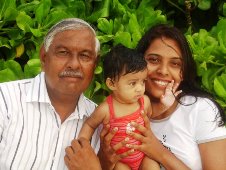
Maldives National Defence Force (MNDF) Captain Dr Fathmath Thahsyna Ibrahim has been removed from her post as Deputy Commander of Medical Services, after she expressed outrage on social media about alleged brutality by security forces against demonstrators.

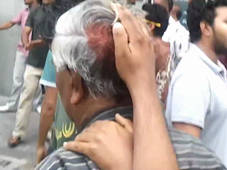
Dr Thahsyna’s 61-year-old father, Ibrahim Abubakur (Kottafaru Dhonthu), was allegedly struck on the head by an MNDF officer during an opposition Maldivian Democratic Party (MDP) protest on August 2.

Videos surfaced on social media showing Abubakur emerging from the crowd holding his bloodied head while MNDF officers pushed protesters back to the Chandanee Magu junction. The Republic Square area was cordoned off by MNDF officers while former President Mohamed Nasheed was attending police headquarters.

Captain Dr Fathmath Thahsyna IbrahimFollowing the incident, Dr Thahsyna – who was the first female MNDF doctor – took to Facebook alleging that her father was “hit by an MNDF personnel.”

“Every civilian has the right to freely express their views. No uniformed personnel has any right to beat up their own citizens, no matter what!” she wrote on August 2. “My father was hit on the head and he has a 7cm deep laceration on the back of his head.”

Verbal protest or abuse should not be “answered with the baton,” she added.

“I know my father is an MDP activist and he may have called you names, but still even he doesn’t deserve to be hit on his head,” she wrote.

When she posted the same comments on the MNDF medical page on Facebook, Thahsyna revealed that only two officers expressed well wishes for her father, “out of good will and humanity.”

Abubakur meanwhile told newspaper Haveeru yesterday that his eldest son saw the MNDF officer hit him with a baton.

“That day I was on the pavement in front of the Umar Shopping Arcade. I was behind theBrutality against MDP demonstrators fence. When the army officers charged and tried to disperse the civilians on the road, someone fell outside the fence and I was hit on the head while I was bending over to help him back up.”

Speaking to Minivan News today, MNDF Spokesperson Lieutenant Colonel Abdul Raheem confirmed that Dr Thahsyna was removed from her post as deputy commander on August 5.

Raheem however stressed that she was not demoted to a lower rank but had “a change of appointment,” which “happened routinely” in the army.

“She is still working at the medical services,” he said. “She has not been transferred to a different unit.”

While Colonel Raheem could not “definitely say at the moment” that Dr Thahsyna’s removal as deputy commander was in response to her comments on Facebook, the MNDF spokesperson confirmed that an “internal investigation” was ongoing into the allegations of brutality against Dr Thahsyna’s father.

He however added that Dr Thahsyna’s remarks on Facebook was related to the investigation as she was a uniformed officer making public comments concerning the army.

On August 3, Dr Thahsyna posted on Facebook asserting that she has “never crossed my limitations as a solider and never will.”

“I don’t believe expressing my sentiments about my father being beaten up unlawfully is ‘being political’,” she wrote. “What is wrong is wrong no matter who does it. And we should not hide these unlawful acts, in order to make people responsible for their actions.”

Raheem meanwhile insisted that the MNDF would take action against any officers who assaulted civilians “if the investigation finds that any officer was involved.”

“The MNDF does not support violence and will never support it,” he said. “We have been telling our officers continuously that no harm should be caused to anyone. We have internal mechanisms to investigate such allegations and take measures.”

In the wake of the controversial transfer of power on February 7, Amnesty International, the UN High Commissioner for Human Rights and UN Human Rights Committee have expressed concern over the “excessive use of force” against demonstrators of the formerly ruling MDP calling for early elections for the past six months.

Likes(0)Dislikes(0)

Suspect in 2007 Sultan Park bombing arrested after arriving from Pakistan

A man placed on Interpol’s wanted list following the Sultan Park bombing of 2007 was arrested on Sunday after arriving in the Maldives on a flight from Pakistan, local media has reported.

Abdul Latheef Ibrahim, 29, was one of 16 men against whom terrorism charges were laid. Ten of these men fled the country, whilst three were sentenced to an initial fifteen years before having their sentences commuted to three year suspended sentences.

The bomb blast at Sultan Park – a major tourist attraction in the capital located in front of the Islamic Centre – was triggered using a mobile phone and washing machine motor attached to a gas cylinder.

The attack injured 12 tourists, including eight from China, two from Britain and two from Japan.

Likes(0)Dislikes(0)

Police Superintendents ‘MC’ Hameed and Anees relieved of duty

The Police Disciplinary Board has decided to relieve Chief Superintendent ‘MC’ Mohamed Hameed and Superintendent Ibrahim Adhnan of duty, according to a statement issued by police.

The Disciplinary Board has also decided to demote Superintendent ‘Lady’ Ibrahim Manik to Chief Inspector of Police, and to remove the disciplinary badge on his uniform.

The statement said that the Disciplinary Board summoned the senior officers before making the decision, and that they were given the opportunity to speak in their defense as well as appoint lawyers.

However, the statement did not specify the allegations against the officers, or why the Disciplinary Board took action against them.

Newspaper Haveeru claimed that the decision was made by the Disciplinary Board on allegations that the three officers had “worked for the political benefit of a certain party” using their police roles.

Hameed, Adhnan and ‘Lady’ Ibrahim Manik were among only a few police senior officers who did not join the events of February 7, which saw mutinying police hand out riot gear to opposition demonstrators and launch an all-out assault on the main military headquarters. The state broadcaster was also stormed.

In June, Anees sued the Maldives Police Service seeking compensation for medical treatment of injuries sustained after mutinying police officers allegedly attacked him in Republic Square and inside police headquarters on February 7.

Adhnan Anees, Ibrahim Manik and Chief Superintendent Mohamed Jinah were among senior officers allegedly assaulted on February 7.

Meanwhile on June 14, police arrested Chief Superintendent Hameed, former head of police intelligence, following his contribution to the Maldivian Democratic Party (MDP)’s report into the controversial transfer of power on February 7.

Following reports that police who cooperated with the Ameen-Aslam report were being rounded up and detained, police initially denied allegations of a “witch hunt” and issued a statement accusing the media of “circulating baseless and false reports”. However court warrants for the arrest of Hameed and Staff Sergeant Ahmed Naseer were subsequently leaked.

The Criminal Court arrest warrant stated that Hameed was accused of “misusing” or leaking information acquired through his position for “the political gain of a particular group”, and participating in the compilation of the “misleading” Ameen-Aslam report, which undermines “the public’s respect for the security services.”

It justified his detention on the grounds that Hameed might influence witnesses and attempt to get rid of evidence as “others are suspected of involvement in the case.”

Police issued a statement that day confirming that Hameed had been arrested on charges of leaking “important information collected by the Maldives Police Services intelligence related to national security” as well as providing “untrue and false information” intended to benefit a specific [political] party, which could pose a threat to national security and create “divisions between the police and the public.”

Hameed’s actions were in violation of the Police Act, the statement insisted.

Following his detention in July, the family of Chief Superintendent Hameed expressed concern over his detention and noted that he was widely respected in the force as “a man of principle”. He has been in the service for over 17 years and has a masters in policing, intelligence and counter-terrorism.

Following the raid and extrajudicial dismantling of the MDP’s protest site at Usfasgandu on May 29, Hameed tweeted: ” Called a ‘baaghee’ [traitor] on the road twice today. Rightly so when our own actions are unjustifiable and thuggery like!”

After his dismissal last night, Hameed tweeted: “Ayan: Daddy, why were you fired from your job? My response: Because I did not join the bad guys.

Likes(0)Dislikes(0)

Comment: When Humpty Dumpty falls

When a traffic policeman raises his hand, encased in neat white gloves, all traffic automatically comes to a halt.

Obedience is ingrained in us. We barely stop to think why. Had it been otherwise we would no doubt be in the middle of a perpetual traffic jam.

When a policeman raises his hand, it is not a simple gesture of someone lifting his hand. Behind the gesture lies the authority of the people, a functioning system, an elected government and the goodwill of the masses. The combined moral authority of the people are reflected in that simple gesture.

Today, life is no longer simple anymore. Until February 7, 2012, the Maldivian people lived with the assurance that their interests were represented by a government elected by the majority; that the people’s will was reflected in the way they were governed. Everything turned topsy-turvy on February 7, when President Nasheed resigned office and his Vice President Dr Mohamed Waheed Hassan Manik assumed the mantle of government.

The transition of power would not have caused ripples or raised eye-brows unless the very next day President Nasheed claimed that he had resigned under duress. His resignation had been forced.

In the light of President Nasheed’s statement and after a clear look at the events leading to his ‘resignation’, it wasn’t difficult to believe that indeed Nasheed’s resignation was coerced. What followed afterwards – the appointment of Nazim as the Defense Minister and Abdulla Riyaz as the Police Commissioner – removed any reservations to the contrary.

The security forces – comprising of the Maldives Police Service and the Maldives National Defense Force (MNDF) were instrumental in forcing the President’s resignation. All the circumstantial evidence combined with the data compiled by the media further confirmed Nasheed’s allegations.

All doubts were removed when former police sergeant and Acting Deputy Leader of the PPM, Umar Naseer – known to friends and foes alike as a weapon of mass destruction –  blatantly confirmed his active involvement in the overthrow of Nasheed’s government on national TV – “spilling the beans”, as CNN aptly defined it.

During his three years in office President Nasheed worked hard to deliver on his election pledges. He was a symbol of hope for the downtrodden masses whose cause he championed. For 30 years the Maldivian people had lived a hand-to-mouth existence, brutally repressed by the dictator Gayoom. According to the UN 42 percent of the people lived below the poverty line.

Given the role played by the security forces in ousting a vastly popular government, the police and the military have become villains overnight. When the policeman lifts his white-gloved hand he is no longer able to covey the moral authority to instill obedience amongst the masses.

Up until February 7, the military were looked up to by the people for their professionalism and generally enjoyed the respect of the population. Even the youth who sought a career in the armed services were proud to be a part of this elite corps. The military, as a rule, upheld high ethical standards.

Except for a few among the military high command and the police services, the security forces were uninvolved in the intrigue that brought down Nasheed’s government. There was little doubt that the top brass were bought; they had sold not only their souls but had betrayed the confidence and trust of their subordinates, the rank and file of the armed forces.

Those youth, who had pledged their lives to uphold the tenets of Islam and defend the country were being labeled ‘turncoats’, a title they did not deserve as they were as much in the dark as everyone else. The greed of a few commanders who defiled the military’s code of honor had put the stamp of betrayal on the entire armed forces.

The coup has had certain unforeseen influences on the public psyche too. The MDP, led by the ousted President Nasheed doubled in membership overnight. Quite suddenly, public involvement grew by leaps and bounds.

Consequently, civil disobedience has taken root in the public psyche. The security forces are openly scoffed at by the public – the label ‘rebel’, ‘turncoat’, now precedes any description of the police and the military.

Maldivians, as a rule, are apt to shy away from violence. Even under the present trying circumstances violence has yet to be a part of the equation. Even though there have been isolated incidents of violent behavior both on the part of the police and the public, violence is frowned upon by all parties concerned.

There is a very clear demarcation line between civil disobedience and civil war. Unlike Syria, Egypt or other Muslim States where the freedom movement has escalated into unbridled violence and civil war, the Maldives is unlikely to go the same route.

Even if the worst case scenario is considered – let’s say Waheed’s regime refuses to set an early election date – with the security forces unable to contain a public uprising and the use of force becomes mandatory, the decision is likely to result in the fall of the government.

A limited population ensures a close-knit society. Members of the security forces and the general public are bound by close family ties making it virtually impossible for any member of the security forces to implement a ‘shoot order’ even if President Waheed were dumb enough or desperate enough to issue such an order.

Any member of the security forces taking aim on a member of the public will in all probability find his colleague’s gun aimed at his own head. Who else but a madman will aim at a crowd, when the likelihood of shooting a brother, sister, cousin or a close relative is almost a dead certainty?

Civil disobedience, led by the MDP, is here to stay. The protests are gaining ground day by day; each day resulting in the increase in members on the streets. The cycle has taken on a natural life of its own and the pace is being set by the members arrested on a daily basis.

It is only a matter of time before push comes to shove. Waheed’s regime, tottering on the brink, is clearly headed up the creek without a paddle. For Waheed, there is but a single option. Like Humpty Dumpty, he can only fall.

All comment pieces are the sole view of the author and do not reflect the editorial policy of Minivan News. If you would like to write an opinion piece, please send proposals to [email protected]

Likes(0)Dislikes(0)