President Waheed requests reshuffle of educational institutions

President Mohamed Waheed has requested parliament approve structural changes that would reshuffle educational institutions, reports local media.

The government proposal would move the National Institute of Education (NIE) under the Ministry of Education as well as transfer the Education and Vocational Training Center for Children (ETCC) to the Ministry of Gender, Family and Human Rights.

Waheed’s cabinet established the NIE on December 24, 2012, however it did not begin to function until May 20, according to local media.

The Education Development Centre and the Centre for Continuing Education, previously under the Education Ministry, were abolished and their mandates transferred to the NIE in 2012.

Likes(0)Dislikes(0)

Father of main suspect in Afrasheem murder case accuses police of coercion

The father of Hussain Humam, the main suspect in the murder of MP and religious scholar Dr Afrasheem Ali, has alleged his son was psychologically traumatised and under coercion by the police when he confessed to the crime.

The suspect has since retracted the confession he gave at a hearing held June 1.

In two separate letters dated May 26 that were sent to Criminal Court Chief Judge Abdulla Mohamed and the Human Rights Commission of the Maldives (HRCM), Humam’s father Ahmed Khaleel asks for assistance from authorities to “ensure [my] son is granted a fair trial devoid of coercion and undue influence.”

Referring to the May 22 hearing of the case, the letter sent to the Criminal Court and obtained by Minivan News reads: “I observed that when my son, Hussain Humam, was brought to the hearing, he was under psychological fear. I observed that he was in a very bad condition, was physically weak and his eyes were reddened. And during the trial, my son, Hussain Humam Ahmed, displayed signs of mental instability, including staring upwards, placing his handcuffs against his mouth, and laughing. Owing to these circumstances, I believe it is of utmost importance to assess Humam’s mental status prior to scheduling another hearing.”

During the previous hearing Judge Abdulla Didi denied a request by Humam’s lawyer that his client be psychologically tested, stating the lawyer had not mentioned any psychological disorder during a prior hearing to extend Humam’s detention.

Alleged police intimidation during trial

Khaleel also alleged in the letter that during the May 22 hearing, police acted “outside of the norms of a court hearing: attempting to psychologically intimidate Humam, and acting in many ways to influence what Humam had to say.”

Khaleel alleges that police  forced Humam into initially rejecting his right to have a defence lawyer, stating, “When the Judge enquired if he wished to have a lawyer, Humam quietly said ‘I do want a lawyer too’, at which point the police officer on his right, and the two officers on his left – Ali Ismail and Shamin – gave angry looks towards Humam and gestured with their eyes in a way that seemed to indicate that Humam was not permitted to say so. I believe that this forced my son to give up and lose this constitutional right.”

“The police also continued to converse with each other while the hearing was ongoing, discussing different aspects of the case itself, and speaking in such a way that it seemed Humam was being threatened. They also exchanged written documents with the state prosecutor outside of court proceedings,” his father alleged.

“Despite the judge unfailingly working to carry out a trial based on fairness and equality where the rights of both concerned parties are protected, with reference to the actions of police in and out of the courtroom, I do not accept that the hearing in question was a fair and just hearing,” Khaleel wrote.

Khaleel called on the court to review video footage of the hearing to confirm his claims, and pleaded for his son to be granted a fair trial and the constitutional rights entitled him.

CP Riyaz and other senior police officials accused of coercion

Khaleel alleged in his letter that in every instance he had visited Humam, his son had repeatedly complained that the police were trying to force him to confess to the MP’s murder.

“I have also observed that the police have phrased their words in such a manner that forces [Humam] to confess. For instance, police brought Humam to Male’ as a hearing had been scheduled for May 16. However, your court cancelled the hearing in the end, and instead of taking Humam back to the Villingili Police Station (where he is being held in detention), he was kept in police headquarters in Male’,” Khaleel wrote.
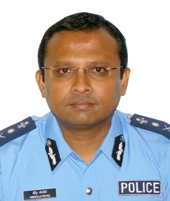
“I have learnt that while he was being kept in Male’, several police officers of various senior ranks questioned him, outside the processes of investigation, including Commissioner of Police Abdulla Riyaz. They all pushed him to confess, assuring him that he would be spared the death sentence if he did so, and threatening that if he did not, they would ensure that he was sentenced to death. Police further said that if he chose to confess, he would be spared from both the death sentences and charges previously raised against him, and tried to confuse and delude him,” he alleged.

“I have also learned that police, even in other instances, have tried to threaten and coerce Humam into a confession, and have asked him to make use of the opportunity presented.’”

“The confession was an exaggerated mix-up of disjointed statements”

“My wife – Humam’s mother – and I met Humam on May 23 and my wife asked him to tell the truth for her sake and the nine months and ten days she carried him inside her, and Humam cried out, ‘No, mother, I did not kill Afrasheem’. He said the same when I repeatedly questioned him about it,” Khaleel stated.

“Therefore, Humam having stated in front of both of us in the court hearing, in such a way that will be heard by the whole of the country, that he had killed Afrasheem, he then told us that he had, in fact, not committed the murder, and this gives rise to many questions in my mind about how this could have happened,” he continued.

“I am now certain that the police and various political leaders, in a bid to hide the truth behind this, and to conceal the real murderer, have made police question Humam and get details about his life and past. I am also certain that the statement that was submitted to the court as one provided by Humam, is in fact an exaggerated account mixing together responses Humam gave to police about unrelated matters, adding and taking out details, and changing and editing it to align with what the police want it to state,” Khaleel alleged.

“When police are exerting undue influence and interfering with a case under the jurisdiction of your court; forcing Hussain Humam to give up a constitutional right, concealing the actual culprits behind the murder for different political gains, telling Humam various things in a bid to pin this on innocent people, and senior police officers are pushing their long arms into this matter outside the boundaries of the trial, I would like to bring this matter to your attention,” he wrote in conclusion of his letter to the Criminal Court Chief Judge.

Speaking to Minivan News today, Khaleel confirmed that officials of the Criminal Court had met with him and advised him on the best way to proceed.

“They told me that some of the matters I had pointed out can only be raised through a lawyer. They were helpful and listened to my concerns,” Khaleel said.

Criminal Court Media Official Ahmed Mohamed Manik was not responding to calls at the time of press.

Police deny coercion allegations

“It is an outright lie. The hearing proceeded in the presence of the judge. Media was also present in the room. Police did not at all intimidate or threaten Humam in any way, nor did police attempt to influence the courts in any form,” stated a police media official, requesting to remain unnamed.

“We can say with certainty that at no time, during or after the investigation stages, did senior officials talk to Humam to pressure him into a certain action or to influence the trial,” the police spokesperson said.

“Confused how HRCM defines human rights”

Khaleel also wrote to HRCM, expressing concern that his son was being subjected to psychological trauma, threats and intimidation while being held in police custody.

He further alleged that Humam was being coerced into confessing to a crime he did not commit, requesting the commission to look into the matter, and to grant an appointment in which he could provide further details of the allegations.

Khaleel further claimed that police had initially prevented Humam from seeking legal representation, thereby stripping him of the constitutional right stipulated in Article 16 of the Constitution of Maldives.

“I have not had any response from HRCM. I have been endlessly trying to get them to do something about this. I have called them lots of times, and they either say they’ll call back or that there’s no one relevant to talk to. Once, I was told there was no point in meeting the HRCM President just yet, that maybe I should meet someone else they recommend. My point is, how will I be able to meet anyone unless they grant me an appointment, at the least?” Khaleel told Minivan News.

“If they call themselves the Human Rights Commission, shouldn’t they be looking into matters like this where a citizen is being deprived of his rights? I am no longer sure how this commission defines human rights, or just how much they are able to protect such rights,” he said.

HRCM Media Official Sajidha Majdi confirmed that the commission had received the letter, but declined from commenting on the matter, stating it was against the commission’s policy to speak about an ongoing case.

Likes(0)Dislikes(0)

Employers facing investigation after 75 expatriates detained for illegally working in market

The Maldives Department of Immigration and Emigration has detained 75 illegal workers this week, and is currently investigating how many are victims of corrupt employment practices.

An immigration official, who asked not to be identified, said an unspecified number of the 75 expatriate workers detained in Male’ on Tuesday (June 4) had already been released as authorities sought to clarify the exact reasons for how they had ended up working in the capital’s market area.

Foreign nationals are not permitted under Maldives law to work at the market area, according to the Immigration Department.

Despite this, a total of 57 foreign workers were seized by authorities in April this year after having been found working at the market area of Male’.

A police media official confirmed yesterday (June 5) that officers had assisted in detaining 75 “illegal aliens” from the local market area of Male’, referring all further enquiries to the country’s immigration service, which has taken responsibility for the workers.

Immigration Controller Dr Mohamed Ali was not responding to calls from Minivan News at time of press to confirm how many of the detained foreigners were presently expected to be sent to the department’s “processing centre” – a gated compound on the island of Hulhumale’.  Unregistered expatriates are usually kept at the centre before being sent back to their respective countries.

Immigration Department Chief Executive Officer (CEO) Abdullah Munaaz – charged with overseeing the service’s monitoring and repatriation efforts – has meanwhile said that authorities were expecting to decide within the next 48 hours how many of the 75 expatriates may face deportation. With investigations ongoing into the case, he said that no further details on the detained workers could be made public at present, with an official announcement expected in the next few days.

The Maldives has come under increasing pressure to tackle the issue of unregistered expatriates, with the country appearing on the US State Department’s Tier Two Watch List for Human Trafficking.  The country has appeared on the list for three years in a row.

Immigration Controller Dr Ali has previously told Minivan News that while almost all foreign workers coming to the Maldives arrive under registered companies, some were finding themselves “illegally used” by employers due to “systematic abuse” of the visa system.

Earlier this year, the Immigration Department confirmed that authorities had targeted the return of 10,000 unregistered workers by the end of the year.

This pledge to return a predetermined number of expatriates was criticised at the time by the Human Rights Commission of Maldives (HRCM), which raised concerns that some workers were being punished for the actions of employers and agents acting outside the law.

Worker release

The immigration source claimed that the country’s expatriate monitoring service was in the process of trying to individually identify whether the detained workers should be released, or deported.

The source said all those detained had not been registered to work in the market area, although some were suspected of being illegally made to do so by their legal employers.

“The paperwork is being done now to try to identify the people who are being put to work at these places by their employers,” the Immigration Department figure added. “These people are working in places where they are not registered to do so and we need to know why is this happening. Some of the employers are giving [the department] a different story to those provided by the expatriates.”

The anonymous source said that authorities would also be looking to take action against employers who may be supplying illegal labour.

The same source has claimed that the majority of the 75 detained workers were suspected of having absconded illegally from their Maldivian employer to seek better paid work elsewhere in the country.

Late last month, Immigration Department CEO Munaaz said his department had recently become aware of individuals posing as recruitment agents who were travelling to airports to poach foreign workers by promising them resort positions or higher pad jobs than the work they may have originally been brought to the country for.  Whether these jobs really exist is unknown.

“Now we have started to identify how this is being done and we are working to stop this,”Munaaz said at the time. “We know there are agents living here in Male’, some who are foreign nationals from the same countries, and they are bringing people over. We are in the process of breaking these rings.”

Foreign low-wage workers are often lured to the country by such brokers, paying a ‘recruitment’ fee or entering into debt – sometimes as high as several thousand dollars – that is shared between local agents and recruiters in the country of origin, most significantly Bangladesh.

In many cases the workers are then brought into the country ‘legitimately’ by a specially-created paper company, created using the ID of a complicit or unwitting Maldivian national, for the stated purpose of working on a ‘construction project’ of dubious existence.

Senior immigration sources have confided to Minivan News that almost no human verification was undertaken by authorities to ensure workers were genuinely employed once a business or construction project was approved.

Moreover, despite the size and scale of the practice, not a single recruitment agent or labour trafficker has appeared before a Maldivian court.

Human trafficking

While the government earlier this year launched a special campaign intended to raising awareness of the rights of foreign workers, NGOs and institutions continue to identify human trafficking as a significant issue needing to be addressed in the country.

Human rights groups in the Maldives have for instance continued to criticise the present and former governments for failing to pass legislation that would allow authorities to press charges against individuals directly for the offence of human trafficking.  The legal measures to do so are presently under review in parliament.

In February, former President Maldives Association of Construction Industry (MACI) Mohamed Ali Janah claimed that an estimated 40 percent of the foreign employees in the sector were thought not to be legally registered.

Considering these numbers, Janah said he could not rule out the involvement of organised crime in certain employment agencies, which supply a large amount of foreign labour to building sites in the Maldives.

Likes(0)Dislikes(0)

DQP MP Riyaz submits bill proposing hanging as preferred method of execution

Dhivehi Quamee Party (DQP) MP Riyaz Rasheed has submitted a bill to parliament proposing executions be carried out by hanging people sentenced to death in court.

Riyaz told newspaper ‘Haveeru’ that he submitted the bill because the government’s version of the bill, drafted in December 2012, had yet to be submitted to parliament.

According to Riyaz’s bill, the trials of people accused of offences punishable by death under the penal code are to be conducted with a defence lawyer, even should the defendant refused.

The bill requires the lower courts to forward a case report to the High Court 14 days from the date the trial reaches a conclusion. The High Court is required to conduct a trial to determine whether the lower court’s ruling is lawful.

Should this decision be upheld, the matter must then be referred to the Supreme Court, which issue the final ruling on the case.

According to the bill, the defendant is given the opportunity to meet his family and say his last words before he is hanged.

The bill obliges the state to delay implementing death sentences if the person is a minor, pregnant woman, mentally ill or suffering from a disease.

In December last year, Attorney General Azima Shukoor drafted a bill outlining how the death sentence should be practiced in the Maldives, with lethal injection being identified as the state’s preferred method of capital punishment.

The government’s draft, which has yet to be submitted to parliament was criticised by religious groups in the Maldives, who argued that the state’s method of execution should be beheading or firing squad.

Likes(0)Dislikes(0)

Judiciary needs transitional arrangement before elections: former JSC member

The former Presidential Member of the Judicial Service Commission (JSC) Aishath Velezinee has called on international organisations to lead a transitional arrangement for the judiciary prior to September’s presidential elections.

UN Special Rapporteur for the Independence of Judges and Lawyers Gabriela Knaul’s final report to the UN Human Rights Council extensively outlined the political, budgetary and societal challenges facing the judiciary and wider legal community, as well as the politicisation of the Judicial Services Commission (JSC) and its failure to appoint qualified judges under Article 285 of the constitution.

The Special Rapporteur also expressed “deep concern” over the failure of the judicial system to address “serious violations of human rights” during the Maldives’ 30 year dictatorship, warning of “more instability and unrest” should this continue to be neglected.

“The UN special rapporteur’s report has raised very serious concerns that the public should be thinking about, because it has implications that affects every single individual in this country, the report is not for the state alone,” said Velezinee during a press conference held on June 5.

“The report raises questions regarding the impartiality of the supreme court. It highlights a political bias in the supreme court,” Velezinee said. “If we are going to allow the supreme court to be the decider on elections, there is very little reason for the public to have confidence in the election results.”

Velezinee noted that because only three months remain before the September 7 presidential elections, “It is time for the parliament and for the leaders to sit down together and come to a transitional arrangement.”

“That transitional arrangement should include a bench or some system outside of existing courts, outside of the supreme court, that will have a final say on all election related issues,” she stated.

“It can’t be done only locally. We need the expertise, presence and participation of the International Commission of Jurists as well as the UN in a transitional arrangement,” she continued.

“Considering the status of the state today, we need a partnership. Bilateral participation would not be something to promote, the best thing would be to have broader participation with international partners,” Velezinee added.

Resistance to consolidating democracy

“Our country today is at a serious critical junction and the issues are all coming from resistance to consolidating democracy,” said Velezinee.

“One of the most serious issues noted in the [UN special rapporteur’s] report is the misconstruing of democratic concepts in the constitution, and the use of these for personal gain by state officials within the JSC, Supreme Court, as well as parliament.”

“After elections the judiciary must be overhauled,” she declared.

The JSC was required to re-appoint judges under Article 285 of the constitution who possessed “educational qualifications, experience and recognised competence to discharge the duties and responsibilities of a judge, and must be of high moral character.”

“It is only through acknowledgement and acceptance that we have breached the constitution on article 285 that we will have the opportunity and the legitimacy to overhaul the judiciary,” explained Velezinee.

“That is very important, unless we do that we may fall into a cycle of coups… and this will go on unless the judiciary functions correctly.”

Velezinee said that while only the Maldivian Democratic Party (MDP) “has stood by the constitution”, it had failed so far to directly address the controversial re-appointment of unqualified judges to the judiciary.

“I have heard the MDP talk about problems in the judiciary and with individual judges, but I am disappointed I have not yet heard them speak of the constitutional breach of article 285,” she told Minivan News.

“[Parliamentary Speaker Abdulla] Shahid is an expert on democracy and is ready to intervene to return the Maldives to the constitution,” claimed Velezinee. “Having Shahid join the MDP is good because now they can go ahead and return the country [to constitutional rule].”

“I also welcome [former Attorney General Husnu] Suood breaking his silence and taking initiative. It’s a good sign he’s speaking up,” she added.

Eariler this week Suood claimed that the JSC had been taken over “dark powers”, and that it was fully under the control of certain political figures.

Suood further contended that the presidential candidate for the government-aligned Progressive Party of Maldives (PPM) Abdulla Yameen Abdul Gayoom, the Deputy Speaker of Parliament and PPM MP Ahmed Nazim, and retired Supreme Court Judge Mujthaz Fahmy have long been in the business of influencing the judges and the verdicts they had been issuing.

“The entire judiciary is under the influence of [retired Supreme Court Judge] Mujthaaz Fahmy,” he alleged.

Suood further alleged that Deputy Speaker Nazim had close ties with members of the JSC, and said several judges had told him that Yameen Abdul Gayoom – half brother of former President of 30 years, Maumoon Abdul Gayoom – had on several occasions given instructions to the judges over the phone as to how their sentences should be phrased.

Yameen and Nazim have denied the allegations.

Likes(2)Dislikes(0)

Police discover over 14,000 cans of beer in water near Male’

Marine Police and Maldives National Defence Force (MNDF) officers were today collecting thousands of cans of beer found floating in the sea on the west side of Male’.

According to the statement issued by police, so far 14,548 cans of beer have been taken from the sea, with more continuing to be found.

Police initially received a report yesterday afternoon at 1:00pm that a dhoni named ‘Azum’ had tipped off balance near Male’, and some beer cases on the vessel had fallen into the sea.

However, a police media official later told media that the earlier statement was a mistake, and said police have been unable to determine the owner of the beer cans or how they were lost.

A police media official stated that police were still trying to determine whether the beer was dumped intentionally.

Marine police are patrolling around Male’ to pick up the floating beer cans.

‘’No one has claimed responsibility for this nor have they admitted the cans belong to them,’’ a police media officer  told Minivan News.

Possession and consumption of alcohol is illegal outside resort islands and licensed safari boats in the Maldives.

Likes(0)Dislikes(0)