Thousands of voters failing to re-register to vote in Male before August 7 deadline, warns Elections Commission

Only 11,000 out of an estimated 65,000 Maldivians have registered to vote outside of their permanent residence for the September 7 presidential election, with many unregistered voters confident they will not encounter problems voting on election day.

Despite this confidence, many of these same voters have also cited confusion or a lack of awareness about registration and voting regulations.

While public response to the voter re-registration process has been poor, Maldivians can only re-register until August 7, after which time the window of opportunity will end, Elections Commission (EC) President Fuwad Thowfeek told local media.

“We urge everyone to pay special heed to the re-registration. Once the deadline ends, we won’t allow any more chances because we need to verify the forms as well,” Thowfeek explained.

The EC has received some registration forms from political parties that are taking part in the process, which Thowfeek hopes many people are using to re-register to vote prior to the deadline.

The 54,000 person voter registration shortfall has prompted the EC to establish a voter registration desk in the Raalhugandu area – Male’s surf point, adjacent to the Tsunami Monument in Henviru ward – openly nightly from 9:30pm to 11:00pm.

To try and understand what is preventing so many Maldivians from registering to vote, Minivan News spoke to a cross-section of youth – individuals between 18 and 35 years-old – and asked: 1) Whether they plan to vote in the September’s presidential election; 2) Where they plan to cast their vote; 3) If they have registered to vote in that location; 4) If they have checked the voter registration list previously published in the Government Gazette, or with the EC.

An overwhelming majority of those questioned expressed passionate excitement about the upcoming elections and said they plan to vote, and enthusiastically voiced support for a particular political party. However, many of the same individuals were unaware – and even unconcerned – about the voter re-registration process.

“Yeah, I’m gonna vote here in Male’. I think I’m registered, cause a guy from the [island] council talked about it and he took a photocopy of my ID card,” said a 20 year-old, originally from Haa Alif Atoll now living in Male’.

“I didn’t check the [voter registration] list. What does it contain – the list of people who can vote this year?” he asked.

Maldivians originally from the atolls now living in Male’ have also said they find the voter registration process for the Male’ Dhaftharu – a special registry for people who are Male’ residents, but are from other islands – to be “too complicated” or “time consuming”.

“‘Ehburun’ – I support the [Maldivian Democratic Party] (MDP)!” exclaimed a 25 year-old safari boat worker from Shaviyani Atoll, who lives in Male’ with his wife and young children.

He said he plans to vote but has had “no time” to research the voter registration process or check the voter registration list and juggle family and work responsibilities. His wife is also politically passionate, and believes they will have no issues voting on election day, but has not checked the voter registry.

Numerous individuals do not think they need to re-register to vote, especially if they voted in a recent election or if they plan to vote on their home island.

“I will be registered on my island. I’ll be able to walk into the polling station on my island and vote, no problem. I have not checked [the status of] my registration, because there’s no need,” said a 22 year-old who is working and studying in Male’.

This sentiment was reflected almost verbatim by a 21 year-old from Meemu Atoll who works in a private business office in Male’: “I don’t know if I’m registered, but there’s no need. I’ll go to my island on election day and be able to vote no problem.”

Those who plan to travel back to their home islands to vote are completely confident political parties will provide boat transport on election day, and that weather causing rough seas will not be a problem.

Those who plan to travel to their islands – from atolls in the far north to the far south of the Maldives – are indiscriminate about which political party boat they will take, even if it means they will be accepting transport from a party they will not be voting for.

University students studying in Male’ have also told Minivan News that because “transportation is difficult” they are currently looking for scheduled trips to their home islands, but will ultimately have to seek out political party boats traveling from Male’ to the islands on election day. The transport provided by political parties tends to be more “luxurious” than regular ferries, some said.

These college students feel because they are studying full time, and many simultaneously work full time jobs, the EC registration process is too complicated and not flexible enough to accommodate their schedules.

Additionally, they “do not trust political parties enough to register through them”.

Meanwhile, many resort workers are still unsure of the location they will be voting and therefore have not registered to vote.
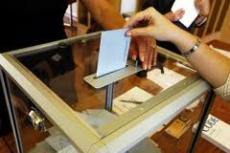
“I’m not sure if there will be a ballot box on the resort. We have not been informed by the resort management,” said a water sports instructor working on a resort near Male’.

He explained that the Maldivian staff also have not been informed if the resort will provide time off or transportation to another island to vote – and they were not notified during the 2008 presidential election either.

“I want to vote, but even if I knew where I should be voting, I only get one day off, so I cannot come to Male’ to register,” the water-sports instructor added. “There needs to be an online registration system.”

Another resort worker noted that he recalls a voter registration SMS reminder  “bouncing around a while back”, but is still unclear on whether he even needs to register to be eligible to vote.

The EC earlier revealed that only 56 of the country’s 100 resort islands had agreed to allow ballot boxes for staff to vote.

“As an alternative, we’ll place boxes in the islands closest inhabited island and they’ll send their employees [to vote],” Thowfeek said at the time. “Resorts cannot stop their staff from going [to vote] because we have an understanding, an arrangement with them. If they try to stop [their employees from voting] we will take the necessary actions [against them].”

Traveling abroad for work during election has also created problems for some Maldivians.

“If we travel we will miss the election. There should be an early voting system,” said a 25 year-old working in Male’.

Even individuals actively involved in campaigning for a particular political party and assisting with the voter registration process for their constituency are not entirely clear about the re-registration process.

“I’m not sure when the deadline is,” said a 23 year-old campaign volunteer who works in Male’.

“I’m definitely voting for MDP,” declared one 22 year-old in Male’, however though he said he has been very active organising various events – political and non-political – in his neighborhood, he did not think he needed to register to vote.

Voter apathy

While the lack of voter registration awareness has not deterred many Maldivian youth from confidently believing they will be able to vote on September 7 without issue, there are some individuals who feel so politically disenfranchised they are choosing not to vote.

“It won’t matter whether I vote, nothing changes for us, we are mistreated by police under every government administration,” said a 22 year-old working in Male’. “Only politicians and their friends have rights, no one else does.”

“I don’t feel like voting since no one will be willing to do anything good for the citizens. When it comes to voting, they’ll tell us it’s our right. But when we go to get our rights, there’s no rights for us,” said a 23 year-old Maldivian studying abroad in Sri Lanka.

“For instance, what about the parents of the murdered guys? Where do they go to get justice for their murdered sons?” he asked.

“You see there’s no candidate that I would like to vote for. I hate each and every one. Everyone [running for president] is out for their own good, no one is going to help the country develop. Neither is any citizen going to get benefits,” he added.

Some Maldivians are planning to vote if the elections continue on to a second round, but say they do not think it is necessary to vote in the first round.

“MDP has so many supporters they don’t need my vote. Ehburun! But if they don’t win in the first round, then I’ll vote in the second,” said a 25 year-old Male’ resident.

EC Hotline Help

The EC has stressed that they wish to hear any and all issues, concerns, or complaints voters may have in regard to the upcoming elections.

“We are here to listen and check into any problems,” said Thowfeek. “Anyone can call the EC regarding any problem, we currently have 12 lines and will increase the number of reception lines as demand increases.”

Currently. the EC hotline is staffed 8:00am to 8:00pm, however as elections day approaches the line hours will be extended, Thowfeek explained.

Maldivians can call or SMS to determine where they are registered to vote, which political party they are registered with, to report any problem or difficulties, and to seek any information.

The Elections Commission hotline is 1414.

The SMS codes for enquiries are as follows:

SMS PPR(space)(ID#) – current political party registration
SMS Voterinformationsystem(space)(ID#) – respective polling place location based on voter registration

Additionally, voter registration, including political party affiliation, can be verified in the Maldives’ government gazette.

Likes(3)Dislikes(1)

Supreme Court challenges Maldives Bar Association for using the word ‘bar’ in its name

The Supreme Court has allegedly requested the Ministry of Home Affairs to look into the procedures of how the Maldives Bar Association was formed claiming that the use of the word ‘Bar’ in the association’s name was leading to “confusion” among international legal and judicial groups.

The Maldives Bar Association was formed in April to empower, lobby and advocate on behalf of legal practitioners. It was also charged with addressing problems faced by lawyers within the judiciary. The association is currently headed by veteran lawyer and former Attorney General, Husnu Al Suood.

In a letter obtained by Minivan News, allegedly sent by the Supreme Court to the Ministry on May 5, the apex court claimed that in other developed countries, the phrase “Bar” referred to a formal statutory body that represents the entire legal community, unlike the current Maldives Bar Association which is an NGO.

“The newly registered ‘Bar Association’ is an NGO belonging only to its founding members, and considering the confusion that may arise due to a group of individuals using such a name, the judges panel of Supreme Court have on April 30 decided to request the Home Ministry to look into the matter,” read the letter.

Meanwhile, in a second letter, the Ministry of Home Affairs responded to the Supreme Court’s letter stating that prior to the registration of the association, the ministry had consulted with the Attorney General’s office regarding the name.

In response, the ministry stated that the Attorney General did not object to the name, but had requested it reserve the name ‘Maldives Bar Council’ – an institution that is yet to be established under the proposed Legal Practitioners Bill, which the Attorney General’s office is currently in the process of drafting.

Speaking to Minivan News, Maldives Bar Association Secretary General Anas Abdul Sattar disputed the Supreme Court’s view that the term ‘Bar’ was limited to formal statutory bodies.

“Even in India, there is the Bombay Bar Association. The Bombay Bar Council which was formed by a statute came to existence much later, but the bar association still continues to function,” Sattar contended.

Sattar said that Supreme Court was not making the right decision if it were to contend that the term ‘bar’ must only be limited to formal and statutory institutions.

Meanwhile, an attorney working closely with the association told Minivan News on condition of anonymity that the Supreme Court was upset about international organisations recognising the association.

“The Supreme Court was informing those organisations that the Maldives did not have a bar council. They then claimed that they would like to affiliate with the bar association, and that the association satisfied their criterion,” the attorney said.

“If you look into the details, Supreme Court is currently not affiliated with any such organisations and they seemed pretty upset when the international legal community started to recognise the association,” he added.

Minivan News contacted the Supreme Court for a response, but the official demanded formal enquiries in writing and said the court would “respond if appropriate”.

The Supreme Court’s letter challenging the bar association follows its vocal calls for the suspension of Supreme Court Justice Ali Hameed, following the release of multiple sex tapes featuring the judge.

Hameed is under investigation by both the police and JSC over the circulation of at least three sex videos apparently depicting him fornicating with unidentified foreign women.

In a previous statement, the association challenged the independence and transparency of any Judicial Service Commission (JSC) investigation into the matter that proceeded without first suspending the judge.

The Maldives Bar Association claimed that it was “against principles adopted in modern democratic societies” to allow Supreme Court Justice Ali Hameed to remain on the bench while he faced allegations of adultery and other concerning conduct.

Likes(1)Dislikes(0)

Nasheed dismisses allegations of SAARC Summit embezzlement, acknowledges overspend: “Senior officials wanted things to get done quickly”

Maldivian Democratic Party (MDP) presidential candidate and former President Mohamed Nasheed has dismissed allegations that his government embezzled state funds to host the 17th SAARC Summit, but acknowledged that it was possible money had been spent contrary to the Public Finance Act.

The Auditor General’s report on government expenses for the 17th SAARC Summit held in Addu City and Fuvahmulah in 2011, revealed several financial discrepancies including an overspend of more than MVR 430 million (US$27.9 million) on the event’s allocated budget.

According to the report compiled through audits of expenditure by the Ministry of Housing, the Ministry of Foreign Affairs, the President’s Office and the Maldives National Defense Force (MNDF), Nasheed’s government spent MVR 667,874,870.84 (US$ 43.3 million), on the summit – 188.82 percent more than the MVR 231,240,000 (US$14.99 million) budget passed by parliament.

Speaking during a campaign rally held at Haa Dhaal Atoll Vaikaradhoo Island yesterday (July 24), the former President welcomed the audit reports on his administration and echoed his party’s position that no corruption was involved in the spending.

“Since the ratification of the 2008 constitution, and since the beginning of word to word enforcement of laws that came after the ratification, it is quite possible that there may be certain things carried out in contrast with the public finance act. This is because senior officials of the government wanted things to get done quickly,” Nasheed said.

Discrepancies highlighted in the report included financial losses incurred by the government, violations of the Public Finance Act and Public Finance Regulation and wasteful spending.

However, the opposition MDP dismissed the findings of the report describing it as “naive” and “misguided political posturing”, while also challenging its credibility and accuracy.

“It is not possible for the MDP-led government to be involved in blatant corruption. Because we came with a plan and strategy for reforms,” said MDP’s Spokesperson Hamid Abdul Ghafoor at the time.

“Looking at perspective of development and progress, we see this report as just ‘petty accusations’. The report lacked due procedure, impartiality and transparency. It may have been possibly influenced by the political vibe in the country.”

Nasheed stressed that he had not dishonored the trust that the people had placed in him, and had not embezzled “a single laari” from the state budget.

The audit report on the SAARC Summit was released during the MDP’s campaigning ahead of the upcoming 2013 election.

Previous reports

A similar wave of audit reports were released shortly before the 2008 presidential elections, revealing the extravagant spending of then President Maumoon Abdul Gayoom – who now heads the Progressive Party of Maldives (PPM), claiming for presidency in September.

In April 2009, former Auditor General Ibrahim Naeem – the country’s first independent auditor general, who was appointed by Gayoom in January 2008 – released a damning audit report (English) of the presidential palace’s finances, revealing that over US$3 million earmarked for helping the poor was spent on “the president’s relatives, ministers and their families, senior government officials and some MPs.”

More than SGD$2.3 million (US$1,500,000) was spent on one of Gayoom’s relatives and his family on trips to Singapore throughout 2007 and SGD$ 1.4 million (US$930,000) for another relative and his family for multiple trips to Singapore.

In March 2008, SGD$23,756 (US$16,000) was spent for a minister’s grandson to stay in a hotel in Singapore for 21 days; in April, SGD$50,022 (US$33,000) was spent on medical expenses for a friend of the president; and in July 2008, SGD$6,905 (US$4,600) was spent on two pairs of glasses for a minister and his wife.

In October 2012, Dhivehi Rayyithunge Party (DRP) MP Rozaina Adam leaked invoices and bills of the spending through the social media, which revealed extravagant expenses of former President Gayoom’s family out of the former presidential palace Theemuge’s budget allocated for helping the poor.

Among the spending included, money spent on trouser materials, jewellery and expensive family stays at luxurious hotels and resorts abroad.

An invoice dated March 31, 2008 showed SG$ 14,977 spent for trouser material (polyester viscose), which was authorised and signed by former Executive Director of the Presidential Palace Ismail Faiz.

On December 20, 2006, a purple gold diamond pendant for SGD$824 and purple gold diamond bracelet for SGD$1,510 were bought using Nasreena’s credit card. Another invoice showed over SGD$28,000 paid out of the Theemuge account to the Grand Hyatt in Singapore.

Moreover, an average of MVR 5,500 (US$430) a day was spent on food for the former President and his family – equivalent to one month’s wages for an employee working in the palace at the time.

So far no action has been taken against any of the embezzlement allegations.

Likes(0)Dislikes(0)

“Murder has to be punished with murder”: Yameen calls for death penalty to be put into practice

Progressive Party of the Maldives (PPM) Presidential Candidate Abdulla Yameen has called for the death penalty to be put into practice in the Maldives, a day after vowing to reform the judiciary.

The MP, half brother of former autocratic ruler Maumoon Abdul Gayoom, made the comments while speaking on the program Voice of Maldives on Monday night (July 22).

Yameen explained that although he was not previously an advocate of the death penalty, he now believed it must be implemented to save Maldivian society from murders that have become too commonplace, according to local media reports.

Yameen noted that as a result of the “recent spate of killings” in the Maldives he has had a “change of heart” and now believes “murder has to be punished with murder.”

“It is something that has to be done. We cannot move forward without making our streets safe,” Yameen said.

Yameen explained that a death penalty sentence should only be implemented if upheld by the Supreme Court.

“I now believe, if it can be proven in trial so that the country accepts, if it is proven to a degree accepted by judicial principles, if all the steps are followed, and if the Maldivian people believe, I believe that the death penalty is necessary to save society,” he said.

He also noted that because detailed legislation is necessary to implement the death penalty, the current government recently proposed a death penalty bill in parliament.

Regarding whether he would implement Islamic Sharia law, Yameen’s response to a caller was that “justice is currently delivered in the Maldives through Islamic principles” and that he would act “in accordance with what is laid out by the constitution.”

He pledged that under a PPM government he would “do whatever has to be done” to make the Maldives a peaceful place.

Yameen also denied financing or having links with gangs, claiming these allegations “do not have any basis” and politicians perpetuating such rumors “lack sincerity”.

Such rumors that Yameen has gang ties have “been around a long time”, according to CNM.

During the PPM presidential primary, former candidate and PPM Vice President Umar Naseer publicly accused Yameen of involvement with gangs and the illegal drug trade. However, Yameen denied the “defamatory accusations” calling them “baseless and untrue”.

Yameen further noted during the Voice of Maldives program that a “major part” of the government budget would be spent on youth, including a special rehabilitation program for drug addicts, with more than 900 placements available, if he is elected president.

Last month, Yameen also announced that PPM intended to transform Hulhumale’ into a “Youth City” where enough apartments to accommodate young people would be constructed.

Judicial reform pledge

Meanwhile, a day prior to Yameen’s comments in favor of implementing the death penalty to quell violent crime in the Maldives, the PPM presidential candidate pledged to reform the judiciary, even if it required amending the constitution.

To gain investors’ confidence and bring foreign investments to the Maldives, reforming the judiciary to ensure swift justice and confidence in the institution is necessary, Yameen explained.

“We see the many challenges ahead from every direction. So we are not only competing with other candidates. We are competing against the flailing economy and fading culture and values,” he said.

Yameen told local media that Chief Justice Ahmed Faiz Hussain had also noted the judiciary has “problems”.

Faiz has meanwhile urged the public and media to refrain from making statements that would give a negative image of the judiciary, and called for constitutional amendments.

His comment’s follow the Maldives Bar Association (MBA) calling for the suspension of Supreme Court Justice Ali Hameed pending an investigation into his alleged sexual misconduct. Hameed is under investigation by both the police and Judicial Service Commission (JSC) over the circulation of at least three sex videos apparently depicting him fornicating with unidentified foreign women.

Earlier this year, Faiz said that the current seven-member bench of the Supreme Court cannot be abolished and will continue to remain as the highest court of the country as long as the Maldives remains a democracy. In July 2012, the Chief Justice also said the death penalty can be executed within the existing justice system of the Maldives.

Death penalty controversy

While the Maldives still issues death sentences, these have traditionally been commuted to life sentences by presidential decree since the execution of Hakim Didi in 1954, for the crime of practicing black magic.

Death penalty legislation was presented to parliament in June by government-aligned Dhivehi Qaumee Party (DQP) MP Riyaz Rasheed to implement the death penalty by hanging if the Supreme Court upheld a death sentence passed by a lower court. The legislation was put to a vote to decide whether or not to proceed with the bill at committee stage and was ultimately rejected 26-18 with no abstentions.

The Maldivian Democratic Party (MDP) MP said at the time that the party’s parliamentary group had opted to throw out the bill on the grounds that it would be “irresponsible” to approve such measures with ongoing concerns held by itself and international experts over the functioning of the country’s judiciary.

The party additionally criticised the proposed bill as being irrelevant, arguing that the country’s draft penal code – a recent issue of contention between MPs and certain political parties – already included provisions for the death sentence as outlined under Islamic Sharia.

Recent calls for presidential clemency to be blocked led Attorney General (AG) Azima Shukoor to draft a bill favouring the implementation of the penalty via lethal injection. It was met with opposition by several religious groups such as the NGO Jamiyyathul Salaf, which called for the draft to be amended in favour of beheadings or firing squads.

Minivan News understands that the bill submitted by the AG remains open for comments on potential amendments.

More recently, the state called for a High Court verdict on whether the practice of presidential clemency can be annulled.

Eariler this year, the UN country team in the Maldives issued a statement calling for the abolition of both corporal punishment and the death penalty in the Maldives.

Additionally, the state’s stance to review implementation of death sentences has led to strong criticism from certain human rights-focused NGOs this year.

Speaking to Minivan News immediately following a visit to the Maldives in April 2013, Amnesty International’s South Asia Director Polly Truscott raised concerns about the recent drafting of new bills outlining implementation for executions.

She argued that even in practice, such bills would be deemed as a human rights violation, with the NGO maintaining that there remained no research to support the assertion that executing criminals served as an effective deterrent for serious crimes.

She noted this was a particular concern considering the recent findings of various international experts such as UN Special Rapporteur on the Independence of Judges and Judiciary, Gabriela Knaul, regarding the politicised nature of the country’s judicial system.

“To leave Sharia law to the discretion of individual judges is something we believe would be a bad idea,” she said at the time.

In May this year, Amnesty International condemned the sentencing of two 18 year-olds to death for a murder committed while they were minors, and called on Maldivian government authorities to commute the sentence.

Meanwhile, a survey of the leading criminologists in the United States conducted in 2009 found that 88 percent of the country’s top criminologists “did not believe” that the death penalty is a “proven deterrent to homicide”.

The study, Do Executions Lower Homicide Rates? The Views of Leading Criminologists published in the Journal of Criminal Law and Criminology, also found that 87 percent of the expert criminologists believe that abolition of the death penalty would not have any significant effect on murder rates.

Likes(3)Dislikes(1)

Parliament’s Committee on Social Affairs submits social protection bill

Parliament’s Committee on Social Affairs on Monday (July 22) submitted a social protection bill to parliament for review, after amending the bill to stipulate 11 instances in which the state must protect and assist under-privileged citizens.

According to the report submitted by the committee, the objectives of the bill are to provide as-yet unspecified support to citizens facing difficulties as a result of poverty and to increase equitability between the rich and poor. Support for citizens lacking the means to obtain basic necessities and the provision of state facilities to all citizens in the most equitable manner possible were also among the aims.

The bill stipulates the provision of financial aid to single parents, and support to children under the care of guardians other than biological parents.  These same guardians and students are also included as recipients of support.

It furthermore guarantees support to neglected persons, as well as persons suffering from psychological disorders.

The bill additionally stipulates the provision of subsidies for expenses on food products, electricity, water and accommodation.

The bill offers support in “emergency situations”, while small and medium businesses located in any industrial district facing difficulties is also included.

Neither the amount of financial aid that an individual may be provided under the bill, nor the criteria individuals must meet to qualify for aid are included in the draft. Instead, the act says that these details must be established in regulations gazetted three months after the ratification of the bill.

According to the bill, an individual or a person on behalf of the applicant is required to register with the National Social Protection Agency (NSPA) for support and subsidies granted by the state.

It also include clauses which obligates the NSPA to uphold the confidentiality of personal information of all persons who file for support, adding that employees of the agency who divulge such information may be subjected to fines ranging between MVR 5,000 (US$325) to MVR 10,000 (US$650).

The Social Protection Bill was initially submitted to parliament on October 19, 2010. It was sent to the Committee on Social Affairs for review and amendment on December 14, 2010.

The Committee had its first meeting regarding the bill on October 8, 2012, after a period of almost two years since the bill was sent for review. At this meeting, a subcommittee to focus on the matter was appointed.

The subcommittee included Maldivian Democratic Party (MDP) MP Ahmed Rasheed, Progressive Party of Maldives (PPM) MP Abdul Azeez Jamaal AbuBakr, Dhivehi Rayyithunge Party (DRP) MP Hassan Latheef and Jumhooree Party (JP) MP Hassan Adil.

According to the committee report, other institutions that have provided comment and feedback on the bill are the Ministry of Health, Ministry of Education, Ministry of Finance and Treasury, Ministry of Gender, Family and Human Rights and the Attorney General’s Office.

Likes(0)Dislikes(0)

High Court upholds seven year prison sentence for throwing rocks at VTV

The High Court has upheld a Criminal Court ruling sentencing a man found guilty of throwing stones at private broadcaster VTV to seven years imprisonment.

Eight men including Mohamed Hameed were given seven year sentences for throwing stones outside the station during anti-government protests on March 19, 2012.

The demonstrators were protesting the new President Dr Mohamed Waheed from giving the opening address to the first session of parliament, following his controversial arrival to power the previous month.

In addition to Hameed, the Criminal Court also sentenced Ismail Hammaadh of Maduvvari in Raa Atoll, Ahmed Hameeed and Hussein Hameed of Alifushi in Raa Atoll, Ahmed Naeem of Henveiru Ladhumaageaage, Hussein Shifau Jameel of Maafannu Nooruzeyru, Aanim Hassan of Ferishoo in North Ali Atoll, Ahmed Muheen of Galolhu Haalam and Mohamed Hameed for vandalising the channel.

The building, as well as the soldiers guarding its entrance on Sosun Magu, came under attack as police tear gas forced the protesters south, past the building from the police barricades near to the parliament building.

Appealing the sentence, Hameed argued that it was extraordinary practice for the court to impose the maximum possible sentence on a first time offender with no criminal record.

However the High Court, noting that the sentence was three to seven years, deferred to the discretion of the Criminal Court judge.

VTV is owned by MP Gasim Ibrahim, a resort tycoon, presidential candidate and member of the Judicial Services Commission (JSC) tasked with disciplining the judiciary.

Likes(1)Dislikes(0)

SAARC Summit ran US$28 million over budget: Auditor General

The Auditor General’s report on government expenses for the 17th SAARC Summit held in Addu City and Fuvahmulah in 2010 has revealed several financial discrepancies including an overspend of more than MVR 430 million (US$27.9 million) on the event’s allocated budget.

According to the report (Dhivehi), former President Mohamed Nasheed’s government spent MVR 667,874,870.84 (US$ 43.3 million), on the summit – 188.82 percent more than the MVR 231,240,000 (US$14.99 million) budget passed by parliament.

The report was compiled through audits of expenditure by the Ministry of Housing, the Ministry of Foreign Affairs, the President’s Office and the Maldives National Defense Force (MNDF).

The report also made several recommendations including the recovery of money spent, as well as action against those found responsible for the expenses.

The release of the report comes at a time when former President Nasheed – who headed the Maldivian delegation at the summit – is campaigning for a second term in the upcoming 2013 election as the opposition Maldivian Democratic Party (MDP) presidential candidate.

More than a year after the summit, Nasheed was ousted from government in what his party described as a “bloodless coup d’état”, amid a mutiny by sections of the police and military. His controversial resignation followed weeks of anti-government protests that began in January 2012 after the detention of the Chief Judge of Criminal Court Abdulla Mohamed over allegations he posed a threat to national security.

Progressive Party of Maldives (PPM) presidential candidate Abdulla Yameen Abdul Gayoom condemned the financial discrepancies highlighted in the report, prior to its release.

Discrepancies

“Until the end of March 2013, excluding the grant aid and projects, a sum of MVR 667,874,870.84 (US$43.3 million) was spent. This figure is MVR 436,634,870 (US$ 28.5 million) or 188.82 percent more than the budget passed by the parliament to conduct the SAARC summit. The figure that was passed by parliament was MVR 231,240,000. No parliamentary consent as required by Article 96(c) of the constitution was obtained in spending the sum,” read the Auditor General’s report.

Other discrepancies pointed out in the report included an additional MVR 61.8 million (US$4 million) being paid for the construction of the Equatorial Convention Centre built for the summit.

The report stated that the initial cost of the project proposed by the contractor Ameen Construction Private Limited stood at MVR 210.4 million (US$13.7 million). However, after negotiations and changes to the materials being used and the overall design of the structure, a figure of MVR 150 million (US$9.7 million) was agreed between the contractor and the Ministry of Housing and Environment.

“However, due to changes brought to the plan by the government, the cost of completing the convention centre stood at MVR 211,852,834.84 (US$13.8 million). [This was] MVR 61,852,834.84 (US$4 million) or 41 percent excess of the amount that was agreed,” the report claimed.

The report noted the cost, which was more than the initial proposition from contractor, resulted from failure in properly planning the project and frequent changes brought to the agreed design in a non ad-hoc manner.

Apart from the costs, due to a delay in depositing the advance guarantee, the government claimed that the SAARC Convention centre needed to be built as quickly as possible, an advance payment of MVR 30 million (US$ 1.9 million) was paid to the contractor. The report added that the advance guarantee, which included both the advance payment and performance guarantee, had not been deposited.

The advance payment of MVR 30 million was given by the government after converting the retention money taken from the same contractor on a different government contract as the payment guarantee of the convention centre project.

This conversion, the report said, could be perceived as an attempt by the government to financially support a specific party contravening existing laws, since other companies who had proposed their bid did not have any retention money owed by the government and could not therefore enjoy the same privileges.

The Auditor General’s findings said that the advance MVR 30 million payment was made in contrast to section 8.23 of Public Finance Regulation, which states that any such advance payment should not exceed 15 percent of total costs. The MVR 30 million advance stands at around 20 percent of the cost, the report added.

Other discrepancies highlighted in the report included financial losses incurred by the government, violations of Public Finance Act and Public Finance Regulation and wasteful spending.

MDP response

Former ruling party MDP Spokesperson Hamid Abdul Ghafoor described the report as “naive” and “misguided political posturing”, while challenging its credibility.

“What we are saying is that after an audit report is released, the litigation based on the findings must begin as soon as possible. The longer time between the release of the report and start of litigation means such reports are open for political manipulation,” he said.

Ghafoor claimed that MDP came out to reform the country, which included fighting against corruption.

“It is not possible for the MDP-led government to be involved in blatant corruption. Because we came with a plan and strategy for reforms,” Ghafoor contended.

He also said that the public will judge the audit reports and will know how politically motivated the report is.

“Looking at perspective of development and progress, we see this report as just ‘petty accusations’. The report lacked due procedure, impartiality and transparency. It may have been possibly influenced by the political vibe in the country,” Ghafoor alleged.

Auditor General Niyaz Ibrahim meanwhile disputed in local media that the timing of the audit report before the election was political, stating that information contained in such reports was necessary for people to make informed decisions.

14,996,108.95
Likes(0)Dislikes(0)

MDP questions legitimacy of leaked security force reform proposals

The Maldivian Democratic Party (MDP) has questioned the legitimacy of a paper leaked on social media allegedly detailing plans to transfer and reform police and military powers should it win the upcoming presidential election.

MDP Spokesperson Hamid Abdul Ghafoor said the party was not aware of having produced any document outlining police reforms as mentioned in local media, despite pledging a ”transitional arrangement” to reform security services in line with recommendations in the Commonwealth-backed Commission of National Inquiry (CoNI) report.

Sun Online reported today that a policy paper, alleged to have been assembled by the MDP in collaboration with former defence chiefs, had been leaked on social media detailing efforts to “neutralise the powers” of the police and military .

Among the proposals said to be included in the paper are the transfer police to the authority of city councils, similar to the US model, while salaries and allowances of officers would be provided through the Local Government Authority (LGA).

The draft is also said to favour creating a national intelligence agency run from the President’s Office, replacing the current police intelligence department, while police forensic activities would be undertaken at Indira Gandhi Memorial Hospital (IGMH) in Male’, according to Sun.

Additionally, the draft reportedly calls for limits to powers granted under the Police Act by limiting the number of branches within the MPS and “dramatically” reducing officer numbers to a force capable of controlling traffic and protests. Local media reported that the report had been compiled to address fears the entire police institution was “anti-MDP”.

MDP MP and Spokesperson Hamid Abdul Ghafoor said he had seen media coverage of the report, but was not aware of efforts within the party to draw up such a document, suggesting its content had been “fabricated”.

He claimed the MDP was presently focused on campaigning for the presidential election scheduled for September 7, while also overseeing what the party called voter protection measures through the use of observers and registration programmes.

While dismissing knowledge of the leaked reform paper, Ghafoor said the party had considered the need for a “transitional agreement” for reforms of the country’s security forces based on recommendations raised in last year’s CoNI report.

“Coup” allegations

The MDP has continued to accuse the country’s security forces of helping orchestrate a “coup e’etat” on February 7, 2012, leading to former President Mohamed Nasheed controversially resigning from office and being later replaced by his then Vice President Dr Moahmed Waheed.

The resignation came after sections of the police and military mutinied against the president on February 7 – a development rejected by the CoNI report, which concluded that the administration of President Waheed had come to power legitimately and not through an alleged coup.

With the CoNI process concluded, Ghafoor accused the Commonwealth and the wider international community of failing to ensure reforms to strengthen democratic institutions called for in the report’s findings were met.

He alleged that the Maldives Police Service (MPS) had failed to fully be transferred from a militarised to civil institution dating back to the administration of former President Maumoon Abdul Gayoom’s before the country’s first multi-party democratic election in 2008.

“Gayoom had moved to separate the military and police into different bodies. In the end, he failed to do this adequately,” Ghafoor said.

Despite pledging to reform the police and military, the MDP said it was not planning a “witch-hunt”.

According to Ghafoor, the MDP was instead focused on trying to secure a “huge election majority” in order to carry out reforms with the mandate of the public.

“This will help solve everything,” he said.

Minivan News was at time of press awaiting a response from Police Integrity Commission (PIC) Director General Fathimath Sareera Ali Shareef over the allegations and reforms within the police since last February’s power transfer.

Internal investigations

In June this year, the PIC announced it had concluded investigations into allegations of police brutality against demonstrators of the Maldivian Democratic Party (MDP) on February 8, 2012, submitting six cases for prosecution – recommending administrative action by the home ministry against those officers.

However, the police disciplinary board later decided not to take any administrative action against five officers facing criminal prosecution.

According to a status update from the PIC on June 6, the commission had investigated 29 cases of police brutality before forwarding six cases for prosecution.

PIC Vice Chair Haala Hameed told parliament’s Government Oversight Committee on June 4 that the commission had urged then-Home Minister Dr Mohamed Jameel Ahmed to suspend the accused officers immediately.

However, Hameed said that the request was not adhered to and at least one of the accused officers was promoted.

Hameed said the commission had failed to identify the police officers in five of the remaining cases while 11 other cases lacked supporting evidence.

Former PIC Chair Shahinda Ismail – who resigned citing failure to hold police accountable for human rights violations – explained to Minivan News in September 2012 that article 44 of the Police Act allows the home minister to ignore PIC recommendations if the commission is informed in writing.

Likes(1)Dislikes(0)

MDP running mate commences campaign trip under banner “I will not become a baaghee”

Former Education Minister and Maldivian Democratic Party (MDP) running mate Dr Mustafa Luthfy, who has recently been appointed as running mate of Maldivian Democratic Party (MDP)’s presidential candidate Mohamed Nasheed, has on Saturday commenced his introductory campaign trips to the atolls under the theme of “Nethey Veveykah Baaghee akah” – ‘I will not become a baaghee’ (‘traitor’).

“Under this programme we will be travelling all over the Maldives to campaign for the upcoming elections. The theme for the campaign is that I will not become a ‘baaghee’ [traitor] even if we are beaten and tortured,” Luthfy said in an interview prior to the trip.

The MDP on Tuesday concluded the first of its presidential running mate Dr. Mustafa Lutfi’s introductory campaign trips to the islands, after having held rallies in four of the southernmost atolls of the Maldives. The team plans to travel to over 26 islands, while also holding occasional rallies in the capital island Male’.

MDP Chairperson ‘Reeko’ Moosa Manik, former chairperson and MP Mariya Ahmed Didi and former Education Minister Shifa Mohamed were part of the campaign team which travelled to Haa Alif, Haa Dhaal, Shaviyani and Noonu atolls.

Addressing nearly 500 supporters gathered at a rally on Kulhudhuhfushi in Haa Dhaalu Atoll, Luthfy said the MDP had been formed to bring an end to the culture of coup d’etats in the Maldives.

“The Maldives is a country in which some individuals in Male’ keep squabbling over power. A glance at our past proves this. This resulted in the development of Maldives proceeding at a much slower pace than it could have gone. In order to bring an end to violence, torture, harassment, deprivation of citizens’ rights, MDP was formed and we worked to establish democratic governance in the country,’ Luthfy said.

“Democracy stipulates that any administration can stay in power only for a specified amount of time. Therefore, there is no need to fight, to orchestrate coup d’etats to rise to power. People must calm down and be patient. The opportunity to rise to power will come with the end of each term. This system was established by MDP, so as to bring an end to the local culture of coups. And yet, before the five year term was up, [they] came out, claiming it was in the name of the nation, on February 7, 2012 and toppled the democracy we had established,” he continued.

“Allah has prohibited coups. However, they came out on Feb 7 under the pretence of action in the name of the nation and patriotism to bring a coup d’etat against Islamic Sharia.”

“In the Quran we have learned that bringing a coup d’etat is haram [prohibited]. We have heard that one must find a way to come to peace with them or come out to battle against them. MDP opted to not take the path of battle, and to peacefully bring an end to the coup. Under this intention, on February 8, MDP came out for a peaceful walk against the coup. However, the people were beaten and tortured. In broad daylight, they shed our blood onto the streets of Male’. Who did this? The very people who are paid salaries from our money to protect our families. They were provided batons and tear gas to protect us. They, however, used these against us,” Luthfy stated.

“I have spoken to many people about how the coup d’etat has affected them. Many of them cried. They spoke of having trouble sleeping, of having nightmares, of having lost appetite, of getting panic attacks. Many of our citizens were psychologically distressed by these events.”

“Expressing ourselves and chanting ‘Baaghee’ at the coup orchestrators helped us. If we hadn’t let out those feelings, we would have been burning up inside with the strong psychological trauma we faced. It is because we came out against this with courage that our efforts have not weakened and we remain strong today. We will continue to stand up against the coup and express ourselves through actions, speech and art. We want to let out our feelings of the coup, we do not want to drown in the bitter thoughts and memories of the coup d’etat. We want to instill in our hearts the feelings of unity and progress,” MDP’s running mate said in his speech.

“Even initially we came out against violence and torture. We came out to bring progress and development to the country. Insha Allah we will win this election in the first round itself, in one round,” Luthfy said, concluding his address.

One local who spoke at the rally told of the adverse effects the alleged coup of February 7, 2012 had on the development of the island.

“Mohamed Nasheed is the only candidate contesting in the upcoming September 7 elections who did not play a role in last year’s treacherous coup d’etat,” the local said.

The team also held rallies in four other islands during the three day trip.

Speaking on Manadhoo in Noonu Atoll, Luthfy said, “It does not at all deter me when upon visiting an island, I am asked to promise that I will not bring about a coup d’etat. It is something I tell myself too.”

He said people’s trepidation about his potential vice presidency was understandable in light of the actions of Nasheed’s previous running mate, current President Mohamed Waheed Hassan.

In addition to rallies, the team hoisted canvas prints depicting images of police brutality which followed the controversial transfer of power in 2012. The team will be leaving on phase two of the campaign trip early this coming week.

Likes(0)Dislikes(0)