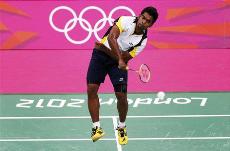
An estimated audience of 900million people saw Mohamed Ajufan Rasheed carrying the Maldivian flag during the opening ceremony of this summer’s Olympic Games in London.
A further 750million were said to have seen the closing ceremony during which fellow compatriot Azneem Ahmed took the opportunity to wave the red, green, and white for the world to see.
In between, Ajufan competed in the men’s badminton as the first Maldivian to qualify independently for an Olympic event, whilst Azneem broke the Maldives’ national record in the men’s 100metre preliminary heats.
The pair were accompanied by Aminath Shajan – women’s 50m freestyle swimming , Ahmed Husham – men’s 100m freestyle swimming, and Afa Ismail – women’s 100m athletics.
These five Maldivians joined over 10,000 fellow Olympians competing in 26 different sporting events conducted across Great Britain.
A total of 962 medals were shared amongst 85 countries and, despite the Maldives not appearing on the medals table, the games was not without progress for the island nation.
Both Ajufan and Azneem have returned to Male’, anxious to talk about their time in London and excited about their sporting futures.
“We want to share our experiences with others,” said Ajufan, whose first match in the tournament saw him drawn against current European champion Marc Zwiebler, ranked the world number 18 by the Badminton World Federation’s (BWF).
Despite holding his own for long periods during his first ever clash with a European opponent, Ajufan lost to both Zwiebler and his next opponent, the Ukrainian Dmytro Zavadsky (ranked 48 in the sport’s official rankings).
Undeterred however, Ajufan was confident he had benefited from this high level of competition at the games.
“It was not the speed [of Zwiebler] but his finishing shots. I need to work on specific shots,” he said.
Ajufan’s own rise in the BWF rankings has been greatly assisted by the opportunity to train in Malaysia courtesy of Interntional Olympic Committee (IOC) funding.
Improved training and facilities have seen him rise 200 places to 185th in the official rankings in less than a year.
After training six hours a day and working the world’s tournament circuit in preparation for the Olympics, Ajufan is enjoying his first holiday in a year and a half.
Azneem’s preparations for the games were quite different.
After being scouted in Kulhudfushi in 2008, Azneem found work in Male’ with the police force and designed his Olympic training schedule – 2hrs a day – around his duties.
Despite an increased workload owing to political tensions in the capital this year, Azneem was still able to become the first Maldivian sprinter to qualify from the preliminary rounds at the Olympic Games, recording a national record time of 10.79 seconds.
Ahmed Marzook, Secretary General of the Maldives Olympic Committee (MOC), explained that he was hoping to send Azneem to train in Jamaica by the end of September to continue his development.
He will compete in the Maldives quarterly ranking event at the running track in Male’ this weekend.
“We are hoping to send all our athletes abroad eventually,” said Marzook.
Azneem had previously made history as part of the 4 x 100metre relay team who won the country’s first medal at the 2010 South Asian Games.
Marzook explained that the Olympics will have prepared the athlete’s for the next South Asian Games in February 2013.
“We are really hoping for individual medals,” said Marzook.
When asked about the disadvantages of competing against the financial advantages of other Olympic nations, Ajufan said that he felt it was commitment that was the vital ingredient for young athletes, and hoped that their achievements could inspire others.
“Before, Maldivians thought that the Olympics were out of reach – now kids have more motivation,” he said.
As for the next Olympiad, Marzook is optimistic that the team will be even bigger in Brazil in four years time.
“We will now focus on nine or ten athletes,” he said.
The Olympic experience is one both Azneem and Ajufan are keen to repeat.
“There was a good atmosphere in the Olympic Village,” said Ajufan. “There were lots of famous people.”
Both athletes had the opportunity to meet Olympic gold medallist Jessica Ennis whilst in the UK.
But, while Azneem was able to meet the British athlete during his pre-Olympic stay in Bedford, Ajufan was unable to see her in the flesh.
“I met Jessica Ennis at Madame Tussaud’s [waxwork museum],” he laughed.
When asked whether they would be in Rio for the 31st Olympic Games, the pair replied in unison.
The Police Integrity Commission (PIC) has stated its intention to release findings from ongoing investigations into alleged breach of laws and regulations by police officers during the lead up to and in the direct aftermath of February’s controversial transfer of power.
Speaking to Minivan News today, PIC President Shahinda Ismail said the institution would be releasing three separate reports. These reports will focus on the events of February 6 and 7, the events in Male’ on February 8 and the events in Addu Atoll on February 8 and 9. She also stated that these reports would be available to public upon release.
“I feel that it is of utmost importance to release the reports before the Commission of National Inquiry (CNI) report comes out. If not, there is a chance that the PIC investigations are not given the importance it merits. We’re working to get this done,” Shahindha added.
Meanwhile, local news website Haveeru quoted PIC Vice President Dr Abdulla Waheed as saying that the commission has gathered information from a variety of sources and its reporting was now almost complete.
Asked if PIC had so far taken action against any police officers found at fault through the investigations, Waheed refused to comment on it before the release of the said reports.
With reference to the HRCM reports released last Saturday, Waheed said that the commission had not yet discussed the findings concerning police conduct. He added that the commission would be able to respond to them once government offices resumed work after the holiday period.
A “HIV Awareness Festival” being held this weekend in Male’ aims to provide free advice and medical examinations, alongside activities for those interested in learning about HIV/AIDS in a friendly environment, organisers have said.
According to the United Nations Development Programme (UNDP), the main organiser of the festival, the aim for the event is to promote HIV/AIDS awareness amongst a rapidly growing migrant population in the Maldives – identified as one of the most vulnerable groups to contract the deadly virus.
It is an opportunity to connect migrant workers to the available HIV preventive and curative services in the Maldives as well.
“The festival will create a platform for migrant workers to obtain information on prevention of HIV/AIDS and clear misconceptions through activity-based interaction in their native languages,” a press statement about the event read.
The festival will begin at 4:00pm in Sultan Park and throughout the event, stalls will be providing basic healthcare checks, for dental and eye health, voluntary counselling and testing for HIV/AIDS – all free of charge.
A jumble sale will also take place, while snacks and music will reflect the different food and cultures of migrant populations.
According to the organiser, the stall activities are supported by various foreign embassies and civil society organisations.
HIV situation in Maldives
Compared to many countries in the region, the Maldives had been found to have a low prevalence of HIV.
As of December 2011, state figures reveal a total of 15 HIV cases were detected among Maldivians, while 289 were identified among the expatriate migrant labour force.
However, the challenge remains to maintain the low prevalence rates amid widespread high risk behaviours.
Heath Minster Dr Ahmed Jamsheed has contended that these high risk behaviours – including unsafe injecting, unprotected sex with multiple partners, serial monogamy, group sex, gang rape, commercial sex, and unprotected male-to-male sex – have put Maldives at the brink of an HIV/AIDs explosion.
Recent studies suggest that migrant construction workers, injecting drug users, female sex workers, men who have sex with men, seafarers, resort workers and young people are the seven groups at the most risk for contracting deadly virus.
An unknown number of 80,000 to 110,000 foreign workers – almost one-third of the total local population – is estimated to be working in Maldives – primarily in the construction and service sectors.
Thousands of them are undocumented workers who have entered the country illegally, possibly escaping the mandatory HIV screening process.
Through the Global Fund Supported Programme in the Maldives, health authorities and UN agencies are working to run outreach programmes on HIV, targeting the groups most vulnerable to contracting HIV and strengthening national HIV preventive mechanisms.
The International Labour Organisation (ILO) has written to the Maldives government for a response to allegations that members of the Maldivian Ports Workers Union (MPWU) have been harassed over their political views.
In a letter seen by Minivan News, Cleopatra Doumbia-Henry, Director of the ILO’s International Labour Standards Department, asked the government for its observations about accusations raised by MPWU members concerning workplace harrasment.
The letter also “denounces” the termination of MPWU president Ibrahim Khaleel, executive committee member Yazeedh Abdhul Hameed and six other union members. Concerns were also raised by the ILO over the suspension of 49 trade union members, the reassignment of many union members to other ports, and accusations of threats and harassment towards union members.
The MPWU itself has previously alleged that authorities at Maldives Ports Limited (MPL) had violated worker rights based on their political activism. MPWU President Khaleel has previously sent a letter to MPL CEO Mahdi Imad, in which he said, “Although the constitution guarantees freedom of expression and freedom of assembly , it is now common within MPL to stop employees from expressing certain political views, and to violate the Employment Act by unfairly dismissing employees and transferring employees to different departments without prior warning or explanation of any offense committed.”
Speaking to Minivan News today, Deputy CEO of MPL, Ahmed Faiz said they had already sent a response to the ILO on behalf of the Maldivian government. Faiz was unable to share the contents of the letter, but said that it was based around the authorities’ belief that the MPWU was being used as a political tool.
On the topic of MPWU’s accusations of harassment and unfair treatment based on political activism, Faiz said “There can be no grounds to make these accusations. Even today MPL employs many staff who belong to different political parties. We even have people in managerial posts who are actually members of MDP.”
Faiz also went on to say, “MPL is a service provider which deals with a variety of clients. In this time of political turmoil, such activism out in the open may have a bad impact on the company itself and that is why we took measures to stop them”
Earlier this month, the World Federation of Trade Unions also expressed concern over this matter.
MPWU President Khaleel was not responding to calls at the time of press.
Police raided the premises of the ‘Natural Beauty Harbor Salon’ in Male’ Tuesday evening (August 21) with officers discovering alcohol, forged US Dollars and materials used for sexual activities.
Police said Tuesday’s raid was part of a special operation launched jointly by the Drug Enforcement Department (DED) and Police Intelligence after authorities received reports that illegal drugs were being stored at the salon.
According to police, a search of the premises was conducted at 10:07pm, after officers obtained a search warrant from a local court.
Police said they discovered materials used for sexual activities, as well as controlled drugs, US$2000 in forged currency, a large amount of money suspected to have been gained through prostitution, five bottles of unspecified alcohol, and a further three empty bottles.
A 38 year-old Maldivian man and a 27 year-old Thai woman were inside the salon when police raided. Both have been arrested.
Police said the business was located at the third floor of Mahchangolhi Maaharaage’.
According to a report on online newspaper ‘Sun’, the Maldives Police Force has so far closed 22 properties believed to have been operated as brothels, since February. As part of this crackdown, 83 people have reportedly been arrested since the crackdowns began following the controversial transfer of power.
The paper said that the Islamic Ministry had claimed police have confiscated Rf63,000 and US$2,640 allegedly obtained through prostitution.
In June, the Home Ministry said that twelve brothels have been shut down in an operation launched by police after President Mohamed Waheed assumed office in February.
A month earlier, the Ministry of Islamic Affairs said it was formulating rules and guidelines for registering and operating alternative medicine centres, spas and beauty salons to prevent the use of such establishments as a front for prostitution.
Shutting down spas and massage parlours doubling as brothels was a key demand of a ‘mega protest’ on December 23 organised by eight political parties and religious NGOs to ‘Defend Islam’ against the alleged concerns of the liberal policies of the former Maldivian Democratic Party (MDP) government.
President Dr Mohamed Waheed Hassan is to discuss the findings of several reports released this week by the Human Rights Commission of Maldives (HRCM) with the Sri Lankan government during a two day official visit to the country. The official visit began today.
The findings of the HRCM, which were published earlier this week in several different reports, will be among the discussion topics with senior officials in the country, the Sunday Times of Sri Lanka has reported. The president is also expected to use the trip to meet with expatriates and Maldivian business owners living in the country, as well as visit the War Heroes Monument in Sri Jayawardenapura.
Speaking to Minivan News yesterday, President’s Office spokesperson Abbas Adil Riza said the official visit was taking place this week after having been previously postponed. He added that the visit would focus on high-level talks with Sri Lankan President Rajapaksa and senior officials concerning wider bilateral relations and commercial opportunities between the two nations.
According to Abbas, no discussions were expected to take place on how the government would deal with the potential findings of the Commission of National inquiry (CNI), which was set up by the president to review February’s controversial transfer of power.
The President’s Office website has said that President Waheed will be accompanied during the visit by Minister of Environment and Energy Dr Mariyam Shakeela, Tourism Minister Ahmed Adheeb, Economic Development Minister Ahmed Mohamed and Foreign Minister Dr Abdul Samad Abdulla.
A police crackdown on a Maldivian Democratic Party (MDP) march across Male’ on February 8 that left dozens of demonstrators injured was “brutal” and “without prior warning,” the Human Rights Commission of Maldives (HRCM) concluded in an investigative report (Dhivehi) made public yesterday.
Based on its findings, the HRCM recommended that the Maldives Police Service (MPS) and Police Integrity Commission (PIC) should investigate the “disproportionate” use of force in violation of police regulations authorising use of less-lethal weapons. Legal action should be taken against the officers responsible for any such offences, the commission concluded.
“This commission notes that the human rights of a number of people were violated as a result of police using disproportionate force in violation of the constitution, the Police Act and regulations, and international conventions the Maldives is signatory to in dispersing a gathering of MDP supporters at the MMA [Maldives Monetary Authority] area on 8 February 2012 ,” the HRCM report concluded.
“The commission believes that those who carried out these acts must bear responsibility.”
On February 8, thousands of MDP supporters took to the streets after former President Mohamed Nasheed declared that his resignation the previous day was “under duress” in a “coup d’etat” instigated by mutinying Special Operations (SO) police officers.
The HRCM report on the human rights violations that occurred on February 8 was compiled based on interviews with senior MDP leaders who participated in the walk, police commanders, senior military officers, eyewitnesses, victims of police brutality and media personnel as well as photo and video evidence.
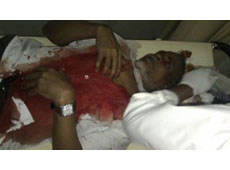
An injured protester
While 32 people filed complaints with the commission concerning varying degrees of injuries sustained in the crackdown, 20 people submitted medical documents of their treatment of injuries.
Among the injuries caused by the police baton charge, the HRCM report noted that several people were bruised and battered, one person fractured a bone in his leg, one person was left with a broken arm and six people sustained head wounds.
Two fingers on the left hand of one demonstrator were crushed, the report noted, and the victim had to undergo treatment at the operating theatre.
The former ruling party meanwhile informed HRCM that the march across Male’ was spontaneous and that the party had not planned to stage any protests on the day.
According to the MDP, participants of the walk were sitting down at the MMA area when the police charged without warning and caused serious injuries, noting that most people were attacked from behind.
Senior members of the party told the commission that police were asked to let MDP supporters continue their march along the outer ring road of Boduthakurufaanumagu.
MDP claimed that police refused to transport victims of the alleged brutality to the hospital and that former President Nasheed’s military bodyguards left the area before the baton charge.
“Emotionally charged”
In interviews with senior police officers and commanders in the field on February 8, the HRCM was told that police intelligence had learned that the MDP supporters were planning to “confront” police officers.
Participants of the MDP walk “attempted to cause damage” to the Family and Child Protection Unit building and Galolhu police station, the officers claimed, at which point they determined that the gathering was not peaceful.
Police did not allow the march to continue because participants could have entered the Republic Square or green zone, where gatherings are prohibited under freedom of assembly regulations.
Police further claimed that protesters hit police shields and that armed gangs “under the influence of drugs” were part of the crowd.
While protesters did not cross the police line, the senior officers said that rocks were thrown at the police. About 30 riot police and plain-clothed officers from other departments were in the area at the time, police said.
While police conceded that “a large number of civilians were injured by police officers” on February 8, senior officers interviewed by the HRCM revealed that the riot police were not acting on commands.
The violence occurred “because individual police officers were too emotionally charged at the time,” the senior officers said.
“And when civilians were getting injured by individual police officers, [they said] senior police officers went to the area and attempted to gather all police officers in one place,” the report stated.
The senior police officers further claimed that police were “very psychologically weakened” due to the events of February 7.
Following the crackdown, police admitted that “use of force” forms were not filled out and an “after action review report” was not drafted as was required under normal procedure.
Meanwhile, the Maldives National Defence Force (MNDF) informed HRCM that about 15 soldiers were active in the area during the crackdown, but claimed that military personnel did not witness police brutality.
When the protesters reached the MMA junction, they began striking the MNDF riot shields and throwing water bottles. They were then pushed back about 20 feet, where they sat down, the MNDF explained.
Contrary to the HRCM’s findings, the MNDF claimed that police advised the protesters to disperse and issued warnings before advancing with riot shields.
Military personnel used coloured smoke “to minimize damage and for ease of controlling those gathered,” the MNDF informed the commission.
Concluding observations
Opposition-aligned private broadcaster Raajje TV meanwhile provided video footage to HRCM showing the arrest of MDP MPs ‘Reeko’ Moosa Manik, Mariya Ahmed Didi, Imthiyaz Fahmy and Ibrahim Rasheed.
MDP Chairperson 'Reeko' Moosa Manik
An HRCM team that visited Dhoonidhoo detention centre observed “bruises all over the body” of one of the MPs, while her eyes were bloodied and swollen.
The commission noted in its concluding observations that police officers “acted very harshly” towards the politicians “in ways that could cause physical and psychological harm” even though they showed “no resistance.”
While the Raajje TV cameraman was shooting the arrest of MDP Chairperson Reeko Moosa Manik, HRCM was told that two plain-clothed officers “pushed and shoved” Raajje TV reporters to the Republic Square and severed the camera cable, ending the station’s live feed.
However, in its concluding observation, the commission reprimanded the private broadcaster for their coverage of the events, which “incited fear and hatred among citizens, instilled a spirit of vengeance and caused serious damage to private and public property.”
Conversely, the commission noted that reporters from private broadcasters DhiTV and Villa TV – alleged by the MDP to have incited hatred against the administration of former President Nasheed and promoted the “coup d’etat” – were “threatened and intimidated” by MDP supporters and were consequently prevented from covering the march.
The HRCM also noted that students at Immadhudeen School during the afternoon session were adversely affected by the MDP supporters gathering outside the party’s Haruge camp on the afternoon of February 8. The party’s gathering area was ransacked by rogue riot police and army officers prior to President Nasheed’s resignation.
The commission contended that MDP supporters were loud and used obscene language outside Haruge, which was reclaimed by supporters led by President Nasheed to the area after the MDP national council meeting earlier in the day.
Citing article 72(b)(1) of the Police Act, which prohibits “commission of an act that could obstruct the execution of any of the police powers and discretions, or plotting to commit such an act, or participate in the commission of such an act, or call for or encourage or assist others to commit such an act,” the HRCM claimed that MDP supporters who participated in the walk “obstructed the performance of police duties.”
Moreover, the commission noted that patients and staff at hospitals ADK and IGMH faced “serious difficulties and inconveniences” due to MDP supporters gathering outside both hospitals following the police crackdown.
However, the BBC reported “a baton charge by police on crowds gathered outside one of the main hospitals.”
“People scattered as officers sprinted towards them silhouetted against the lights of passing traffic,” the BBC’s Andrew North reported from Male’. “Inside the hospital, dozens of Mr Nasheed’s supporters are still being treated for injuries, following earlier scuffles in the main square. Among them is Reeko Moosa Maniku, chairman of Mr Nasheed’s Maldives Democratic Party – who was with the former president when the clashes broke out. With a large head bandage and his shirt bloodied, he regained consciousness as we arrived. The police said they would kill me, he told us, as they beat me. Another MP was still unconscious in another ward.”
The crackdown
While riot police baton charged the front of the protest march on February 8, Minivan News observed riot police officers charging the crowd from a narrow alley leading to the MMA area.
The Special Operations officers used obscene language, pointed to and chased after individual MDP activists and severely beat unarmed civilians.
Parts of the attack from the rear were filmed by Al Jazeera, which reported on February 8 that “police and military charged, beating demonstrators as they ran – women, the elderly, dozens left nursing their wounds.”
Amid the clashes, a group of opposition demonstrators infiltrated the crowds, attacking MDP supporters, according to witnesses.
Former President Nasheed was reported among the injured, and received head injuries during the clashes. He was briefly taken under police custody before being released back into the crowd.
Minivan News also observed several youth with head injuries queuing up for x-rays in the waiting area outside the reception area at IGMH.
One young woman who had gone to IGMH with her sister was being treated for a head wound. A gauze wrapped around her head was spotted with blood, and she claimed the wound was still bleeding as she went in for an X-ray.
“The police were just standing there and suddenly we were being beaten with batons and pepper spray was thrown in our face. They threw us to the ground and kept beating us,” she said.
Explaining that she, her sister and most women had joined the party’s “walk around Male” because they understood it was not a violent protest, the young woman said she had never seen indiscriminate beating of men and women on Male’ under Mohamed Nasheed.
“It was just supposed to be a peaceful walk. That’s why we went, and why more women than usual went. But there was no warning of the attack, no announcements, we were all beaten even after we began retreating. My sister was almost trampled,” she said. “I just think it’s disgusting that the police could beat so many unarmed women.”
The manager of a guest house in Male’ has discovered a six month old baby left alone in one of the property’s rooms on Monday (August 20), prompting a police investigation that today revealed the child’s mother to be a 13 year-old minor.
According to local media reports, the child was discovered by the manager of the M. Hudhufas guest house in the capital after he heard the baby crying for several hours. Upon entering the room, he discovered the child alone and unharmed.
The Maldives Police Service was alerted to the scene immediately, with the baby being taken into state care temporarily while a search was conducted for the child’s parents.
A girl claiming to be the child’s mother later came to the police station by herself after officers called the mobile number she had provided while checking into the guest house.
“We called the number to confirm if she was the baby’s mother and asked her to report to the station. When she came, we found out that she was just a 13 year-old girl,” Police Sub-Inspector Hassan Haneef said.
When asked about the circumstances surrounding her pregnancy, Haneef noted that no further information could be revealed about the case at this stage, as the mother was a minor herself.
A police investigation is currently ongoing in collaboration with the Gender Ministry.
Haneef also declined to confirm if the police were investigating the details of how the minor became pregnant or if there was suspicion she may have been the victim of abuse.
“We have now returned the girl and her baby to her family,” he added.
Speaking to Minivan News today, Deputy Prosecutor General Hussain Shameem also pointed out that in cases involving minors, “no conclusions” should be drawn until an investigation into the matter was completed.
When asked if a minor who gives birth to a child out of marriage could face criminal charges, Shameem said that it was “very unlikely”. He contended that, under the law, a child below 18 cannot give their consent for sex – therefore any resulting pregnancy is deemed to be the result of sexual abuse.
“For example, in this case, we need to determine first if she is in fact the mother of the baby or not. Then we need to find out how she got pregnant and where her parents were when this happened, because they are responsible for looking after their underage children,” Shameem added. “She is a minor so she cannot give consent [for sex], so police need to investigate the case. It it is very unlikely in such cases for minors to be charged and prosecuted,” he explained.
The “Stringent Punishments for Perpetrators of Sexual Violence Against Children Act’ explicitly states that a child below 13 years of age cannot give consent to any form of sexual relationship, which will be deemed as abuse – a punishable criminal offence. If the child is aged between 13 to 17 years of age, the court must similarly deem that she or he cannot give consent to any form of sexual relationship unless proven otherwise in court.
However, given the history of cases of unmarried pregnancies in the country – often resulting from sexual abuse or unsafe sex – women or girls have traditionally faced the brunt of legal repercussions and widespread stigma. Subsequently, there have been a number of recent incidents reported in media where pregnant women have been forced to take desperate measures, such as self-induced abortions, infanticide or leaving babies abandoned.
In June, police recovered the body of a newborn infant buried in the outdoor shower of a house on Shaviyani Feydhoo island. The baby’s mother was identified as a 15 year-old school student.
Meanwhile, over the last two years, three newborns have been found dead in the country, with another two incidents where newborn children were discovered abandoned but alive. Two foetuses were reported discovered during this two year period, one hidden in a milk tin and the other at the bottom of Male’s municipal swimming pool. Another fully-developed baby was thrown into a park having apparently been strangled with underwear tied around its neck.
The two babies found abandoned and alive have now been placed under state care.
The Centre for Community Health and Disease Control (CCHDC) has described these incidents, as well as the figures detailing an increase in the rate of sexually transmitted diseases, as evidence of a sexual health crisis in the Maldives.
Nazeera Najeeb, who leads the reproductive health unit of the CCHDC, told Minivan News in an interview earlier this year that the centre was witnessing an “alarming” increase in cases of underage and unplanned pregnancies, where some girls are getting pregnant “without even knowing it”.
“These unwanted pregnancies are subsequently resulting in more unsafe abortions, baby dumping or infanticide,” she noted.
Najeeb added: “Not just that, sexual violence committed against girls such as sexual abuse and rape, remains at alarmingly high levels. In most cases, abused girls did not even know what happened to them, because no one talks to them about it.”
To curb these perceived problems, she stressed the need for implementing a comprehensive sex education curriculum in and outside educational institutions to create greater awareness on sexual and reproductive health subjects.
Though the concept of sex education is widely supported by health authorities, including Health Minister Dr Ahmed Jamsheed, efforts to implement such practices nationally have been limited.
“Maldivian surfers are beginning to attract support from around the world for a campaign to save a popular surfspot from privatisation,” reports Travel News Maldives.
“The Save Our Surfspot (SOS) campaign was launched in response to news that the Government of the Maldives wants to sell Thanburudhoo Island in North Male’ Atoll and its two surf breaks known as ‘Sultans’ and ‘Honkeys’ for US$5million. The island is also a breeding ground for herons, a protected bird in the Maldives.
The campaigners have organised an online petition via international campaign website Avaaz with a target of 10,000 signatures, as well as a social media campaign to encourage people to support the cause. Their calls are now starting to be taken up by the international surf media and supporters as far away as Australia, the USA and Russia.”
 Despite holding his own for long periods during his first ever clash with a European opponent, Ajufan lost to both Zwiebler and his next opponent, the Ukrainian Dmytro Zavadsky (ranked 48 in the sport’s official rankings).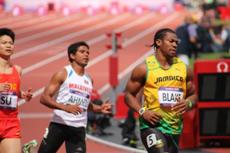
 (0)Dislikes
 (0)
(0)