Elections Commission faces “major challenges” over “lack of funds”

The Elections Commission announced yesterday (May 8 ) that it was facing “major challenges” preparing for the upcoming elections due to a “lack of funds”.

Elections Commission Member Ali Mohamed Manik told local media the commission requires over MVR 80 million (US$ 5,232,160) to hold the upcoming elections.

The EC has meanwhile declared it will publish the voter registry in the government gazette later this month, reports local media.

Manik also announced that the voter registry is almost fully updated and the commission plans to publish the list May 21, so to give the public an opportunity to verify the information and file complaints if revisions are needed.

Regarding ballot box placement, Manik said that there will be 556 ballot boxes for the presidential election, 355 in the atolls, 55 at resorts, while the remainder will be divided between Male’, industrial islands, and prisons.

Manik also urged voters registered in Male’ Dhaftharu – a special registry for people who are Male’ residents, but are from other islands – to provide the Elections Commission with their current addresses as soon as possible.

Likes(0)Dislikes(0)

Strong storms and rough seas cause nationwide damage

Stormy weather conditions – heavy rain, harsh winds, and rough seas – over the past week have caused damage to islands throughout the Maldives.

In the south the island of Fuvahmulah has suffered the most damage, said Minister of State for Defence and National Security and head of the National Disaster Management Center (NDMC), Ahmed Mohamed.

“The harsh winds that hit Fuvahmulah yesterday afternoon blew off roofs. A large coconut tree had fallen on top of house and a large tree had fallen on top of the council office. There is additional damages as well. An estimate of damages is now being assessed,” Mohamed said.

He also noted that heavy rains have led to a food shortage, flooding and property damage on Thinadhoo Island in Gaafu Dhaalu Atoll.

“In Thinadhoo, some of the roofs of houses were blown off due to strong winds. Heavy rain had caused flooding throughout the island. The flood water had seeped into the houses damaging people’s property. We are also receiving reports that they are short of food,” said Mohamed.

Meanwhile, in the north of the country, Rashgetheemu Island in Raa Atoll suffered damage from a lightning storm on April 27 which left all electronic systems within the Island Office “useless”, equipment inside the island’s health centre and power house damaged. Additionally, some electronic devices in private homes were harmed, as well as the island’s banana plantations, Island Council Vice President Ali Hameed told local media today (May 9).

The Maldives Meteorological Service has forecasted thunderstorms throughout the country, concentrated in the central and south, over the next 24 hours, with rough seas, and strong winds gusting up to 40 miles per hour. They have also issued warnings about flooding due to storm surge and tidal waves, particularly during high tide.

Likes(0)Dislikes(0)

UN Special Representative calls for abolition of degrading and capital punishment against children

The United Nations Special Representative of the Secretary General on Violence Against Children, Marta Santos Pais, has called on the government to find an alternative for, or abolish, capital and degrading punishment against minors.

Pais made the comments at a press conference held on Wednesday, together with Acting Minister of Gender, Family and Human Rights Azima Shakoor, at the conclusion of a six day visit to the Maldives to “support national efforts to address concerns” about the case of a 15 year old female rape victim sentenced to a 100 lashes on charges of fornication.

“My visit was sped up because of the case of this 15 year-old. As you know, the whole world is following this very closely with concern, for a number of reasons. The most important one is that we are talking about someone who is very young, who has been the victim of a sequence of situations that are very traumatic, and which has certainly affected her well-being. And which should not put at risk the way she looks at her future,” Pais stated.

“We have been concerned naturally about the opportunities that seem to have been missed in the process, in the first stages of the judicial procedures that were carried out. At the same time we feel encouraged by the fact that not only were there expressions of condemnation by the President, the government and the Maldivian civil society, but there is an appeal for her now,” she continued.

“We are very confident that the situation will be globally assessed in the light of the best interests of the child, and the assumptions made about the capability of a girl of 15 years of age to channel such decisions about one’s life will be taken into consideration,” Pais said.

“In her case, as well as the other case mentioned of capital punishment, as you know, there is a very important trend across the world. The first is to recognise that the Convention on the Rights of the Child and other international treaties in fact consider that these forms of sentencing are not in conformity with human rights. And these are treaties ratified by the Maldives, and as you know, the Constitution of the Maldives recognise the primeness of these, providing guidance to act in line with these treaties including when courts are applying or interpreting laws and constitution,” the Special Representative continued.

“And secondly there is a trend visible in many countries, including muslim countries, to abolish this form of sentencing and also to find alternatives to deal with children and young people who are in such situations. So we are very hopeful that these options will be taken under consideration in Maldives in these particular cases, and other similar cases that may come up,” she stated.

Former Attorney General and Acting Gender Minister Azima Shakoor admitted that “there were a lot of misses in the 15 year old’s case”, adding that the matter could have been better handled if the state had acted earlier, and if the necessary systems were more strongly built.

Action by the state

The Special Representative welcomed the establishment of a Child Protection Committee by President Mohamed Waheed Hassan, noting the importance of pushing for change to prevent similar cases from happening again, calling the girl’s case a “paradigmatic of the wider situation of violence against children.”

Pais said that she had conducted discussions with government officials, parliamentarians from across the political spectrum, other political actors, members of the judiciary, national institutions and relevant civil society organisations during her brief visit.

While noting that she had observes a common “reaffirmation of the international commitments undertaken by the Maldives to safeguard the rights of the child and ensure the implementation of the CRC” and other ratified conventions, she added that the country “now has before it a critical opportunity to translate these commitments into tangible legal, policy and programmatic action”.

Pais also emphasised that “incidents of violence still remain hidden and concealed, and are sensitive to be raised as a public concern, and difficult to report.”

She noted that in the recent past, significant tools and studies have been developed to address cases of violence, abuse and exploitation, including pieces of legislation like the Domestic Violence Act.

“Steady action is of essence”

Special Representative Pais said that despite the current action being taken by the state, a lot more steady action needs to be taken in the country to protect the rights of the child.

She recommended that awareness campaigns be carried out to prevent social acceptance of violence against children. Additionally, she stated that it is crucial to focus on capacity building programmes for teachers, social workers, law enforcement officials, judges, prosecutors and other child protection actors as they are in a unique position to safeguard children’s protection from violence and intervene in case such incidences occur.

Also among her recommendations is the importance of building upon the country’s Constitution and passing progressive legislation for the protection of human rights and children’s rights.

“It is imperative to improve in the legislation a clear legal prohibition of all forms of violence against children, including in the home, in care and justice institutions, as well as a form of criminal sentencing,” Pais stated.

In conclusion, Pais referred to the upcoming September 7 presidential elections, and called on all political actors to refrain from involving children in politics and from sidelining children’s right issues.

Likes(0)Dislikes(0)

Maldives potential US “lilypad”: Russia & India report

The US is acquiring some very valuable real estate in the Indian Ocean by exploiting the perceived insecurity of the political elites who usurped power and currently matter in Malé, writes M K Bhadrakumar for the Russia & India Report.

The American diplomats on the South Asia beat maintain that there are “no plans for US base in Maldives.” The US stance is that their Status of Forces Agreement [SOFA] under negotiation with the government of Maldives is a “normal practice.”

They argue, the US has signed SOFAs with over 100 countries, so what’s the big deal. The Maldives Defence Minister Mohamed Nazim says that as per his understanding, the SOFA would facilitate “joint military training exercises” that the US has proposed. Meanwhile, Chinese newspaper Global Times has carried on Monday a Xinhua agency report appropriately entitled “Maldives could allow increased US military presence.”

Do these reports contradict each other? To my mind, the reports are variations of a single theme. Consider the following: The current US policy disfavours the setting up of old-fashioned military bases abroad, which would be wasteful and unwarranted in the post-Cold War era. Clearly, Okinawa in Japan or Yongsan in Seoul are a thing of the past.

The United States is currently negotiating a SOFA with Afghanistan. But Washington maintains that it has no intentions of setting up military bases in Afghanistan – although the intention is quite obviously to establish open-ended American military presence in the region.

No one can take exception to such diplomatic sophistry. The former US defence secretary Donald Rumsfeld who had a way with words conjured up a brilliant expression to describe the post-modern American military bases abroad. He called them “lily-pads” and embedded the label in a new military doctrine signifying a fundamental shift in how the US forces are deployed worldwide in the 21st century.

Read more

Likes(0)Dislikes(0)

Maldives launches US$3.38 million eco-tourism wetland conservation project

With the launch of a US$ 3.83 million eco-tourism wetland conservation project, the Maldives continues to push forward with climate change mitigation and adaptation initiatives, aiming to serve as a model for small island states.

The Environment Ministry eco-tourism initiative will create wetland conservation areas and enhance drainage systems on Hithadhoo Island – an administrative district of Addu City – and on Fuvahmulah Island, in the far south of the Maldives.

The project aims to address climate change impacts by mitigating flooding and erosion due to storm surge, enhance fresh water security, as well as create economic benefits from these sustainable conservation initiatives. Additional mitigation and adaptation components of this Climate Change Trust Fund (CCTF) supported project include coral reef monitoring in Kaafu Atoll, and rainwater harvesting on Ukulhas Island in Ari Atoll.

“This is the first such project in the Maldives with a conservation plan to develop eco-tourism on an inhabited island. Developing a firm and systematic plan to manage and gain economic benefits from these wetland areas could play a vital role in changing the interpretation of the people regarding them,” Environment Minister Dr Mariyam Shakeela told local media during the project’s inauguration ceremony yesterday (May 7).

“We strongly believe that the environment is the only asset that the Maldives has to market ourselves to the international community,” Vice President Mohamed Waheed Deen said while speaking at the project launch.

“Our beauty, whether it is underwater, above water, or wetlands, these are all God’s blessings, nature’s blessings. Unless we know how to look after God’s blessings they will disappear,” he added.

The Vice President also thanked the international community and project donors for recognising that the Maldives has been a minor contributor to global pollution, particularly greenhouse gas emissions, but has “quite unfortunately become a victim” of the resulting climate change impacts.

“I sincerely support the world community for lending support to the Maldives because we believe this is the only way we can make our land, our assets economically viable, and sustainable,” stated Deen.

He emphasised that once the environment has been degraded, it is not possible to restore to its original pristine state, therefore properly implemented environmental conservation can also develop the Maldives’ economy.

Deen noted that the Maldives’ environmental policies have “never changed” and the current government are also “strong environmentalists”, akin to former President Maumoon Gayoom and former President Mohamed Nasheed.

“The Government of Maldives will assure you that the environmental policy maintained by the last two presidents is still maintained,” he stated.

Community-based conservation

The Wetlands Conservation and Coral Reef Monitoring for Adaptation to Climate Change (WCCM) project will be implemented in three phases over 18 months, to be completed in September 2014.

Phase one consists of developing a conservation plan, designing an eco-tourism methodology, and improving water drainage systems. During phase two, eco-tourism facilities will be established in addition to continued water drainage “system rehabilitation”. Phase three includes commissioning a RAMSAR (convention) wetland and national park with eco-tourism.
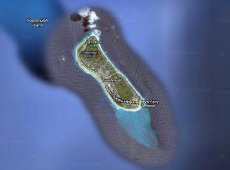
“The idea is that these are terrestrial wetlands, in the vicinity of the community, so we are trying to manage these protected areas with the help of the community,” Environmental Protection Agency (EPA) Environment and Social Safeguards Coordinator Ibrahim Mohamed told Minivan News yesterday.

Mohamed explained that the nearby communities will be the main implementing partners managing the wetland areas and local NGOs are hoped to contribute as well. A “pool of people” will be trained to manage the areas and act as tour guides.

“There will be a visitor centre and a fee and go into the area accompanied by tour guides, it’s going to be like a national park,” said Mohamed.

“These are very beautiful places, that you will immediately sense are very different from the rest of the Maldives, given the [large] size of the islands and the unique way they are connected.

“In Fuvahmulah there are huge fresh water bodies, swampy areas in the depressions of the islands. While the Hithadhoo wetlands are a huge area with mangroves. There are so many birds here, you will always see so many,” he added.

Spanish company Hidra has been hired to prepare the phase one components over the next five months, including the community-based wetland management plan, for which extensive public consultations – including students – are being conducted.

“Then we will start the civil works, such as making the nature trails, visitors center, and bird watching areas,” said Mohamed.

Public private partnerships

The coral reef monitoring component of this conservation project will involve partnering with resorts in Kaafu Atoll, explained Mohamed. They will be trained by the Environment Ministry to monitor water surface temperatures, erosion, biodiversity, bleaching, impacts on fish, as well as “fish landings” to determine where fish being brought to the resorts are caught.

The goal is long-term monitoring of reefs nationwide, however this project will begin by looking atfive. Currently coral reef monitoring is limited, because it primarily focuses on bleaching and is only conducted twice annually, in accordance with the monsoon and dry seasons, according to Mohamed.
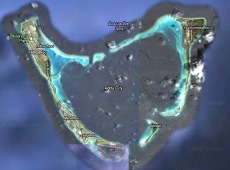
“We have started developing the database and the [monitoring] protocols, which have been peerreviewed by international reef ecologists,” said Mohamed.

“The idea is that over 10 to 15 years we will know what is happening to the coral reefs, so that we can determine the impacts from climate change,” he added.

“Exemplary example for small island states”

Mohamed stated that the overall goal is for these wetland and coral reef areas – and the entire nation – to be protected and developed sustainably to become biosphere reserves.

He further explained that the idea behind this CCTF project is for the Maldives to become an exemplary example for other small island states.

“This project can be replicated anywhere in the world, all small island countries can utilize [what the Maldives has developed],” he added.

The holistic approach to wetland and coral reef conservation is necessary because the components are “so interrelated”.

“If you don’t properly manage waste there will be impacts on coral reefs, etc.,” noted Mohamed.

The CCTF serves as the “main umbrella” under which there are three projects in the Maldives: the WCCM, clean energy for climate mitigation, and solid waste management. The WCCM in particular is supported with donated funds from the European Union and Australian Aid, and managed by the World Bank.

Likes(2)Dislikes(0)

Maldives expects flooding due to storm surges

The Maldives Meteorological Service (MET) has warned that high storm surges due to current poor weather conditions could cause flooding nationwide, reports local media.

Flooding due to storm surges during high tides, as well as heavy rain accompanied by strong wind and thunder, can be expected throughout the atolls, said a MET weather forecaster, according to local media.

“Flooding has not yet been reported from any region, but it can be expected in this bad weather,” he said.

The northern and central atolls can expect the worst weather, however heavy rain, thunder and rough seas will likely be experienced in all regions.

Likes(0)Dislikes(0)

‘Fisherman’s Community Centre’ established

A Fisherman’s Community Centre has been established on Gan Island in Laamu Atoll to provide information on the location of schools of fish and bait.

The Maldives Fishermen’s Association and Maizan Electronics established the centre, which was inaugurated by Fisheries Minister Ahmed Shafeeu May 1, reports local media.

Chairman of Fishermen’s Association Maizan Ahmed Manik told local media that the centre will help reduce the cost of fuel for fishermen, however the information provided via satellite requires a daily fee of MVR 116.66 (US$7.57) or MVR 3,500 monthly (US$ 226.98).

The centre will also offer training programs for vessels that travel outside Maldivian territorial waters, and seek solutions for the challenges those fishing boats, Manik said.

He also announced that a similar centre will be established in Huvadhoo Atoll, on a still to be determined island with the largest population of fishermen.

Likes(0)Dislikes(0)

Local NGO launches child abuse prevention website

Maldivian NGO Advocating the Rights of Children (ARC) launched the website for HOPE Campaign against Child Abuse and announced its partnership with telecommunications company Dhiraagu for an upcoming fundraising road race event on May 7.

The website will provide “easy access” to information in four key HOPE Campaign areas in both Dhivehi and English. The campaign is focused on helping children ‘heal’, the importance of ‘outreach’, ways to ‘prevent’ abuse, and how to ‘empower’ children against abuse.

To support the NGO’s advocacy and awareness efforts, ARC will hold a “run to make a difference road race” in partnership with Dhiraagu, with 100 percent of the proceeds used for child protection programs.

Likes(0)Dislikes(0)

Sheikh Ilyas again summoned to Parliament Committee; says MPs “ignorant of Islamic ways”

Parliament’s Penal Code draft committee has once again decided to summon Chair of Adhaalath Party Religious Council and member of Maldives Fiqh Acadamy Sheikh Ilyas Hussain, after he failed to attend the committee’s previous summons.

The committee stated that it has asked Sheikh Ilyas to attend a committee meeting on May 15 regarding a sermon he gave at the Furugan Mosque in March titled “The Purpose of Islamic Shariah”.

In the sermon, Ilyas swore to God that the Penal Code was intended to destroy the religion of Islam. Calling the penal code “a trap made by the West” to eradicate Islam in the name of Muslims, Ilyas alleged that it did not have penalties for fornication, theft, corruption, forgery, or robbery. He further claimed the code stipulated that if a person claimed they were intoxicated when committing a crime, then they would not be subjected to punishment.

After the initial decision to summon Ilyas, Penal Code Committee Chair Maldivian Democratic Party (MDP) MP Ahmed Hamza rejected the Sheikh’s claims and stated that “[Sheikh Ilyas] has told the public that there are some provisions in the Penal Code that are not in it. We want to bring him and have a chat and inform him about the provisions that are there in the Penal Code.”

“MPs summon me as they are ignorant of the ways of Islam”: Ilyas

Upon being summoned to parliament again, Sheikh Ilyas told local media that the committee continued to summon him only because they were ignorant of the Islamic way regarding the matters he had raised.

Ilyas stated that the parliament members who sat in the committee had insisted that the Penal Code did not have any clauses against Islamic principles, but only because none of them possessed sufficient religious education to understand the reality. He added that he will would explain the matter to the MPs through verses of the Quran and the sayings of the Prophet when he attends the committee meeting.

Ilyas further stated that the bill has a number of clauses which contradicted the penalties defined in Islamic Sharia, and that it had many “deceptive clauses”.

“I will strip the MPs naked”: Ilyas

Sheikh Ilyas was also reported in local media as stating that he would “strip the MPs naked” if he is summoned to the Penal Code Committee.

“I am willing to attend the committee. I will not be called Sheikh Ilyas if I fail to strip them naked. What will they prove? Who gave these people the right to take out the penalties defined in the Quran and categorise them into Part 1 and Part 2?” Ilyas stated.

Ilyas also called on all Maldivian media to broadcast the committee meeting which he is to attend live on TV.

Ilyas made the comments at the gathering held by Adhaalath Party and the National Movement at the Artificial Beach on April 30.

The Adhaalath Party has previously alleged that the parliament committee had added a clause to the Penal Code after Sheikh Ilyas gave the sermon in the Furugan Mosque, and accused the committee of orchestrating a cover up.

Likes(0)Dislikes(0)