Comment: Death penalty for infanticide is infantile

Among the many paths in life that lead a woman to kill her newborn baby, it is never this: one day she wakes up with an overwhelming urge to kill.

In order to satisfy that urge, she goes out and seduces/forces a hapless, innocent man to have sexual intercourse with her and to impregnate her. Still with the ultimate end-goal of killing in mind, she covertly carries the baby inside her. After nine-months of ingenious methods of hiding her ballooning figure from all eyes, she gives birth in perilous conditions without any medical attention.

Finally, she experiences the pleasure of killing which she had anticipated and meticulously planned for nine long months. And with immense gratification, she reaches out and makes sure her baby’s first breath is also its last.

Infanticide is not a new phenomenon – cases of it have been recorded from the time human records began, and research has shown a myriad of socially-generated causes behind the offence. Rates escalate in patriarchal societies where women are regarded as second-class citizens, and where crimes against women are on the rise. A recent report published by TrustLaw Women, an online organisation that offers free legal assistance to women, shows that infanticide is a common marker among countries that offer the worst environments for women to live in.

What is driving our women to such desperation? We do not know for sure, because we have invested neither time nor effort to find out. Crime statistics, however, give more than just a hint.

The thin line between perpetrator and victim

Police statistics for 2010 show over 500 sexual offence cases and 299 arrests for the same. By April this year, 58 cases of sexual offences had already been reported to the police.

In the last few months, Minivan News has reported on a whole range of random violent sexual offences against women from gang rape to rape of a 74 year-old. Added to these are less random rapes and sexual assaults occurring closer to home that run the whole gamut from decades-long sexual abuse of daughters by fathers to the attempted to rape of a mother by her son.

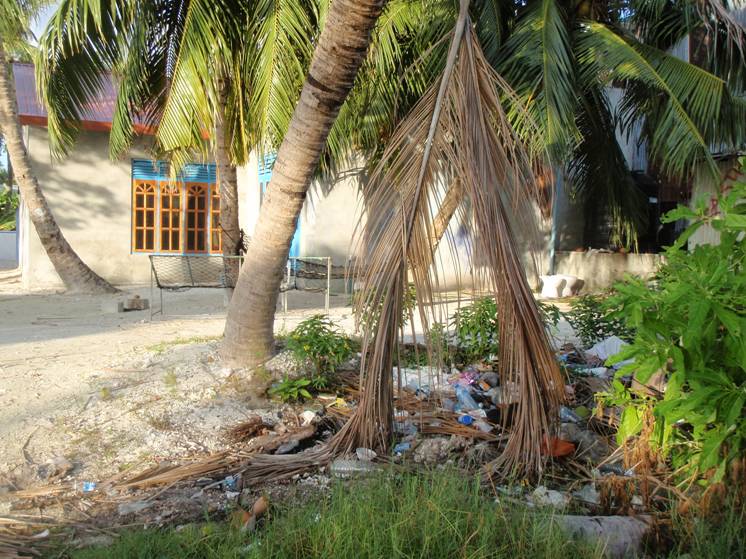
In the latest case, reported last month, five men are alleged to have raped an 18-year-old girl in Laamu Atoll Maabaidhoo. Her mother found her after two hours of searching, slumped under a coconut palm, her clothes in tatters and unable to walk from all the injuries the men had inflicted on her.

In March this year, a gang of 15 men abducted, drugged and raped a 20-year-old woman on the island of Hithadhu in Seenu Atoll. They recorded their vile acts on a mobile phone, for post-rape pleasure. Yet, as a coalition of NGOs highlighted recently, ‘not a single case of ‘rape’ [was] in the statistics maintained by either the PG [Prosecutor General] or the Criminal Court’.

Why? Rape is not a crime under our current Penal Code.

We live in a society where years of ‘religious’ preaching and traditions that have refused to bow to the winds of progress have taught women to accept it as their due to be beaten up by husbands for perceived marital transgressions.

Seventy percent of our women believe this to be the case. One in every seven secondary school students are sexually abused, according to an unpublished 2009 report by UNICEF, a vast majority of them girls. A Gender Ministry report in 2007 found that over 12 percent of Maldivian women between the age of 15 and 49 are sexually abused as a child.

The situation is worse for girls in Male’ than elsewhere, where more than 16 percent of girls under the age of fifteen are sexually abused. This means that of every 100 girls you walk by on the streets of Male’ and its auxiliary islands, 16 have suffered sexually at the hands of a man. How many of these offences end up in unwanted and enforced pregnancies?

Some of the girls are in a position to travel abroad for abortions – and yes, whether we like it or not, it is happening; and it will continue to happen.

Refusing to see that this behaviour is not merely a sin, but also a social issue that affects every human society, does not make it into a religious problem alone with only the harshest of religious solutions. Those who cannot have their unwanted babies surgically removed, resort to dumping them somewhere, drowning them, or subject them to worse forms of mutilation and death. These girls/women need help.

Capital punishment is not a deterrent as evidence from various countries where it is in force has shown. The fate of previous perpetrators would be the last thing on the mind of a woman about to commit such an act. If she were capable of rational thought during those desperate moments, killing a baby would be the last thing she would do.

Immaculate conceptions?

The learned men at Adhaalath see only one reason for the rise of infanticides: the “rising popularity of fornication“, and have called for the death of mothers guilty of the crime. It is not sufficient that some of the women have been jailed for life while the men, who must surely have been involved, have walked scot-free.

Without the existence of a crime defined as ‘rape’, it is easy to categorise every such brutal violation of a woman as ‘fornication’ – the type that is only ever ‘popular’ among depraved, misogynistic men who seem to view preying on vulnerable women as a popular sport. By calling for the death of the women who become victims of such men while remaining wholly silent on the men themselves, the ‘scholars’ at Adhaalath are encouraging such behaviour among the men.

And, by taking such a stance on this pressing social concern, Adhaalath is making itself not just a misnomer, but is turning a blind eye to its own slogan proudly displayed on its masthead taken from Surath An-Nisã (The Women): ‘Allah commands you […] that when you judge between people, you judge with justice’ (4:58).

Criticism of Adhaalath’s views, and that of other religious bodies in the country, do not always arise from ‘mad secularists’, as is their constant accusation. Nor is criticism of these views meant to suggest that religion has no role to play in our society. It does; and there is much Adhaalath and other such institutions can do.

Why not preach against rape in their Friday sermons when they have the ears of most of the country’s male population within their reach?

Why not speak then of the respect with which Islam says women are to be treated?

Why not drive the point home that at least 50 percent of the blame [in cases where the conception arose from consensual activity] lies with the men?

Why not repeat the message until it penetrates through the thick haze of misogyny that seem to envelop many among them that women have not been put on this earth for their depraved ‘pleasures’, sexual or otherwise?

Adhaalath, and other religious bodies, could also use their proven ability for fundraising to raise money for proper research into the rising problem of infanticide.

Or to help boost the adoption programme under Islamic teachings that the Gender Department has been trying hard to get off the ground. Or perhaps to provide funding for a shelter for abused young women or a safe place for young girls turning to juvenile delinquency. None of them have proper care; none of them have a place to go. The buruga may cover, but it does not shelter; and being covered up is not the same as being protected.

There are many different ways to help, and many ways that Islam obliges its followers to help those in need; but they can only become clear when the dogma is put aside and room for reason made.

No doubt the next ‘religious’ edict calling for the death of yet another disturbed or disadvantaged group in society would be prefixed with the customary Bismillah. If only, instead of repeating it like some meaningless chant, a moment is taken to consider its meaning: ‘In the name of Allah, the most compassionate, the most merciful…’ Wither the compassion, Adhaalath?

All comment pieces are the sole view of the author and do not reflect the editorial policy of Minivan News. If you would like to write an opinion piece, please send proposals to [email protected]

Likes(1)Dislikes(0)

MIRA concedes profit tax challenges following door-to-door push

The Maldives Inland Revenue Authority (MIRA) has taken a door-to-door approach in trying to prepare Maldivian enterprises for the introduction of a new Business Profit Tax (BPT) that comes into effect on July 18.  MIRA says informing and registering every national enterprise in the country under the scheme will be a considerable challenge.

The BPT is to be charged to all businesses operating in the Maldives,that makes a profit  of more then Rf500,000 (US $32,425).  The tax will be a first for companies operating in the Maldives, a country that launched a similar 3.5 percent Tourism Goods and Services Tax on all travel industry income as of January 1 this year.

Business owners and industry representatives, while said to generally welcome direct revenue in the country, have called for a gradual introduction of financial reforms like the BPT, which are being sought by the government to balance national budget deficits and protect smaller enterprises.

Under the present BPT system,  businesses that make a profit of more than Rf500,000 (US$32,425) will be asked to pay 15 percent of their earnings to the state.  This sum will effectively rule out small businesses operated by individuals and places  like corner shops that mainly caters to the local residents from having to pay BPT.

Moomina Abdul Sattar, 49, who runs a small tailor service, is one such businesswoman.

“I don’t have to pay the BPT tax; it is applicable only for those who make a profit of more than Mrf 30,000 (US $ 1945) a month,” she said.

Sattar added that she had previously attended an information session held by MIRA and was not therefore concerned about the tax as it does not affect her operations.

“My income per month is around Mrf 15,000 (US $ 973), from this I have to pay the salary of my three tailors,” she said.

Nonetheless, Sattar added that she still wasn’t aware that registration of her business was required by MIRA, even after attending the meeting.

For other businesses in the country, beyond the registration process itself, BPT is still expected to provide a significant challenge, at least in the short-term.

“We are not fully ready for BPT, but we are taking it positively,” said Ibrahim Hameez, Managing Director of Ryan Pvt Ltd. A design consultancy firm, Ryan has about 40 employees and would be seen as a medium and growing business.

“A lot of things that affect businesses were introduced this year, pension scheme, BPT, Income tax,” he said.

Hameez added that it was the timing of the introduction of taxes that posed a problem. “If we had known one year in advance, it would have been better. At the end of last year, we had not foreseen and planned for all these expenses in our cash flow for this year.”

The BPT Act was published in the government Gazette on 18th January, with the tax to come into effect 6 months from the date of publication.

Despite the problem of timing Hameez believes taxation is a good thing.  “BPT is going to be tough to adjust to, but we can and we will.”

Business of all sizes

As part of the act’s requirements, businesses of all sizes, including small and medium enterpises have to be registered with MIRA. This is a first for the Maldives, where small businesses run from home have generally not had to register themselves in the country.  

MIRA says they are having great success in their door to door campaign to spread awareness.

“The response from the public has exceeded our expectations, people are very cooperative and even fill up the forms for registration on the spot most of the time” said Fathimath Rasheeda, Director of Tax Payer Education and Facilities for MIRA.

 Landlords had also previously been exempt from having to register their operations or interests.  It is these type of earners that Rasheeda has said have been the target audience for its door-to-door campaign.

“As a society we don’t tend to think that renting places, giving tuition, or selling sliced arecanuts are doing businesses,” she said.

Until this month, individuals or partnerships running small businesses like making short eats or cakes from their homes had only been required to get permission from the Ministry of Health to operate.  Similarly, anyone renting accommodation, no matter the size, had not been required to register their property unless the place in question was to be used as a shop.

“Even a person renting out one room for Mrf 2000 (US $130) or teaching a small Quran class should register. But we will be taxing only those who earn more than 500,000 (US $ 32425) annually as profit,” said Rasheeda.


Challenges and Penalties

Alongside businesses, MIRA also has its own concerns over such a large scale operation being conducted for the first time.

“This is a big challenge for us also, as this is the first time a lot of businesses in Maldives would be registered,” she said.

MIRA’s 70 staff will be participating in an awareness campaign set for next Saturday. While next week the campaign will be taken to the islands.

“Due to lack of resources we cannot cover all the islands, but the city and island councils have been very helpful and have helped register the businesses in the islands,” Rasheeda added.

Among the challenges faced by MIRA will be taxing businesses that had never before declared their revenues publicly.

In addressing this potential difficulty, Rasheeda added that the BPT would operate like taxation systems in most other countries, where “individuals and businesses have to declare on their own the profits they make.”

The audit department of MIRA is expected to conduct a risk analysis to prioritize the first businesses it will audit to ensure the system is being adhered to.

“We hope to audit all the businesses within a five year period.  Those businesses and individuals eligible to pay taxes will be asked to file a tax return annually,” Rasheeda added.

The penalties for enterprises omitting or filing false tax returns will include fines of up to Rf100,000 (US$6,485), six months to two years of house arrest and imprisonment or banishment, as per the BPT act.  Rasheeda added that “if businesses or individuals fail to pay their taxes, aside from the wide ranging penalties, we can also seize their property in order to get the amount owed to the authority.”

Likes(1)Dislikes(0)

Customs seize 500 grams of heroin in false compartment of suitcase

Maldives Customs Service apprehended a Sri Lankan national at the Male’ international airport on June 25 after discovering over 500 grams of drugs hidden in a false bottom of his suitcase.

Sun Online reports that the narcotics found in the suitcase of the suspect, Mohamed Arafath Mohindeen, 32, later tested positive for heroin.

The street value of the drugs seized by customs is estimated to be Rf800,000 (US$62,200).

On the same day, customs stopped a Pakistani national who had swallowed 100 packets of “high-grade” heroin.

Likes(0)Dislikes(0)

EC announces by-election to replace dismissed Thulhaadhoo councillor

The main opposition Dhivehi Rayyithunge Party (DRP) is preparing to mount a legal challenge to the dismissal of Thulhaadhoo Councillor Umaira Abubakur after the Elections Commission (EC) yesterday announced a by-election for August 20 to replace the party’s sole representative on the five-member island council.

The DRP contend that four councillors of the ruling Maldivian Democratic Party (MDP) conducted emergency meetings while Umaira was attending a workshop as part of “a planned effort” to remove her from the post.

Article 119(b) of the Decentralisation Act states that a councillor can be removed if he or she misses seven consecutive meetings “without offering a valid reason that is acceptable to the council.” Umaira did not attend ten meetings which took place while she was ostensibly participating in a workshop in Bandos Island Resort.

Speaking to Minivan News today, DRP Deputy Leader Ibrahim ‘Mavota’ Shareef lambasted both the MDP-majority Thulhaadhoo council for “abusing the law to silence a minority voice” and the EC for “failing to carry out their responsibility.”

“The dismissal was unfair, unjust and completely against democratic principles,” he said, warning that the EC’s decision to uphold the council’s dismissal could set “a very dangerous” precedent.

Island councils where one party had a majority might be encouraged to arbitrarily dismiss minority members, Shareef suggested, which could “plunge the nation into chaos and anarchy.”

Moreover, the MDP councillors’ dismissal of the only female member of the council amounted to “discrimination against women.”

Shareef said that a delegation from the DRP held a meeting with members of the EC today, “but what we saw from them was arrogance.”

“The mandate of the Elections Commission is not just holding elections,” he said, adding that the commission was “not independent anymore.”

Shareef claimed that as a result of the ruling party’s new majority in parliament, the EC was “forced” to act in the government’s interest.

“I will recommend the DRP council to look into the independence of the Elections Commission,” he said.

EC Chair Fuad Thaufeeq told Minivan News today that the commission had received letters of complaint from both the dismissed councillor and some members of the Baa Atoll Council.

“But this is not a concern of the atoll council,” Fuad explained. “It is up to the island council and in this case a member was removed by the other four councillors.”

Fuad added that the EC did not have the authority to either postpone or cancel the by-election unless ordered to do so by a court order.

“The law does not say that the atoll council can overrule a decision made by an island council,” he said. “Only a court of law can invalidate the decision. We will stop the election immediately if there is a court order.”

Thulhaadhoo Council Chair Ahmed Rasheed told Minivan News earlier this week that the decision to dismiss Umaira was taken after consultation with the Local Government Authority (LGA) and based on legal counsel from the Attorney General’s Office.

“She did not inform in writing as she was required by law either before she left or during her holiday,” he insisted.

While confirming that six of the ten meetings in question were emergency sessions, Rasheed however denied the DRP allegation of actively plotting to dismiss Umaira.

Likes(0)Dislikes(0)

Dengue hospital situation “stable”, despite high patient demand

Hospitals in the capital have said they continue to screen significant numbers of patients for dengue fever, yet claim that the situation remains “stable” as authorities raise fears that an ongoing outbreak of the virus may be more persistent than originally thought.

As officials today confirmed that a 41 year old man from Addu Atoll had become the eighth person to have died during the latest dengue outbreak, health care representatives in the capital have said that they remain “busy” dealing with cases and had not yet seen significant declines in patients coming through their doors suspected of contracting the virus.

After declaring this week that the current outbreak of the virus around Male’ and several islands was being treated as an “epidemic”, the government has since established a task force to try and coordinate its ministries, the military and NGOs in preventing further spreads of dengue. The task force was originally budgeted to run for seven days, by which time the situation was expected to be under control.

However, upon admitting yesterday that the suspected number of dengue cases in the country had slightly risen after a perceived fall in infection rates earlier during the week, a media spokesperson for the task force suggested that the operations were now likely to run beyond the original seven day time-frame.

Meanwhile, for hospitals on the front-line of dealing with the “epidemic,” the Clinic, a Male’-based private hospital, has said it has been busy collaborating with the task force in trying to identify infection cases.

A spokesperson for the Clinic, which begun offering free dengue fever screening services on Tuesday (July 5), said it was continuing to receive a steady number of patients looking for dengue testing and had been working to the emergency protocols recently imposed by the government.

“At the moment I don’t think we are seeing the number of patients [with suspected dengue] going down,” she said. “From the first day [of the screening service], we have received large number of pediatric enquiries regarding dengue infections among children, though adults are coming for testing now in large numbers.“

Panic fears

The Clinic spokesperson revealed that the medical centre remained concerned about the impact panic was having on the general public.  She said this this concern reflected the limited amount of knowledge about the symptoms and severity of dengue fever within Maldivian society as a whole.

“Trying to create knowledge [about dengue] among the public is one of the main challenges we are facing. People who may have symptoms are sometimes sitting at home and relaxing trying to overcome the fever, which means that some cases of the virus are being missed,” she said.

“Dengue fever has to be better managed by people. Members of the public with the virus need to take more fluids, but they are lacking awareness of this.”

The spokesperson added that the Clinic was currently working to put together a leaflet that she said would try and provide more details about the virus.  During the current panic over dengue infections, the Clinic spokesperson suggested that some members of the public were staying at home instead of coming to be checked.

Despite concerns that the public may begin inundating hospitals beyond their capacity as a result of panic over the virus, Cathy Waters, Chief Executive of Male’s Indira Gandhi Memorial Hospital (IGMH) said that increased patient numbers were to be expected during an outbreak like that presently taking place in the country.

“We have seen a lot of children being bought in by relatives because of the virus. I think that some panic is to be expected as people are concerned about dengue, but the situation is definitely stable here at the hospital,” she said. “I think the message has got out about the virus and its symptoms and people are responding to this.”

In trying to treat patients found to be suffering from the effects of dengue, Waters said that the hospital had moved to adapt additional wards and services to dealing specifically on trying to deal with the ongoing dengue outbreak, yet she added that the overall situation was under control.

“At the moment we would describe the situation as relatively stable, but definitely very busy here,” said the hospital chief executive. “We have set up an additional fever clinic, which means people can be seen relatively quickly for testing and then be given the necessary treatment.”

Waters added that the current dengue situation had required the hospital to develop contingency plans to allow for the provision of increased bed capacity as well as bringing in additional nurses to cope with demand.

The hospital chief executive said that this had in certain cases meant that some surgeries had to be cancelled to accommodate dengue testing and treatment, a situation that would continue to be reviewed regularly to ensure patient demands were being met as best fitted the situation.

The government taskforce has said that it is expecting to address members of the media concerning the latest developments later this evening.

While pledging to support efforts to try and cut dengue infection rates in the country, opposition politicians have been critical of the speed by which the government has responded to the present outbreak.

Ibrahim ‘Mavota’ Shareef, Spokesperson for the opposition Dhivehi Rayyithunge Party (DRP), saidthat he believed that the government had “bungled” their response to trying to control dengue fever.

“From what we have seen the government is just not doing enough. We don’t believe they have been willfully negligent, but there has been negligence in their approach [to dengue outbreak],” he claimed. “They have not responded fast enough, which could be inexperience on their part. But I think this will be a wake-up call for them to change policy in dealing with these type of situations.”

Likes(1)Dislikes(0)

Over 19,000 applications being processed under “Veshi Fahi” Male’ housing project

Some 19,900 applications for housing under the government’s flagship “Veshi Fahi” Male’ (decongestion) project are being processed as construction of 250 flats in Hulhumale’ and 500 flats in Male’ is expected to be completed “before too long.”

According to a statement by the President’s Office on the implementation of the project’s first phase, two members of the public – Aishath Hussein Manik, H. Reedhookokage, and Mohamed Afeef, Ma. Redrose – were chosen for the oversight committee on Monday.

The oversight committee will be tasked with monitoring the evaluation of the application forms while a permanent office is to be opened on Sunday (July 10).

Under phase one of the project launched in January, a total of 1,000 parties were invited to apply for the housing scheme. Over 8,000 application forms were submitted on the first day.

Also in January, the cabinet approved related projects under the “Veshi Fahi” programme, including development of a container park in Thilafushi to incentivise relocating warehouses in Male’ and construction of a multi-purpose local market with modern facilities for residents of Male’.

On April 12, the cabinet handed over land allocated for the project to the newly-elected Male’ City Council, which has nine councillors from the ruling Maldivian Democratic Party (MDP) and two councillors from the opposition Dhivehi Rayyithunge Party (DRP).

The programme was launched on November 10, 2010 with the aim of combining the development of Malé, Vilingili, Guli Falhu, Thilafushi, Hulhumalé and Malé International Airport: “The programme’s goal is to provide adequate housing for least advantaged Malé families and support decongestion of Malé.”

The capital Male’ has a land area of less than two square kilometers but is home to one-third of the country’s population or approximately 125,000 people.

Likes(1)Dislikes(0)

Saudi Arabia donates 50 tons of dates

Saudi Arabia donated 50 tons of date palm fruits to the Maldives today ahead of the upcoming fasting month of Ramadan.

The Saudi government has donated large shipments of dates every year since 1988.

According to the Foreign Ministry, the State Trading Organisation (STO) has been tasked with clearing the fruits from customs as well as its storage, after which the dates will be distributed through the Local Government Authority (LGA).

Likes(0)Dislikes(0)

Maumoon Foundation awards nine scholarships

Former President Maumoon Abdul Gayoom awarded recipients of the Maumoon Foundation’s annual scholarships at a ceremony last night.

Sun Online reports that the courses offered for this year’s scholarships were a tourism and journalism course; a three-year journalism, psychology and English degree course; a computer information degree course; a commerce degree course; a business management course; a hotel management course; a biotechnology, biochemistry and genetics degree course.

The panel tasked with evaluating the applicants consisted of Dr Mohamed Saud, Dr Mohamed Habeeb, former MP Aneesa Ahmed and Sun Online Editor Ahmed ‘Hiriga’ Zahir.

The scholarships includes tuition fees but does not cover accommodation or living costs.

Speaking at the ceremony, the former President said that he had been assured of scholarships for Maldivian students to study in Dhaka, Bangladesh during a recent visit.

Likes(0)Dislikes(0)